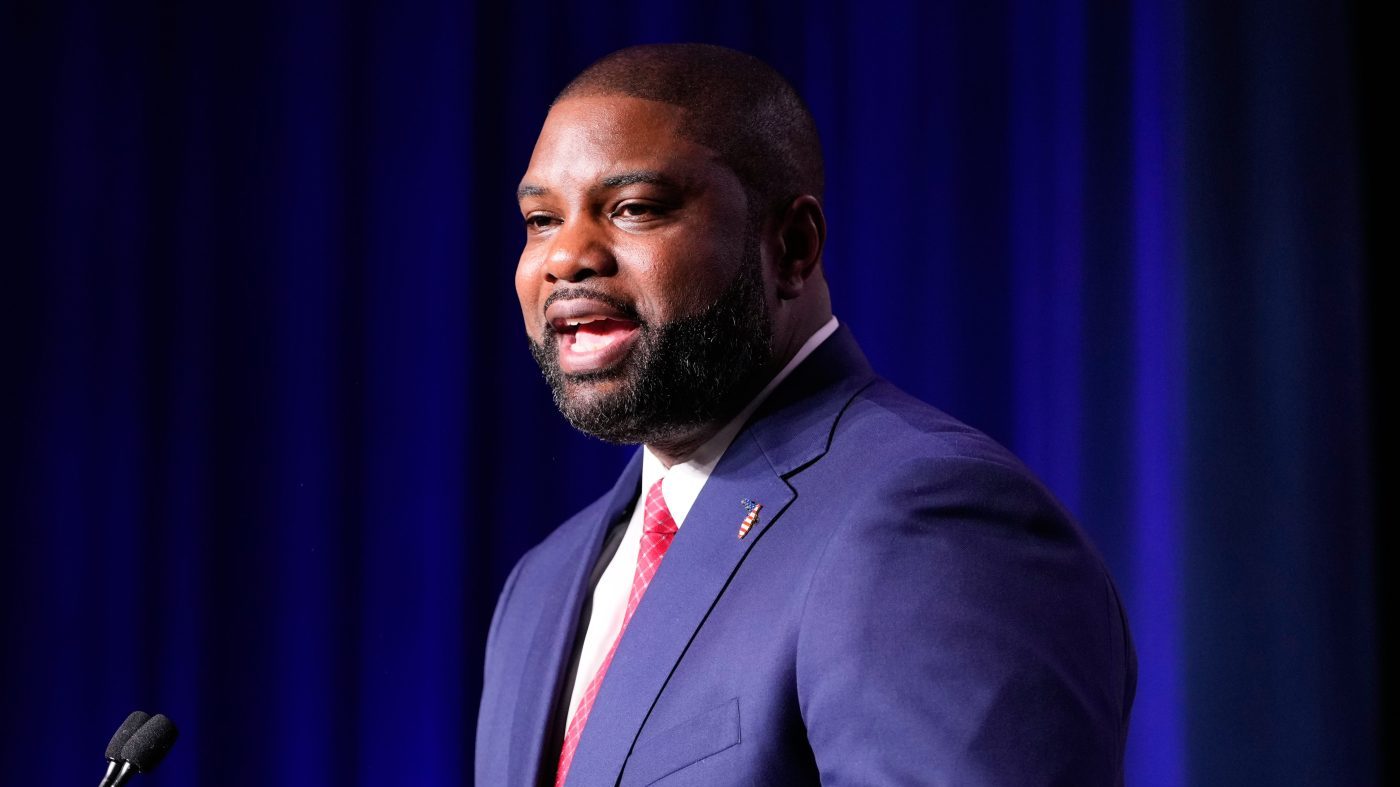
Rep. Byron Donalds (R-Fla.) emerged victorious in Florida's Republican gubernatorial primary on Tuesday, setting up a general election clash with Democrat David Jolly. In his first post-primary interview, Donalds acknowledged the boost from President Trump's endorsement but stopped short of predicting a joint campaign appearance.
"It gives you a great lift, a great lift in our party, but you've got to go in and put in the work," Donalds told NewsNation's Leland Vittert on "On Balance." "And in my campaign, we've been putting that work in every single day for 18 months. And that's why we're successful tonight. So, the president has great support here in Florida, continues to have great support here in Florida."
When pressed on whether Trump would hit the trail with him, Donalds said, "Well, that's his decision if he's going to come down." The comment leaves room for the president to stay away as the race tightens, especially given the mixed record of Trump-backed candidates in recent primaries, including losses in Wyoming and Florida's 19th district.
Donalds outlined a busy schedule for the next 77 days, saying he would be "crisscrossing" the state. "Again, we will be talking to voters all across our state, because it's about keeping the Florida dream alive. And that's what the people of Florida want to know about," he said.
The congressman, who would become the first Black governor in Florida's history, brings a unique biography. He graduated from Florida State University in 2002 after transferring from Florida A&M, one of the nation's Historically Black Colleges and Universities. That connection could prove valuable, as Florida A&M has historically energized younger voters—a factor that helped Andrew Gillum become the Democratic nominee in 2018 before he lost to outgoing Gov. Ron DeSantis.
DeSantis, who is term-limited, notably declined to endorse in the primary, though he praised Donalds's rival Paul Renner's "really great record of policy." The governor also suggested Donalds hadn't been part of major conservative "victories" in recent years—a subtle dig that could linger into the general election.
Now Donalds faces Jolly, a former congressman and prominent Trump critic, in what is expected to be a competitive November contest. Jolly's campaign has already signaled a focus on Donalds's ties to the president, but Donalds is confident his message will resonate.
"How we do this for the November election is we stay focused on kitchen table issues," Donalds said. He listed lowering insurance costs, tackling housing affordability, and managing growth as his top priorities. "Thirty percent of the costs of a new home is government costs, not a faucet, not a sink, not a roof," he argued.
Donalds also stressed the need to balance Florida's rapid expansion with quality of life. "And then the third piece is how do you balance the growth that is coming to Florida, making sure that quality of life remains while you continue to expand the economy and have high paying jobs," he said.
The gubernatorial race is shaping up to be one of the most closely watched in the nation, with implications for the 2026 midterms and beyond. Donalds's ability to navigate the Trump factor—while appealing to a broader electorate—will be critical in the weeks ahead.