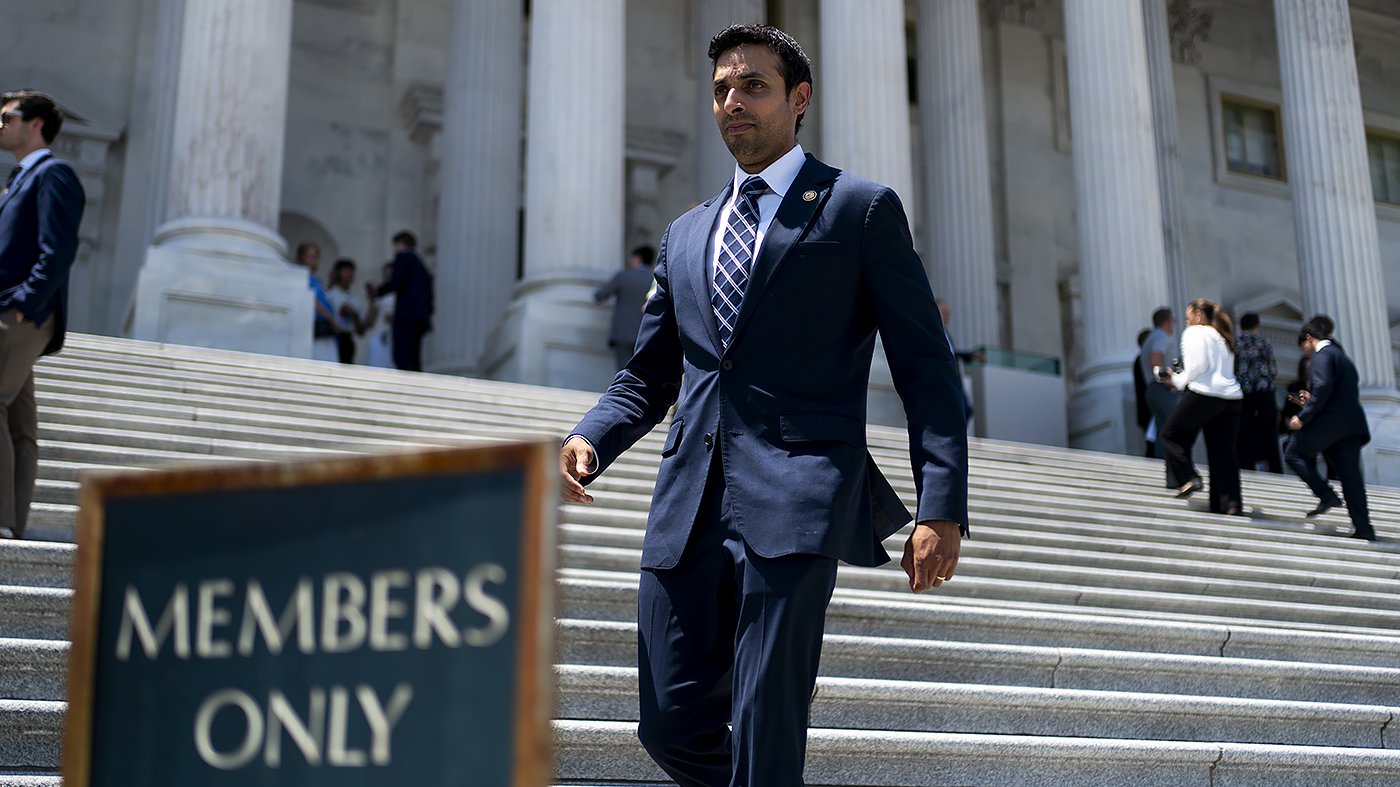
Democratic Rep. Suhas Subramanyam of Virginia on Sunday cast doubt on whether President Trump will ultimately sign a sweeping bipartisan housing bill, accusing the president of prioritizing a nonexistent voter fraud problem over addressing rising housing costs.
“I don’t know with this president, because he’s said that he doesn’t care about rising costs,” Subramanyam told host Chris Stirewalt on NewsNation’s “The Hill Sunday.” “He said… if he doesn’t have a housing problem and his friends don’t have a problem with housing, then it doesn’t matter to him. So I actually wouldn’t be surprised if he doesn’t sign it.”
The remarks come after Trump abruptly canceled the signing of the 21st Century Road to Housing Act last Wednesday, even though the legislation cleared both chambers of Congress with veto-proof majorities. The president has tied the bill’s fate to passage of the Safeguard American Voter Eligibility Act, a House-approved measure that would require proof of citizenship to register to vote in federal elections. Trump’s push for voter ID laws has drawn criticism from Democrats who say it risks derailing bipartisan progress on affordability.
House Speaker Mike Johnson, a Louisiana Republican, said Sunday he plans to send the bill to the president on Monday. “I’m going to send the bill over to him on Monday, and it will become law,” Johnson told host Maria Bartiromo on Fox News’ “Sunday Morning Futures.” Under standard procedure, if Trump does not sign or veto the bill within 10 days—excluding Sundays—it automatically becomes law. However, a pocket veto could kill the legislation if Congress is adjourned when that period ends. Both chambers are set to recess this Friday ahead of the Fourth of July, but pro-forma sessions are expected to prevent a pocket veto.
The bill bundles more than 45 provisions from lawmakers across both parties. It aims to speed up housing construction reviews, create pilot programs to boost homeownership, and provide incentives for renovating older homes. Key sponsors include Sens. Tim Scott (R-S.C.) and Elizabeth Warren (D-Mass.), along with Reps. French Hill (R-Ark.) and Maxine Waters (D-Calif.). They argue the measure will increase housing supply and lower costs for first-time buyers.
The housing industry has rallied behind the legislation. Bill Owens, chair of the National Association of Home Builders, said after Trump’s delay that Americans “are demanding action on housing supply and affordability.” A recent NAHB study found that regulations account for $131,734 of the average new home price of $499,500.
Subramanyam, who has pushed for federal help on down payments for first-time buyers, called the bill “good politics” for Trump. “We push this on the Democratic side and push Republicans to join us in supporting it,” he said. “But… it was an easy win for him and he decided not to take it because he wanted to solve a problem that doesn’t exist, which is illegal immigrants voting. So we are where we are right now. And this president… will do what he wants to do.”
The standoff underscores a broader political tension: Trump’s rule targeting food stamp loopholes and his focus on immigration enforcement have often clashed with bipartisan efforts on domestic policy. As the housing bill hangs in the balance, both parties are watching closely to see whether Trump will seize a rare opportunity for a cross-aisle win or let it slip away.