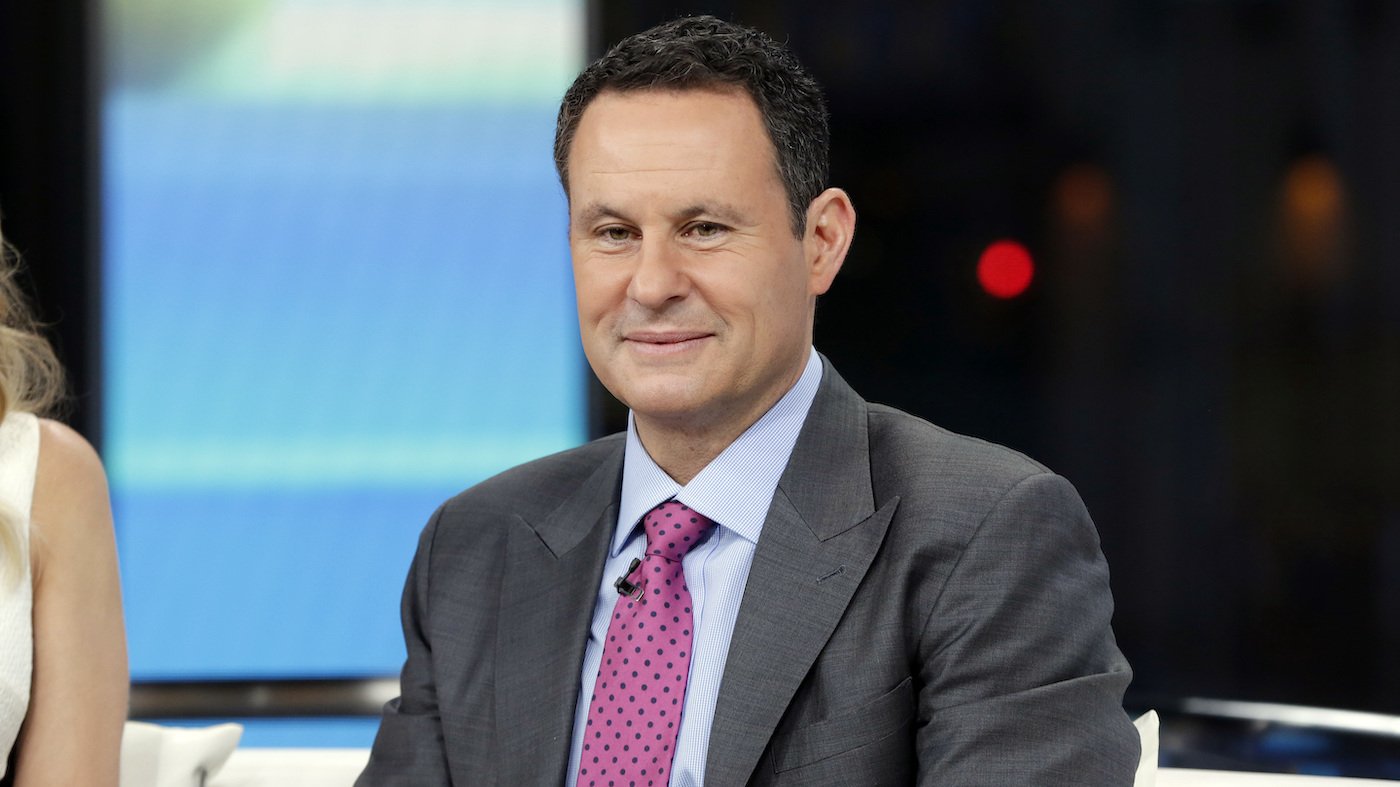
Fox News anchor Brian Kilmeade said Tuesday he expects the United States and Iran to engage in a “kinetic war” before Labor Day, a timeline that would place a major military confrontation just two months ahead of the midterm elections. Speaking on “The Five,” Kilmeade argued that while President Trump would first intensify economic sanctions, military action would ultimately be required to settle the standoff.
“I think the real story is what we do next in Iran. I think the president’s going to put the economic squeeze on them. I think the misery index is up to 91 percent,” Kilmeade said, as highlighted by Mediaite. He added, “So, just my point is this: I think we end up in a kinetic war to finish this thing off before Labor Day because the Iranians need to understand who the superpower is.”
The ongoing conflict with Iran has already weighed on Trump’s approval ratings and is a growing liability for Republicans defending their House and Senate majorities. The war has driven up gasoline prices and raised costs across the economy. According to AAA, the average price for a gallon of regular gas stood at about $4.04 on Thursday afternoon, up from roughly $3.14 a year earlier.
Former Defense Secretary Mark Esper offered a more cautious assessment Monday, suggesting the administration was on its “back foot” strategically despite inflicting significant damage on Iranian military assets. “Tactically, we have imposed a lot of pain on them through our U.S. military strikes against their air force, their navy, their militias, their ballistic missile forces — done a lot of tactical damage,” Esper said in an interview on NewsNation’s “The Hill.”
President Trump, for his part, signaled over the weekend that he was deliberately downplaying the situation. In comments to Axios on Sunday, he said, “We are only semi-negotiating with them. We are just watching Iran with its huge inflation and the fact they have no money.” That aligns with Kilmeade’s emphasis on economic pressure, but the Fox host’s prediction of imminent combat underscores the volatility of the current standoff.
The prospect of a pre-election war carries obvious political risks for the White House and congressional Republicans. High fuel prices are already a central theme in campaign ads, and a new military engagement could further unsettle voters. Meanwhile, the administration’s mixed signals—ranging from Trump’s “low-key” posture to Kilmeade’s bellicose forecast—have left allies and adversaries guessing about Washington’s next move.
Kilmeade’s comments come amid broader debate over who should lead Iran diplomacy. He has previously criticized Trump’s envoys, arguing they are unfit for the role and backing Secretary of State Marco Rubio instead. That internal friction adds another layer of uncertainty to an already tense situation.
With Labor Day fast approaching, the question is whether Kilmeade’s prediction will prove accurate or whether the administration will continue to rely on sanctions and economic strangulation. Either way, the Iran file remains a top-tier political and national security issue, with midterm consequences looming large.