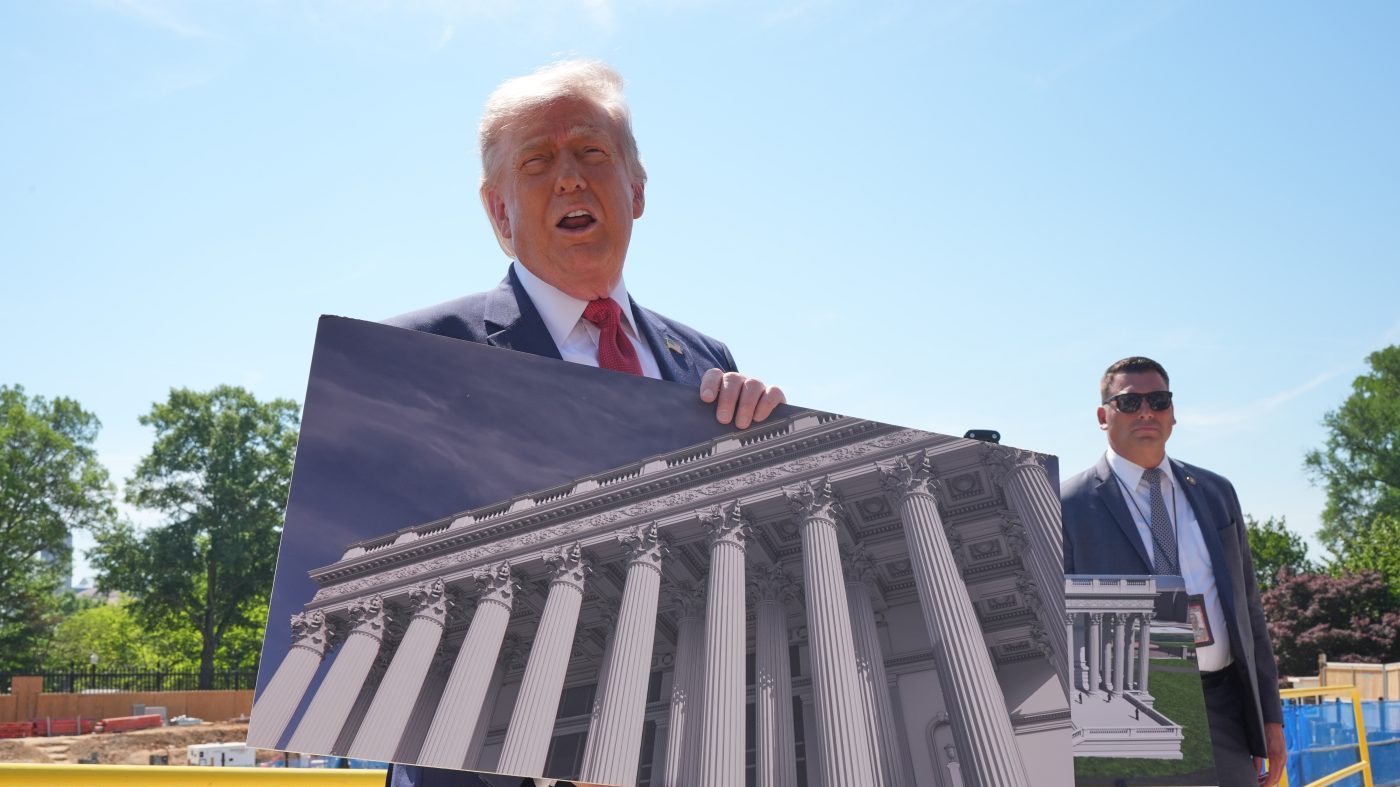
The Trump administration is moving forward with a sweeping overhaul of the White House campus that will cost at least $900 million, with a significant portion of the tab falling on taxpayers—despite never receiving formal approval from Congress. The Washington Post first detailed the scope of the spending, which includes demolishing the East Wing, building a new ballroom, and constructing an underground security complex.
Beyond the ballroom, the president has ordered a redesign of the West Wing, where the Oval Office sits, along with a new helipad and a major renovation of Lafayette Park. The total price tag for the ballroom alone is $600 million, with additional funds going toward gold fixtures, statues, labor, and materials. Administration officials have framed the work as essential to modernizing a complex that has seen little investment in decades.

What makes this project unusual is not just its size—it's the method of funding. The administration has accepted private donations to support parts of the construction, a workaround that legal experts say encroaches on Congress's constitutional "power of the purse." The executive branch typically submits a budget proposal and manages spending through agencies, but the Constitution grants lawmakers sole authority to appropriate taxpayer dollars. This project, however, is being executed without that approval, a break from precedent that has alarmed watchdogs and preservationists.
Last week, a federal appeals court ordered a two-week halt on construction to allow the government to appeal a ruling that blocked the ballroom's development. In that ruling, the majority wrote: "We are aware of no instance in American history in which a President unilaterally and using privately collected funds demolished substantial portions of the White House that Congress authorized to be built and American taxpayers paid for. Until now." The minority dissent called the ruling "judicial overreach."
President Trump has defended the project, arguing the underground national security complex is "being built for the protection of our Country and, additionally, all future Presidents." White House spokesperson David Ingle echoed that in a statement to The Hill, calling the renovations "long-overdue" and "necessary." He pointed to coordination with the White House Military Office and the Secret Service on design and security features.
Administration officials have cited past attack plots against Trump and Cabinet members as justification for the upgrades. A one-pager previously sent to Congress and obtained by PBS Newshour outlines plans to install bulletproof glass, drone detection systems, chemical and biological threat filtration, and other advanced security technologies. The goal, according to the document, is to counter drones, airspace intrusions, and emerging threats through state-of-the-art investments.
Still, critics argue the president is overstepping his authority. Democrats have called on the Government Accountability Office—an independent, non-partisan watchdog—to investigate the use of private funds for the ballroom. They contend that such a massive project should have gone through the standard appropriations process, especially given the potential for permanent damage to a historic site.
Historic preservationists have also voiced alarm, saying many plans have not undergone proper review to ensure the White House grounds are protected. The legal battle over the ballroom is ongoing, with the Supreme Court now the likely next stop. As the project continues, it raises broader questions about executive power and the limits of unilateral action—a theme that resonates with unresolved spending battles on Capitol Hill and the broader fall showdown over Trump's agenda.
The administration's approach has also drawn attention amid sagging approval numbers, as critics see it as an example of executive overreach that could have political consequences. For now, the construction continues, with the White House arguing that security needs trump procedural concerns.