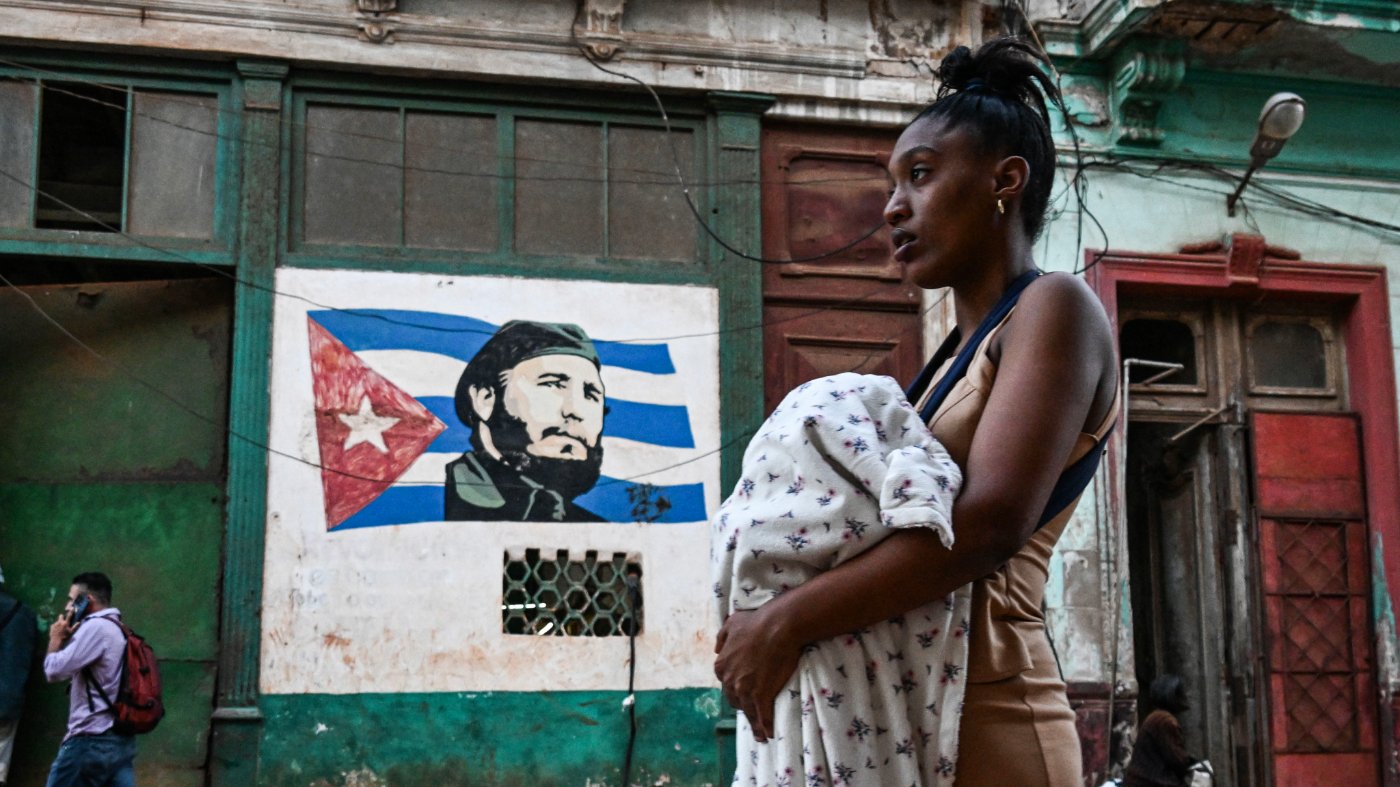
Cuban authorities acknowledged Friday that the island has exhausted its oil and diesel reserves, exacerbating a deepening humanitarian crisis as the Trump administration piles on economic and political pressure, with some officials hinting at military action unless Havana capitulates to U.S. demands.
The energy collapse stems from decades-old U.S. sanctions, but the immediate trigger was the capture of Venezuelan President Nicolás Maduro and the killing of former Iranian Supreme Leader Ayatollah Ali Khamenei. Trump allies see these events as a chance to topple Cuba's Castro-linked government, which has long relied on Venezuelan oil.
Despite the squeeze, Cuban President Miguel Díaz-Canel remains defiant. He recently called the U.S. embargo "genocidal," writing on X that it is "a perverse design whose main objective is the suffering of the entire people, to hold them hostage and turn them against the Government."
Energy Crisis Worsens
Energy Minister Vicente de la O Levy told state media that the electric grid is in a "critical state," with rolling blackouts lasting up to 22 hours a day. Cuba depended on Venezuelan oil but has received only one shipment since January. The Trump administration has warned other nations against doing business with Cuba or selling it oil, threatening tariffs and linking the issue to broader geopolitical tensions, including the ongoing conflict in Iran. That conflict has also complicated Cuba's efforts to import fuel, as the Strait of Hormuz remains closed.
Mexico, once a key oil supplier, has shifted to delivering humanitarian aid. Russia provided a 730,000-barrel shipment, but that has run out, Levy told United Press International. The shortages have sparked protests in Havana, with demonstrators chanting "Turn on the lights!" according to Reuters.
Indictment Looms for Raúl Castro
The Associated Press reported Friday that the Trump administration is preparing to indict former Cuban President Raúl Castro, 94, for his alleged role in the 1996 shootdown of four planes operated by the Miami-based exile group Brothers to the Rescue. The U.S. Attorney for the Southern District of Florida, Jason A. Reding Quiñones, has formed a working group to build cases against top Cuban officials, a move that follows pressure from south Florida Republicans to reopen the investigation.
U.S. Officials Escalate Pressure
CIA Director John Ratcliffe visited Havana on Thursday to "personally deliver President Trump's message that the United States is prepared to seriously engage on economic and security issues, but only if Cuba makes fundamental changes," the agency said. Secretary of State Marco Rubio, a Cuban American and longtime critic of the Castro regime, claimed Cuba refused a $100 million humanitarian aid offer after Hurricane Melissa, though Cuban Foreign Affairs Minister Bruno Rodríguez Parrilla denied any such offer was made. Rubio also announced new sanctions on two Cuban entities and one individual accused of propping up the communist government.
Cuba has signaled it won't back down. Charge d'Affaires Lianys Torres Rivera told The Hill that Cuba will stick to its "red lines" and is preparing for a potential military attack. Ambassador to the U.N. Ernesto Soberón Guzmán told Fox News that "words like 'give up,' 'surrender' or 'collapse' are not in the Cuban people's dictionary."
GOP Calls for Regime Change
Key Trump allies are pushing for a harder line. Sen. Lindsey Graham (R-S.C.) said after Maduro's ouster that regime change in Cuba is "just a matter of time" and later declared "Cuba's next" on Fox News. Sen. Ted Cruz (R-Texas), also Cuban American, told The Hill that regime change "couldn't happen to nicer people."
The administration's stance has also sparked debate within the GOP, as seen in the Kentucky primary challenge to Trump from Rep. Thomas Massie, testing the president's grip on the party. Meanwhile, Trump's focus on Cuba mirrors his broader foreign policy approach, including his wavering on the Taiwan defense pledge, which has alarmed both parties.