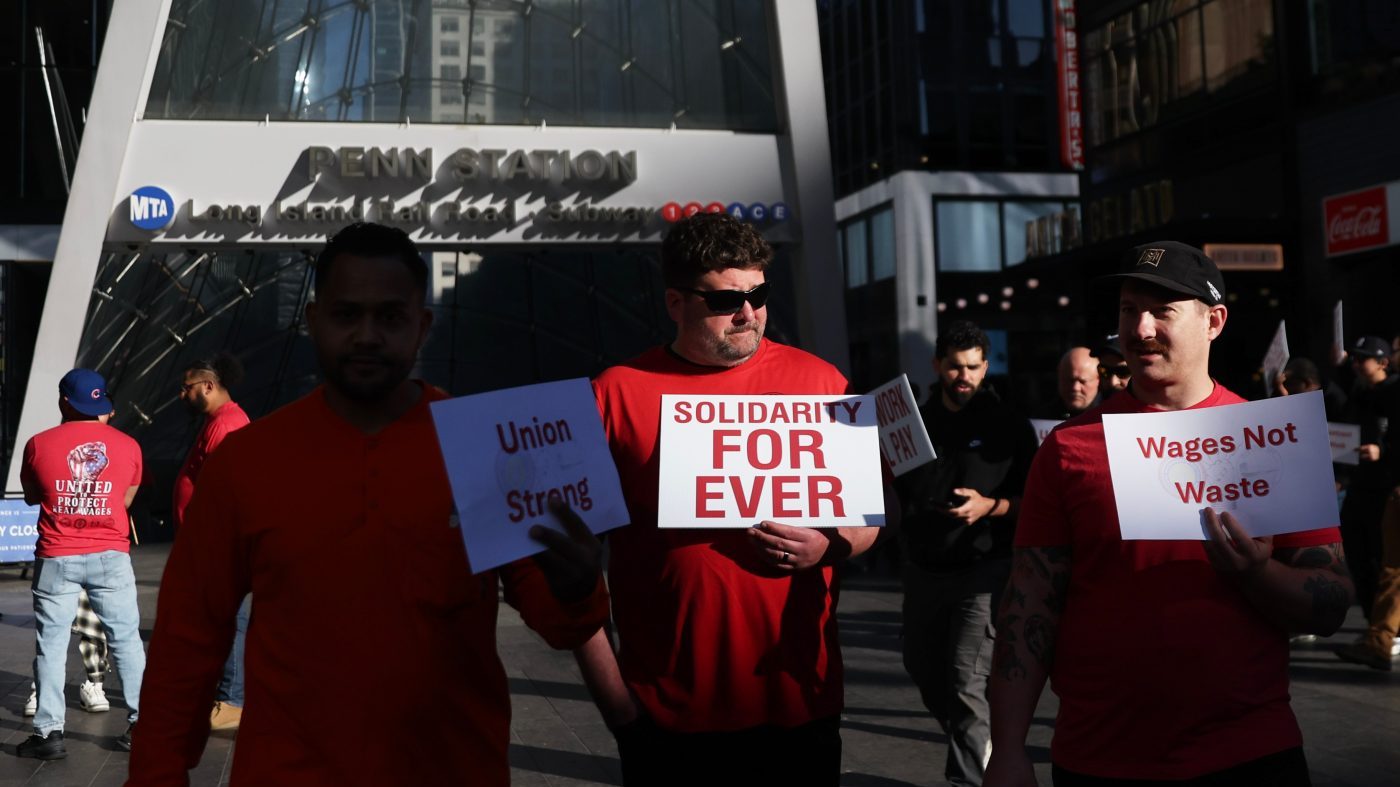
Long Island Rail Road service ground to a halt early Saturday morning as workers from five unions walked off the job, triggering the first strike on the nation's busiest commuter railroad in nearly four decades. The walkout, which began at 7 a.m., follows the collapse of negotiations between the unions and the Metropolitan Transportation Authority just after the midnight deadline.
The strike is expected to affect up to 300,000 daily riders, forcing many to seek alternative routes into Manhattan or work from home. The MTA has warned of significant delays on major roadways as more drivers take to the highways.
“For the commuters out there, this is not a fight against them,” said Paul, a locomotive engineer on the picket line outside Penn Station. “We apologize for this, but unfortunately, this is what it’s come to because the MTA does not bargain in good faith.”
The core dispute centers on wage increases. The unions are demanding a 5 percent raise for 2026, while the MTA has offered 3 percent, citing agreements with other MTA unions that accepted the lower figure. Both sides have already agreed to raises of 3 percent for 2023 and 2024, and 3.5 percent for 2025. The sticking point remains the 2026 figure.
MTA CEO Janno Lieber defended the agency's position, arguing that a 5 percent increase would strain the MTA's budget and ultimately fall on riders and taxpayers. “I and my MTA board have been clear that we cannot responsibly make a deal that implodes the MTA’s budget,” Lieber said at a press conference. “And we absolutely refuse to make a deal that puts it on riders and taxpayers to fund outside wage increases, which is far beyond what anyone else at the MTA is getting.” Each additional percentage point beyond the budget costs $100 million, he added.
Union leaders note that a Presidential Emergency Board supported their request for a higher raise, but the MTA has resisted. The standoff reflects broader tensions between organized labor and public transit agencies across the country, as explored in a recent report on union spending transparency.
New York Governor Kathy Hochul placed blame on the Trump administration, accusing it of cutting mediation short. “The disruption that Long Islanders face…is the direct result of reckless actions by the Trump Administration to cut mediation short and push these negotiations toward a strike,” she said in a statement. “For weeks, the MTA has attempted to negotiate in good faith and put multiple fair offers on the table that included meaningful wage increases, but you cannot make a deal if one side refuses to engage in good faith.”
The strike also comes amid rising concerns over transit reliability and worker compensation in the region, with some drawing parallels to broader economic trends, such as the widening gap between CEO and worker pay highlighted in a recent Oxfam report.
For commuters, the MTA has arranged limited shuttle bus service during peak hours from six Long Island locations to subway stations in Queens. The buses will run from 4:30 a.m. to 9 a.m. into Manhattan and from 3 p.m. to 7 p.m. returning to Long Island. NICE bus routes in Nassau County also offer connections to the 7 and F trains. Additionally, passengers can use designated subway stations near major highways as drop-off points, though parking is not available.
Those heading to the Subway Series at Citi Field should consult the stadium's alternate travel plans. The strike is expected to continue until both sides return to the table, though no new talks have been scheduled.