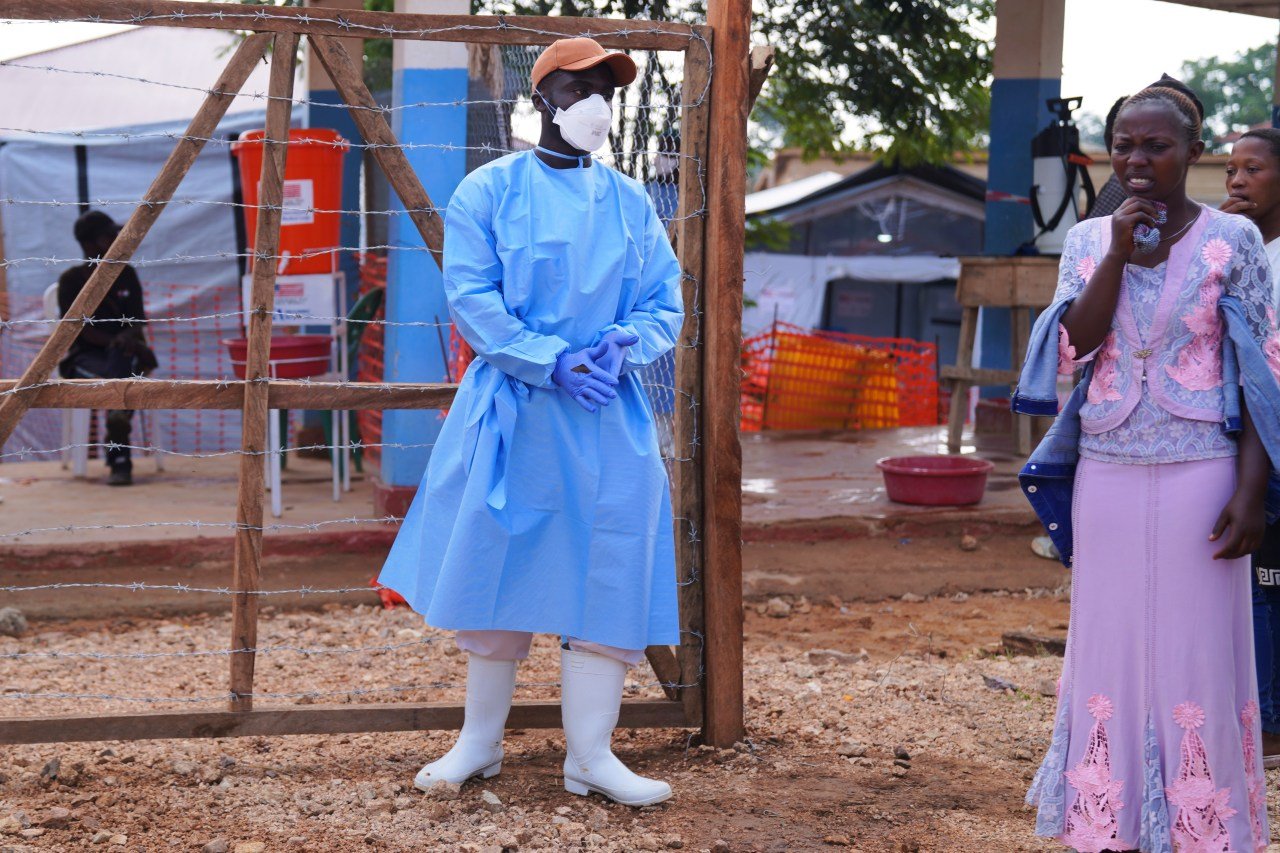
BUNIA, Congo — The Ebola outbreak in the Democratic Republic of Congo has now claimed over 1,000 lives, marking a grim milestone in what health officials describe as the fastest-spreading outbreak of the virus in history. The Africa Centres for Disease Control and Prevention confirmed 1,031 deaths as of Wednesday, with cases continuing to rise sharply across five provinces.
Dr. Jean Kaseya, director-general of the Africa CDC, delivered the news at a health summit in Ghana, lamenting that the death toll reflects a lack of vaccines, treatments, and funding. “These are people dying. They are dying because we don’t have vaccines, we don’t have medicine, we don’t have funding,” he said.
The outbreak, declared on May 15, is driven by the Bundibugyo virus strain, for which no approved vaccines or therapies exist. It has killed more people at a faster rate than any previous Ebola outbreak, including the 2013–2016 West Africa epidemic that took roughly eight months to reach 1,000 deaths. Congo’s Ministry of Health reported 2,473 cases as of Monday, with at least 737 patients hospitalized or in isolation.
Conflict and community resistance are severely complicating the response. The World Health Organization estimates the true scale of the outbreak could be two to four times higher than official figures, as many affected areas remain inaccessible due to rebel group fighting. In Ituri province, the epicenter, health officials warn that 80% of new cases are emerging outside known transmission chains, signaling that the virus is outpacing tracking efforts.
Community reluctance to accept safe burial teams has further fueled the spread. Robert Ndjalonga, head of civil protection in Ituri, said some communities refuse to allow burial teams to operate, preferring traditional practices that increase transmission risk. “The biggest challenge remains resistance from or outright refusal by some communities to accept response teams,” Ndjalonga said. “On several occasions, burial teams have had to be escorted by security forces.”
Attacks on health facilities and workers have forced some front-line personnel and aid groups to withdraw. A safe-burial team member was recently injured by stone-throwing assailants after a burial in Bunia. The local military administrator in Ituri’s Irumu territory described Ebola as a greater threat than the Islamic State-affiliated Allied Democratic Forces insurgency, urging residents to support health workers.
Containment efforts are faltering due to poor coordination, according to a humanitarian worker involved in the response who spoke on condition of anonymity. Delays in transferring patients and test-result wait times exceeding four days have led some patients to leave health facilities before diagnosis, increasing transmission risk. “At times, it’s unclear who is doing what and where,” the worker said.
The Africa CDC reports that less than 9% of contacts of confirmed patients are being monitored, far below containment thresholds. Over 60% of deaths are occurring in the community before patients can receive care. Pierre Akilimali, Ebola response incident manager at Congo’s National Public Health Institute, said these community deaths suggest many infections are going undetected, allowing the virus to persist.
Experts warn the crisis could worsen. U.S. CDC researchers used computer modeling to project a worst-case scenario approaching the scale of the 2014–2016 West Africa epidemic. Trish Newport, emergency program manager for Doctors Without Borders, said, “There’s never been an Ebola outbreak that started with so many cases because it was so late to be identified. It’s like the outbreak is outrunning the response.” University of Pittsburgh epidemiologist Dr. Jean Nachega, advising African health authorities, cautioned that while he does not expect the worst-case scenario, the challenges remain “huge.”
For context, this outbreak echoes broader public health challenges seen in other recent crises, such as the Trump-era USAID cuts blamed for sluggish CDC response to record cyclospora outbreak and the measles outbreak hitting 2,295 cases, the highest in 35 years. The situation in Congo underscores the urgent need for coordinated international action to prevent a wider catastrophe.