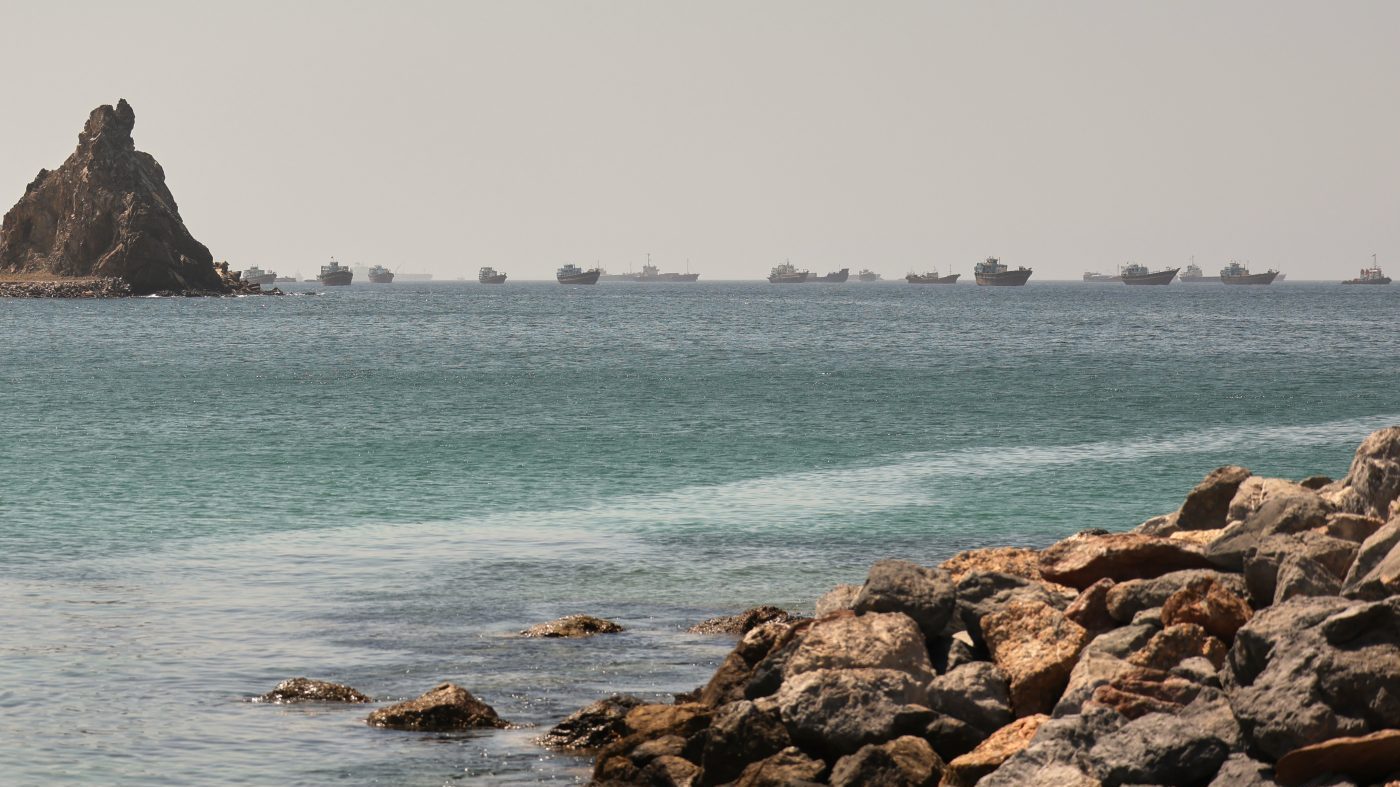
U.S. Central Command (Centcom) announced Saturday that its forces disabled a commercial cargo vessel in the Gulf of Oman after the ship attempted to run the naval blockade in the Strait of Hormuz. The action marks the latest escalation in the ongoing standoff with Iran, which has seen repeated clashes between U.S. forces and vessels linked to the Islamic Revolutionary Guard Corps (IRGC).
According to a Centcom statement, a U.S. fighter jet struck the stern of the Panama-flagged M/V Ocean Molica, also known as the ‘Arika Sun,’ with a precision munition. The strike fully disabled the ship’s propulsion but did not harm the crew. The vessel had previously departed an Iranian port and was trying to transit regional waters despite repeated warnings, Centcom said. Video footage of the strike was released by the command.

Centcom reported that since the blockade was reinstated on July 14, four ships have been disabled and 135 have been turned around. In addition, U.S. forces have destroyed 10 tankers linked to the IRGC’s multibillion-dollar shadow network during the same period. The command reiterated its advisory: “All mariners are advised to heed blockade warnings from Centcom forces.”
The incident comes as the conflict between Washington and Tehran enters its eighth month. On Saturday, the IRGC Navy’s press office claimed that a supertanker struck a mine while transiting the strait, according to the state-run Fars News Agency. Iranian officials have warned that if the conflict continues, “not even one drop of oil will be exported” from the strait or the broader Persian Gulf. The IRGC also cautioned that “a massive fire awaits any violating oil tanker that seeks to disregard the security and regulations of the Strait of Hormuz.”
President Trump has faced mounting pressure over rising gasoline prices, which hit a national average of $4.36 per gallon on Sunday, according to AAA. The White House has attributed the price spike to refinery issues rather than the blockade, a claim that has drawn skepticism from analysts. Trump said Thursday that discussions with Iran have been “productive” and that he will not attack the regime before the November midterm elections, after days of speculation about possible strikes.
A White House official told The Hill earlier this week that the U.S. “is in a very strong position with control of the Strait of Hormuz and the Iranian economy collapsing.” The administration has continued its economic pressure campaign and naval blockade in the Arabian Sea, but Iranian forces have kept striking commercial tankers attempting to transit the strait.
The strategic waterway is critical to global oil supplies, with roughly 20 percent of the world’s petroleum exports passing through it. Iran effectively shut down the strait in the days after the conflict began on Feb. 28, briefly lifting the closure when peace talks seemed to resume, but tensions have remained high.
In a related development, the USS Theodore Roosevelt, a Nimitz-class aircraft carrier, is sailing toward the Middle East to relieve the USS George Washington. The carrier rotation underscores the continued U.S. military commitment to the region. For more on how adversaries are adapting to U.S. strength, see Washington's foes going sideways. Meanwhile, the administration’s stance on Iran has also influenced other policy decisions, such as unblocking military aid to Egypt.
The blockade has also drawn attention to broader military strategy, including planned cuts to top brass and the new Arctic military edge from a Greenland pact. As the standoff continues, the impact on global energy markets and regional stability remains a key concern for policymakers.