Attorney General Todd Blanche on Tuesday deflected repeated questions about the government's scrutiny of Nvidia CEO Jensen Huang, including an alleged relationship with a suspected Chinese intelligence asset and potential violations of semiconductor export rules.
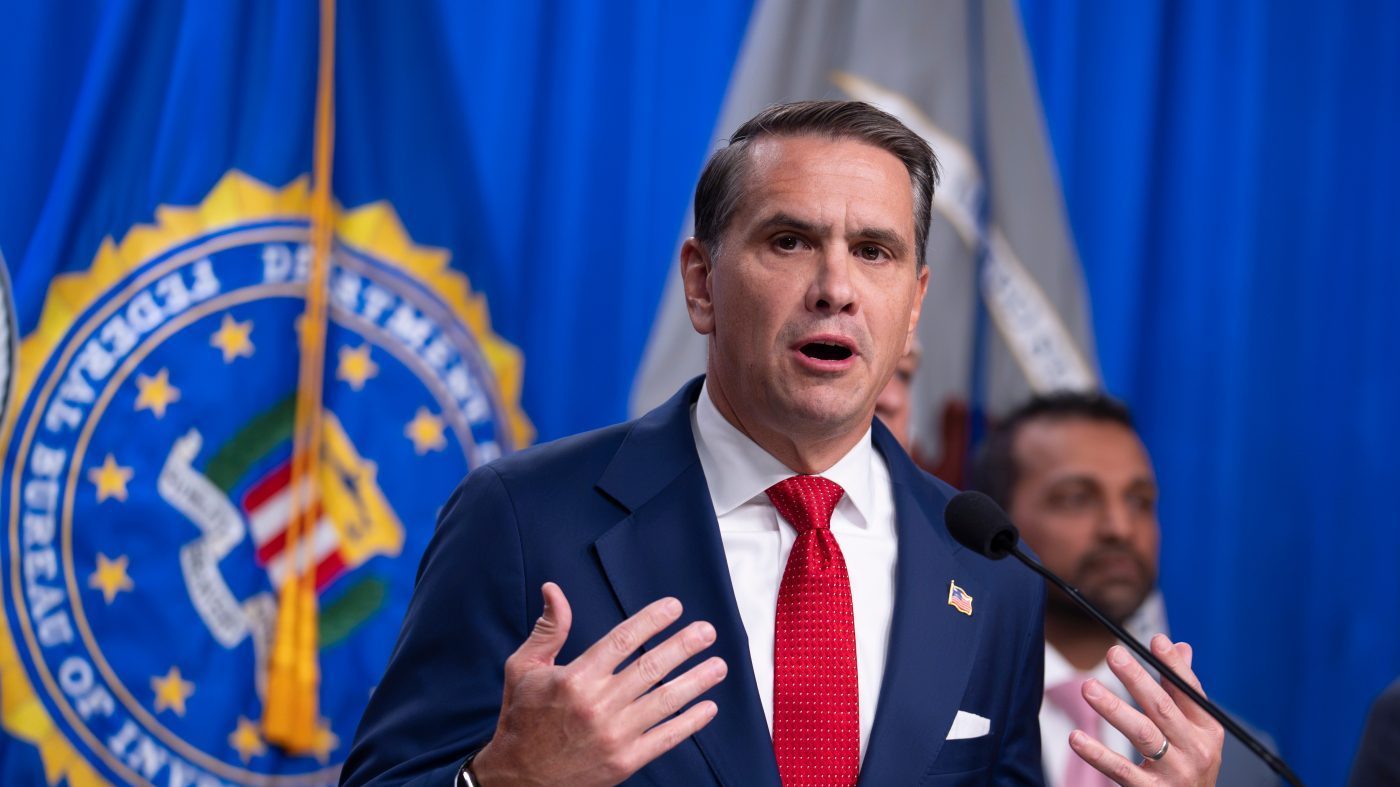
Speaking at a press conference focused on cybercrime, Blanche was pressed on President Trump's assertion a day earlier that Huang had been "exonerated" following unspecified federal inquiries. Trump made the comment during a CNBC interview and on Truth Social, where he stated there was "no reason to believe" Huang posed a national security risk.

When asked directly whether the Department of Justice had investigated Huang, Blanche said, "What the president said is that he talked to a lot of people going into the decision that he made to encourage the board to reinstate him." He added, "I'm not going to get into communications I have with the president about it. What he was saying was true, right? What he was saying is exactly right, which is that, to the extent that the Department of Justice had information that he was committing crimes or something like this, that's something that I would have certainly told the president had it been true."
Reporters pressed again, and Blanche responded, "What does that mean? Had Huang been investigated? For what? I don't understand the question … even the reporting from the various leaks or sources or whatever that was out there, didn't suggest Huang himself was under some sort of investigation. At least not that I saw."
The DOJ and Commerce Department have confirmed they are investigating Megaspeed, the Singapore-based data center firm at the center of the controversy, but have not detailed any specific probes into Huang or Nvidia. Congressional scrutiny is intensifying as lawmakers from both parties vow to examine the national security implications.
Trump, in his CNBC interview, said of Huang: "Well they did a study, they did a pretty good investigation, and they felt that he, himself, was exonerated … I don't know what word to use." He also wrote on Truth Social that the government "does not possess evidence that he has engaged in any unlawful conduct."
The president has taken credit for Nvidia's board reversing its decision to accept Huang's resignation, which came less than two weeks earlier amid revelations of his affair with Alice Huang, a former Megaspeed executive suspected by U.S. intelligence of gathering information for China. The board unanimously voted to reinstate him as CEO and president, just days after telling investors it was not considering his return. Reports detail how Trump and Wall Street pressure shaped that decision.
On export controls, Blanche told a reporter, "I don't know what you're talking about. We have hundreds, if not more, export investigations going at any time" at the DOJ. He affirmed on Nov. 12 that the department has a role in probing potential violations of chip export laws, many of which are "ongoing," but declined to comment on specific cases.
Blanche also refused to share intelligence community findings about Alice Huang, saying it "is not something that we should be sharing with the media." He added, "Nvidia is a good corporate citizen. That's not … that shouldn't be groundbreaking."
Lawmakers have scheduled hearings on the matter, including a Senate testimony set for Dec. 3, as the political fallout continues to unfold.