For two years, I've described Washington as CACO—Congress Always Chickens Out. Now, with voters demanding change, Congress faces its first real test: whether to investigate the abrupt reinstatement of Jensen Huang as Nvidia's CEO, a move that raises serious national security questions. Lawmakers can use their Article I powers to uncover what happened, or they can again retreat.
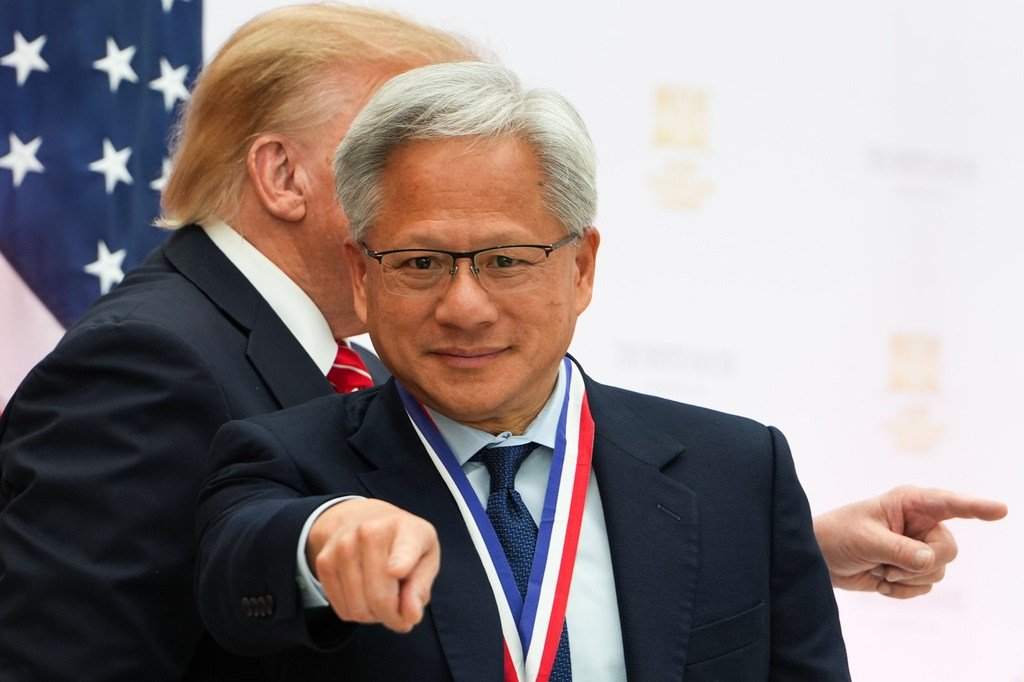
Huang resigned less than two weeks ago amid allegations of an affair with a woman U.S. intelligence believes is a Chinese asset, plus affairs with two Nvidia executives. But on Monday, the board reversed course, citing "input from senior levels of the United States government." President Trump boasted that he personally persuaded the board, dismissing questions about the woman's contacts with China's Ministry of State Security.
According to the New York Times, U.S. intelligence tracked her interactions with an MSS officer from spring 2025 to this fall. Her business partner also had ties to the agency, and her company is suspected of supplying Nvidia chips to Chinese military contractors. After Nvidia's stock plummeted, the administration set aside these concerns and vouched for Huang. Such a swift override of intelligence professionals, without explanation, undermines trust in the intelligence community.
If the president claims a thorough investigation cleared Huang, the administration should share it with Congress. So far, it has provided little intelligence to Capitol Hill and postponed a briefing for senior national security staff. Who assured the board, and on what basis? These questions are more urgent after House Foreign Affairs Chairman Brian Mast (R-Fla.) revealed that the administration approved export licenses for over 879,000 advanced Nvidia and AMD chips to China, including for companies the Pentagon labels as Chinese military firms. Additionally, the president owned at least $12 million in Nvidia stock at the end of last year.
No administration should investigate itself, so Americans look to Congress. Voters made their frustration clear on Election Day. Republicans and Democrats should work together to get to the bottom of this and demonstrate they've heard those voters.
Some steps have been taken: Huang is scheduled for closed-door interviews with three House committees on Dec. 1 and a public Senate Banking Committee hearing on Dec. 3. But Congress should be bolder. Put witnesses under oath, ask tough questions, and summon Commerce Secretary Howard Lutnick, Director of National Intelligence Jay Clayton, and Attorney General Todd Blanche—whom the president consulted. If facts warrant action, such as tighter export controls on advanced chips, pass them.
Waiting for Democrats to take over in January is tempting, but Republicans have a chance to show independence from an administration voters rejected. If Congress intends to use its Article I powers, now is the time. Bipartisan fury is already mounting, and scrutiny grows as a shutdown looms.
This lame-duck Congress also faces other urgent tests: restoring Russia sanctions passed in September after the president waived them, and keeping the government open past Dec. 11.
The question is whether Congress will finally assert its authority or chicken out once more.
Jane Harman represented California's 36th District for nine terms and served as ranking member of the House Permanent Select Committee on Intelligence.