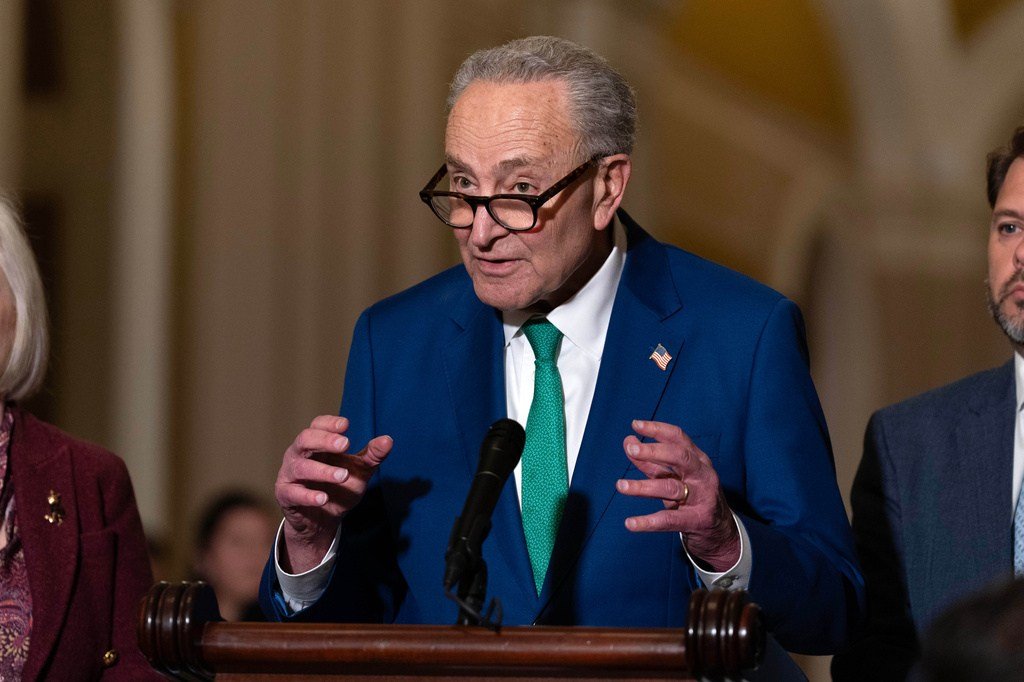
The push to replace Senate Democratic Leader Chuck Schumer with Sen. Chris Van Hollen (D-Md.) is gaining momentum, fueled by the argument that the party must heed the electorate's call for generational and policy renewal. Just as Schumer himself told President Biden in July 2024 that it was time to step aside for the good of the country, many Democrats now believe Schumer should apply that same logic to his own position.
Schumer's leadership was instrumental in the Democrats' stunning nine-seat Senate majority in November, a feat that included recruiting and supporting successful candidates in Ohio, North Carolina, Kansas, Alaska, South Carolina, Texas, Iowa, and Mississippi. However, critics argue that his continued leadership ignores the clear message voters sent: they want change, not the status quo.

“I think the American public spoke loud and clear about what they wanted to see in the country and from this new generation of leadership,” said Sen. Elissa Slotkin (D-Mich.), endorsing Van Hollen. “Not marginal change, not small nibbling at the edges.”
At 67, Van Hollen is younger than the 76-year-old Schumer and is seen as more in tune with younger voters, particularly on issues like the Israeli-Palestinian conflict, where he has expressed willingness to condition military aid to Israel. His backers argue that Van Hollen offers a fresh face and a stronger messenger for the party's agenda.
Schumer's record is not without blemishes. He made strategic missteps in Maine and Michigan, and some argue that with more resources in Florida and Louisiana, Democrats could have flipped even more seats. But the core of the challenge is about the future, not the past.
“Politics is about getting things done,” wrote Bill Press, a prominent progressive commentator, in a column supporting Van Hollen. “And politics is also about knowing when to step down and pass the torch.”
Schumer has defended his record, pointing to his role in passing key legislation and his ability to navigate a divided government. He has also vowed to continue leading the party's investigations and legislative battles, as seen in his commitment to a full Democratic probe into the Huang reinstatement.
The leadership race comes as Senate Democrats weigh broader strategic questions, including potential changes to the filibuster and how to counter President Trump's agenda. With the House already under new leadership, the Senate race is the last major piece of the Democratic leadership puzzle.
As the vote approaches, the outcome remains uncertain. But the challenge itself signals a party in transition, one that is grappling with the very demands for change that propelled it to victory.