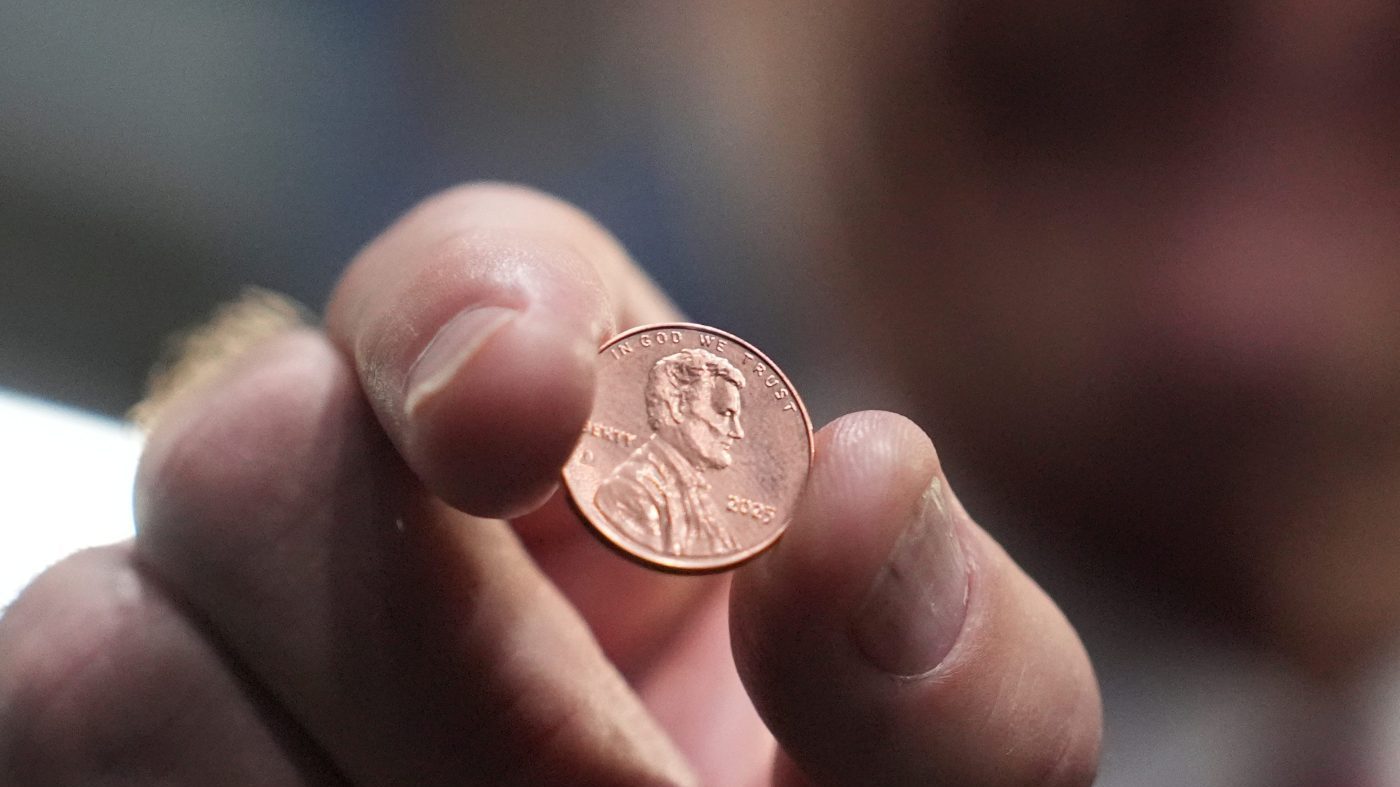
President Trump on Friday signed the Common Cents Act, cementing the end of penny production and delivering a long-sought victory for fiscal conservatives who have long argued the coin costs more to make than it's worth.
The law, which passed the House by voice vote and cleared the Senate without objection, makes permanent a halt in penny minting that the U.S. Mint had initiated about a year ago. According to bill sponsor Rep. Lisa McClain (R-Mich.), the change will save taxpayers roughly $85 million annually—the gap between production costs and the coin's face value.

"In a single year, making pennies cost taxpayers $85 million more than the coins were worth. That ends now," McClain wrote on X, celebrating the legislative win.
Pennies remain legal tender, and the Treasury Department estimates that about 114 billion are still in circulation. The Mint will continue to produce a limited number for collectors, but the new law is expected to cut material costs by about $56 million per year.
The legislation also grants the Mint flexibility to alter the composition of nickels, which currently cost around 13 cents each to produce and distribute—more than double their face value. That provision could lead to further savings down the road.
Cash rounding gets a federal standard
For the past year, retailers have struggled with how to make change when pennies ran short. The new law establishes a uniform framework: businesses may round cash transactions to the nearest nickel when they cannot provide exact change. For example, a $10.01 purchase could round down to $10, while $10.08 could round up to $10.10. Retailers may also choose to round in the customer's favor, such as bringing $10.08 down to $10.05.
Scott Zietlow, CEO and president of Kwik Trip, praised the clarity. "As a retailer, I am grateful to have established legal guidance on rounding cash transactions," he said. "Every cash transaction that we processed in recent months was a reminder that we needed more clarity from the federal government. We've now got that clarity."
Credit card payments, gift cards, and other noncash transactions are unaffected by the new rules.
The move aligns with broader efforts to reduce government waste, a theme Trump has championed in his second term. While the penny has long been a symbol of American history, its practical value has diminished, and critics have pointed to the environmental and economic costs of production.
The law takes effect immediately, and the Mint is expected to wind down remaining penny production for general circulation. Collectors can still obtain pennies through the Mint's numismatic program.
As the change takes hold, consumers may notice fewer pennies in their change, and businesses will adjust their cash handling procedures accordingly. The Treasury Department has indicated it will provide guidance to retailers on implementing the rounding standard.