The federal government's recent history of shutdowns—including a 43-day closure last fall and a 76-day funding lapse at the Department of Homeland Security earlier this year—has left federal workers without pay, forced some to rely on food banks, and even pushed one employee to sell plasma to cover basic expenses. These are the two longest shutdowns in American history, both occurring within the last ten months.
The crisis is entirely preventable, according to supporters of the Prevent Government Shutdowns Act, a bipartisan bill backed by Senator James Lankford (R-Okla.) and Senator Maggie Hassan (D-N.H.). The legislation would automatically fund the government at current levels in two-week increments if Congress misses a funding deadline, while also barring lawmakers from leaving Washington or taking up unrelated business until full-year appropriations are enacted.
“Americans are tired of worthless government shutdown drama and Congress using federal workers and government services as pawns in political standoffs,” Lankford said. Hassan echoed that sentiment, calling the bill a “commonsense, bipartisan” way to incentivize on-time funding.
The modern shutdown is not a constitutional requirement but a legal accident. For most of U.S. history, funding gaps did not stop agencies from operating. That changed in 1980, when Attorney General Benjamin Civiletti reinterpreted a 19th-century law and ruled that agencies without appropriations must cease operations and furlough employees. Since that opinion, the government has partially or fully shut down more than a dozen times.
Early shutdowns were brief and mostly sent workers home. But the two most recent ones forced most federal employees—including TSA officers, food inspectors, and correctional officers—to work without pay for weeks or months. “That is not how any employer is supposed to treat the people who serve it, let alone the U.S. government, likely the largest and best-resourced employer in the world,” wrote Everett B. Kelley, national president of the American Federation of Government Employees, in a recent op-ed.
Critics of the bill worry that automatic funding could remove pressure to pass full-year budgets, letting stopgaps renew indefinitely. But the bill’s authors built in a response: Congress cannot recess, travel, or consider other legislation until appropriations are complete. “Members of Congress do not want to be locked down in Washington and prevented from working on other important matters,” Kelley noted.
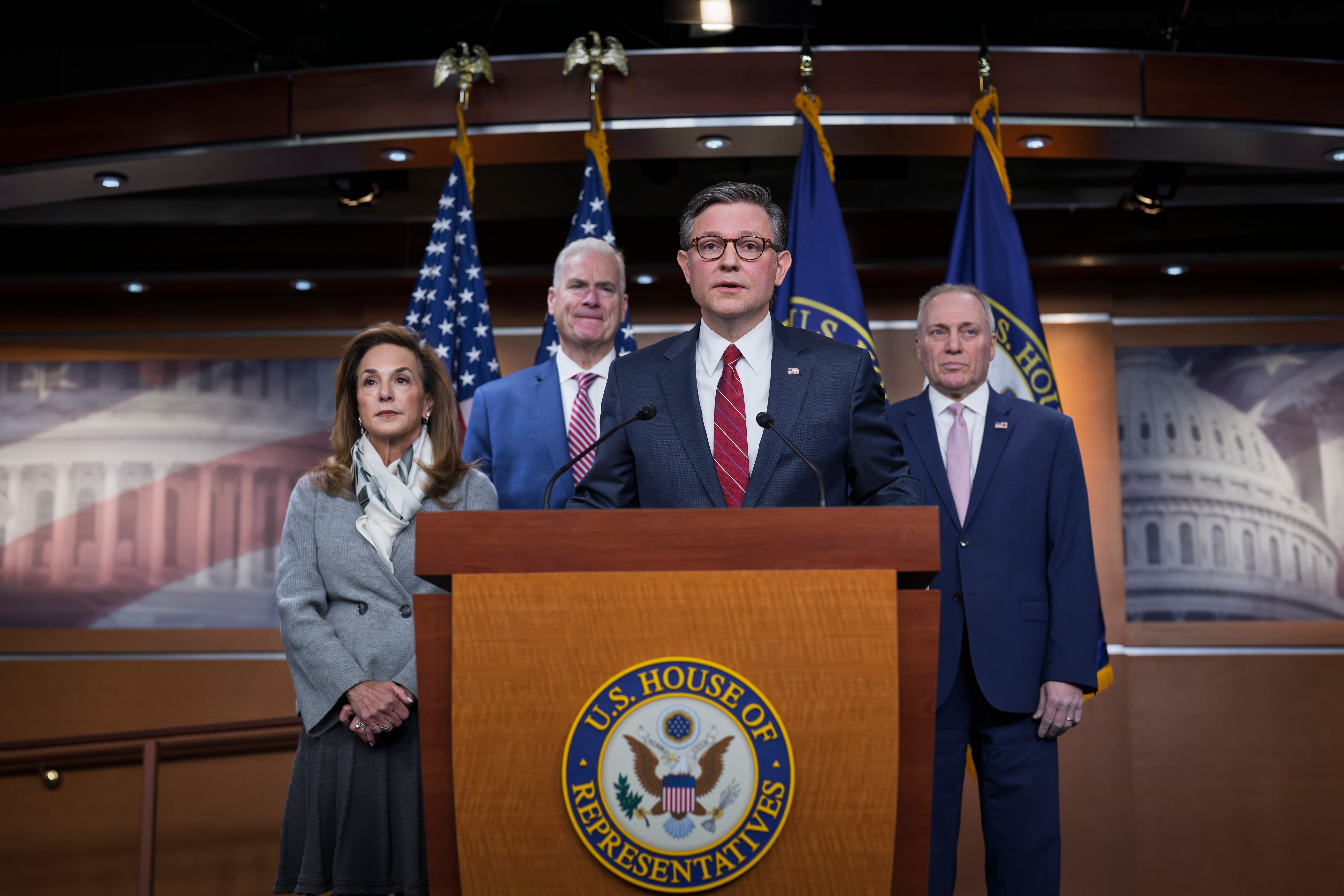
Congress is expected to take up a stopgap funding bill soon to keep the government open through the midterm elections. While such short-term fixes are far from ideal, they are preferable to a shutdown. But as House Republicans prepare a stopgap bill to avert a shutdown, the underlying problem remains: shutdowns are becoming longer and more frequent at a time of intense international competition and conflict.
Federal employees ask only to be paid on time for the work they are required to do. The Prevent Government Shutdowns Act would make that request unnecessary. “Congress should pass the bill and make sure that request never needs to be made again,” Kelley concluded.