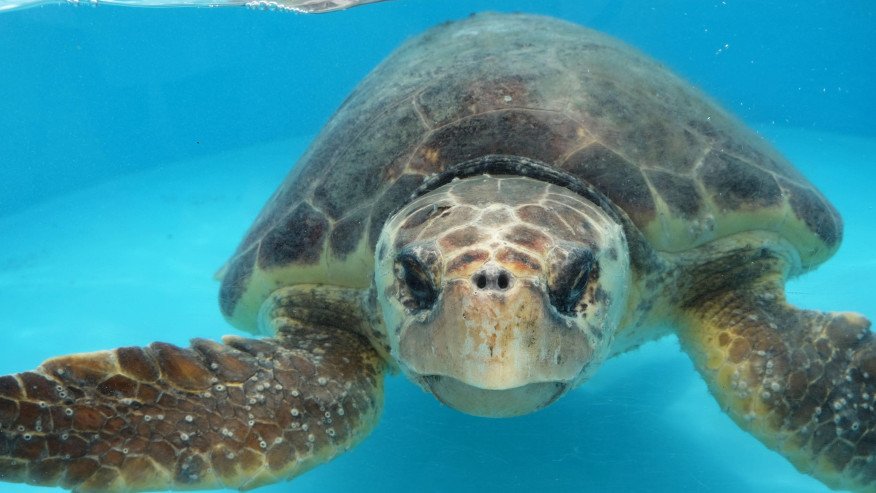
China’s Ministry of State Security has leveled a striking allegation: foreign intelligence agencies are turning marine life into unwitting spies. In a Friday post on the social media platform WeChat, the ministry described an “invisible secret war” unfolding beneath the waves, with overseas operatives deploying a growing arsenal of novel espionage tools to harvest sensitive data from Chinese waters.
The ministry’s statement, reported by NewsNation, warned that “overseas spy intelligence agencies continue to collect and steal sensitive data from our ocean through a variety of new spy devices.” While the post did not name specific countries, the accusation fits into Beijing’s broader narrative of foreign meddling and national security threats, often targeting the United States and its allies.
The claim of “spy turtles” and other marine animals being used for surveillance is a dramatic escalation in China’s public security messaging. State media and analysts have previously flagged concerns about underwater drones and seabed sensors, but the suggestion that living creatures are being weaponized adds a new, unsettling dimension. The ministry did not provide evidence or examples of such operations, leaving room for skepticism among international observers.
This development comes amid heightened tensions over technology and data security. Recently, the Trump administration’s Department of Justice backed Elon Musk’s xAI in a Memphis air pollution case, citing national security, illustrating how espionage and tech competition increasingly overlap. Similarly, 203 state lawmakers urged Congress to block an AI preemption provision, reflecting broader concerns about data sovereignty and foreign access.
China’s focus on ocean espionage is not new. For years, Beijing has invested heavily in its own underwater surveillance capabilities, including a network of seabed sensors and autonomous underwater vehicles. The ministry’s latest statement may be aimed at justifying tighter controls over maritime research and data collection, potentially restricting foreign scientific vessels and environmental monitoring projects.
The “invisible secret war” language echoes Cold War rhetoric, but the context is distinctly modern. As global powers race to secure undersea cables, rare earth minerals, and strategic shipping lanes, the ocean floor has become a new frontier for intelligence gathering. The EU’s push to fast-track Ukraine’s membership also underscores how security concerns are reshaping alliances and priorities worldwide.
For now, the claim about marine life espionage remains unsubstantiated. But the message is clear: Beijing sees every corner of its territorial waters as a potential battleground, and it is ready to cast foreign actors as the aggressors in this underwater shadow war.