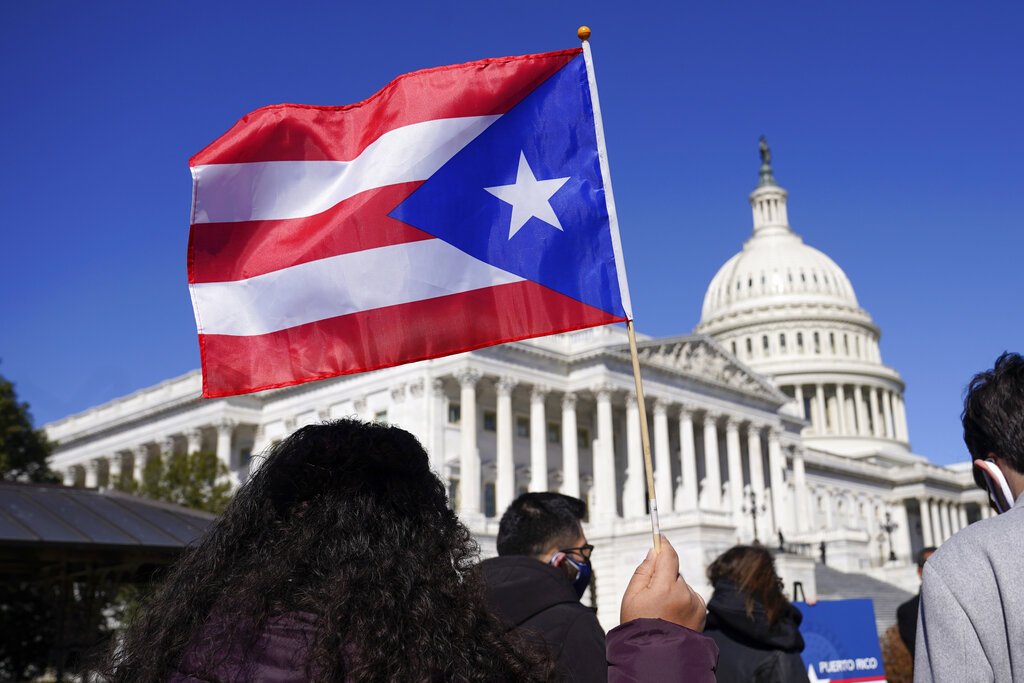
With control of the U.S. House hanging by a thread, Republicans are being told to rethink their stance on Puerto Rican statehood or risk losing the chamber in the 2026 midterms. The call comes from José Fuentes, former attorney general of Puerto Rico and chairman of the Puerto Rico Statehood Council, who argues that Puerto Rican voters—the second-largest Hispanic voting bloc in the country—are a natural fit for the GOP if the party drops its reflexive opposition to statehood.
Fuentes points to a new poll conducted by McLaughlin and Associates, President Trump's own pollster, which shows overwhelming support for statehood among Hispanic and Puerto Rican voters. The survey, released on July 15, found that 68% of Hispanic voters and 71% of Puerto Ricans back statehood. More striking for Republicans: 78% of Republican Puerto Rican voters approve of statehood, compared to just 13% who disapprove. That support is actually higher than among Democratic Puerto Rican voters, where 69% approve.
The data suggests that embracing statehood could be a winning issue for the GOP, particularly in competitive districts. According to the poll, 68% of Republican Puerto Ricans say they are more likely to vote for a candidate who supports statehood. Fuentes argues this is a signal that the party can win over these voters without sacrificing its principles, especially since Puerto Rico's governor and legislative leaders are Republicans, and the island's residents share conservative priorities like a strong military, tough-on-crime policies, and traditional family values.
Despite this apparent alignment, the GOP has long been seen as hostile to statehood, with figures like Sen. Mitch McConnell dismissing the idea. Fuentes says this opposition is outdated and hands Democrats a free opening to claim the issue. Both Vice President Kamala Harris and DNC Chair Ken Martin have recently voiced support for statehood, signaling that Democrats are already courting Puerto Rican voters on this issue.
The stakes are high. Roughly 6 million Puerto Ricans live in the 50 states, with significant populations in Pennsylvania, Georgia, North Carolina, Texas, Florida, and New York. In swing districts, even a few thousand Puerto Rican votes could decide the outcome. Fuentes highlights Pennsylvania's 7th District, where freshman Rep. Ryan Mackenzie (R) narrowly won in 2024 and faces a tough reelection. That district is about 20% Puerto Rican and Dominican, and the Cook Political Report rates it as a toss-up.
According to the Cook Political Report, 12 of the 38 swing House districts are at least 20% Hispanic. Fuentes argues that if Republicans can effectively reach Puerto Rican voters with a message of support for statehood, they could win just enough of these seats to keep control of the House in 2027. He emphasizes that the party doesn't need to make statehood a centerpiece of its campaign—it simply needs to stop attacking it.
The poll also aligns with broader voter sentiment ahead of the midterms. A recent poll showing 60% of voters want pragmatic solutions over ideological fights suggests that taking a clear, positive position on statehood could resonate beyond just Puerto Rican voters. However, the GOP's stance on other issues, such as data center backlash threatening US AI leadership, may also factor into suburban swing districts.
Fuentes warns that if Republicans cede the statehood issue, Democrats will claim credit for it when they next hold full control of Washington—and they will do so with voters who, according to this poll, are already primed to reward Republicans first. The clock is ticking, and the party must decide whether to embrace a winning issue or continue to alienate a key voting bloc.