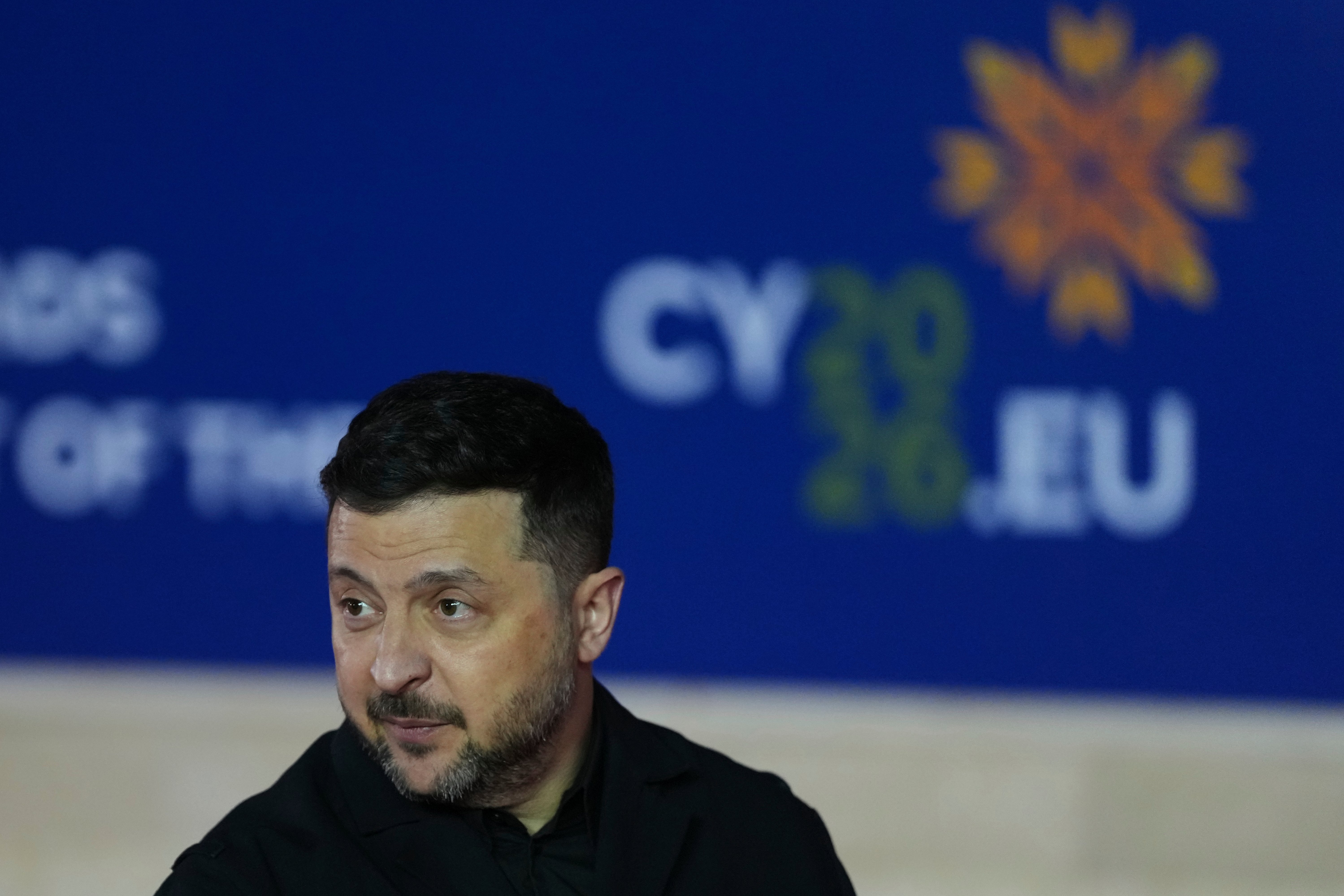
European Union member states have finally agreed to open formal accession talks with Ukraine and Moldova, but the pace must now shift from cautious diplomacy to urgent action. The message to Moscow must be unequivocal: Ukraine will join the EU, and soon.
After years of procedural foot-dragging, the bloc's consensus to begin negotiations on democratic standards and rule of law marks a significant shift. It reflects a growing recognition of the geopolitical stakes created by Russia's full-scale invasion. Ukraine is no longer a buffer state or a perpetual candidate; it is now central to Europe's future security and democratic identity.
Europe's Awakening to Strategic Reality
Since the Trump administration curtailed military aid, European governments have stepped up weapons deliveries and tightened sanctions against Russia. The continent has demonstrated unexpected resilience and strategic coherence, while Russia's heavy battlefield losses have become a serious liability for Vladimir Putin. Ukraine's military performance is arguably the most impressive European success in decades.
The old EU enlargement model—a slow, technocratic process focused on harmonizing standards and fighting corruption—assumed Europe had the luxury of time. That assumption has collapsed under the weight of demographic decline, Brexit, political fragmentation, and populist pressures. The bloc now faces existential strain, compounded by the Trump administration's hostility and the rise of illiberal forces within Europe itself.
Ukraine as a Security Producer, Not Just a Consumer
Ukrainians are fighting and dying for the chance to join the liberal democratic West, even as many Western democracies question their own values. The accession process must be reconceived as a strategic necessity, not an endless bureaucratic probation. Fast-tracking Ukraine sends a clear signal to both Russia and the Trump administration that Europe is serious about its own defense.
Ukraine's army is now among the most battle-tested in the world, with drone warfare capabilities that are reshaping modern combat. European militaries are learning from Ukraine in real time. As an EU member, Ukraine would instantly become Europe's leading military power—a producer of security, not just a recipient. This reality underscores the absurdity of Europe's continued dependence on the United States for protection against a Russian economy roughly the size of Italy's.
Given Trump's wavering commitment to NATO, major European powers are already rearming: Germany, Poland, France, and Britain are all scrambling to rebuild military capacity. Accelerating Ukraine's membership is a logical extension of this strategic awakening.
Deterrence and Consequences for Russia
Putin launched his war partly to prevent Ukraine from escaping Russia's sphere of influence. Fast-track EU membership must be understood as the price Russia pays for its aggression. If peace negotiations eventually require painful territorial concessions in the occupied east, rapid integration into the EU would help compensate for those losses politically and psychologically. A sovereign, democratic Ukraine anchored irreversibly inside Europe would represent a historic strategic defeat for Putin, even if he clings to fragments of occupied territory.
Polls already indicate that some Ukrainians, especially younger ones exhausted by war and uncertainty, are beginning to lose faith in Europe's promises. Europe cannot afford that erosion. The gap between rhetoric and reality is corrosive.
This is also a moment for Europe to rediscover its strategic and moral purpose. Ukraine offers a chance to demonstrate that the EU stands for something beyond regulation and procedure. Millions of Ukrainians are risking their lives because they believe Europe still represents liberal democracy. Europe must not let them down.