In July 2022, just five months after Russia's invasion of Ukraine, analysts warned that a revolution in military affairs was underway. Two weeks later, they faced heavy pushback from critics urging them to “stop saying war has changed.” But the evidence is now overwhelming: war has changed.
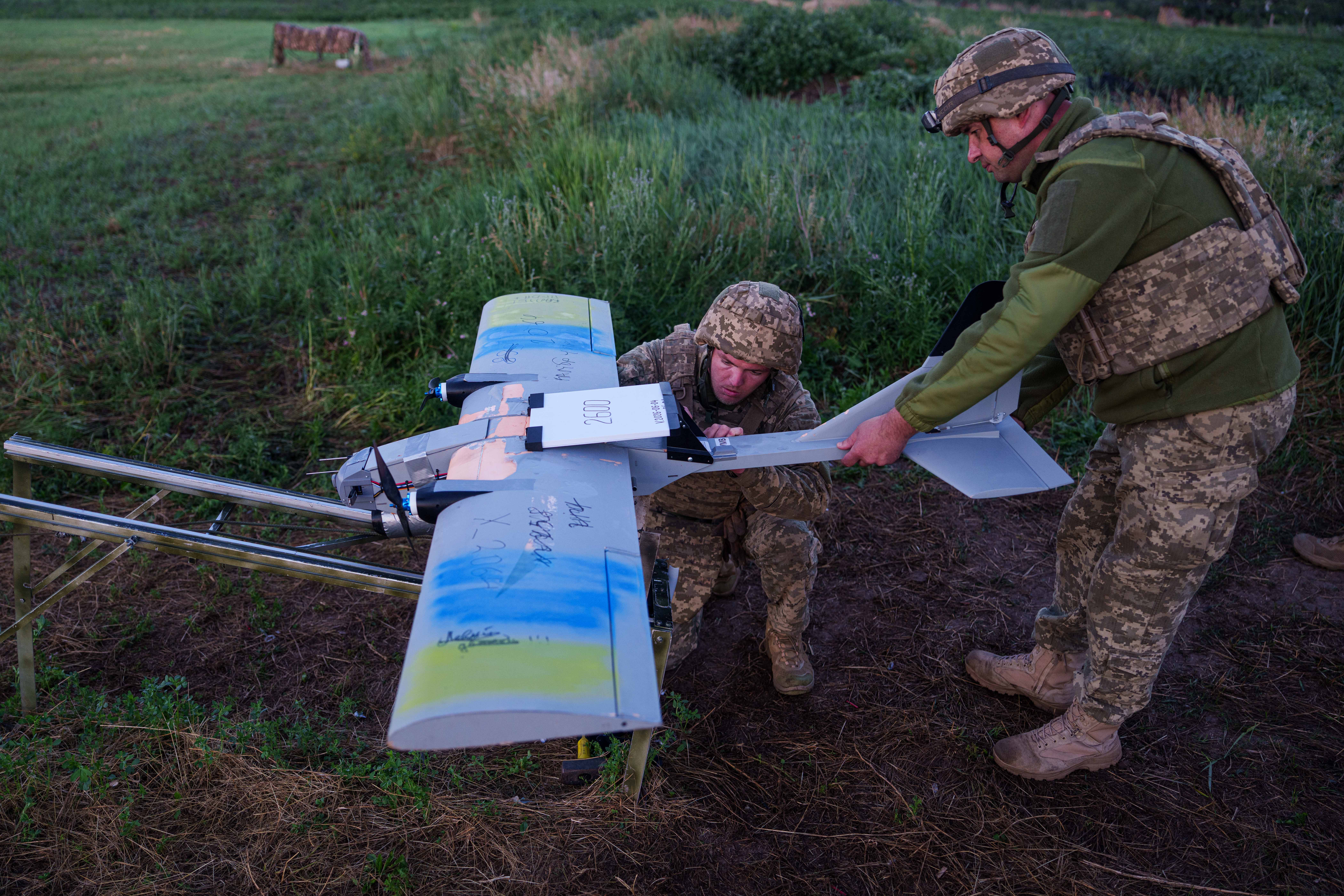
Ukraine is deploying drones for deep-strike missions and enveloping Russian forces in kill zones stretching 10 to 20 miles along the frontlines. Meanwhile, Iran's drone tactics are proving effective against fixed U.S. military positions in the Persian Gulf. Retired U.S. Army Gen. David Petraeus, former CIA director, has described Ukraine's unmanned aerial vehicle operations as “a whole new concept of warfare,” noting that “the real genius is how they’re pulling it all together” by integrating surveillance, targeting, and strike capabilities into a unified platform. With artificial intelligence, Petraeus envisions “algorithmically piloted drones that you can’t jam,” further transforming frontline combat.
Petraeus also warned that “in some Western countries right now, they think that innovativeness is giving 50 drones to an armored battalion.” His prescription: “No. What we should do is scrap the armored battalions and replace them with a drone battalion.” While armored units still have a role, the thinking is indeed revolutionary.
A true revolution in military affairs requires three elements: technological change, doctrinal change, and organizational change. Ukraine's conflict meets all three. Kyiv has established a separate Unmanned Systems Force to conduct devastating precision strikes against Russian oil and gas infrastructure and distribution hubs. As Ukraine's defense pact with the U.S. includes plans for a drone factory, the pace of innovation only accelerates.
Russia's poor defensive posture has enabled these successes, with strikes reaching near Moscow and Saint Petersburg. But Petraeus is deeply concerned about the U.S. military's ability to defend against drones, especially AI-controlled “drone swarms,” which he calls “very, very worrisome.” Iranian drones are already causing headaches for U.S. Central Command, which is burning through interceptors at a high rate. A new report from the Center for Strategic and International Studies estimates that the U.S. has consumed up to 66 percent of its prewar Patriot interceptor stockpiles and 62 percent of its THAAD interceptors since the war with Iran began on Feb. 28.
These systems protect U.S. forces and facilities across the Middle East, but the rapid depletion has sparked concern on Capitol Hill about a strategic vulnerability in the Indo-Pacific, particularly regarding China and Taiwan. China hawks, led by Vice President JD Vance and Undersecretary of State Elbridge Colby, are signaling that the U.S. cannot fight a war with Iran while deterring Beijing from breaking through the first island chain. But the authors argue that the U.S. must do both, as both threats stem from the same axis of adversaries.
China remains the larger strategic threat, but a nuclear Iran controlling the Strait of Hormuz and 20 percent of the world's oil supply is equally unacceptable. War is changing for China too, and the U.S. still holds powerful naval assets, including submarines, that give Beijing pause. But Washington must use that time wisely to address two converging threats: AI-driven drone warfare and the need for more defensive assets. The manufacturing bottleneck is real; scaling up production requires sustained, accelerated effort, not just funding. The U.S. cannot ignore underwater and space-based drones either.
Ultimately, national willpower is the missing ingredient. Harnessing it may require President Trump and Congress to declare a national emergency. The U.S. is at war, and the nature of that war will soon slip beyond its grasp if adaptation does not come quickly.