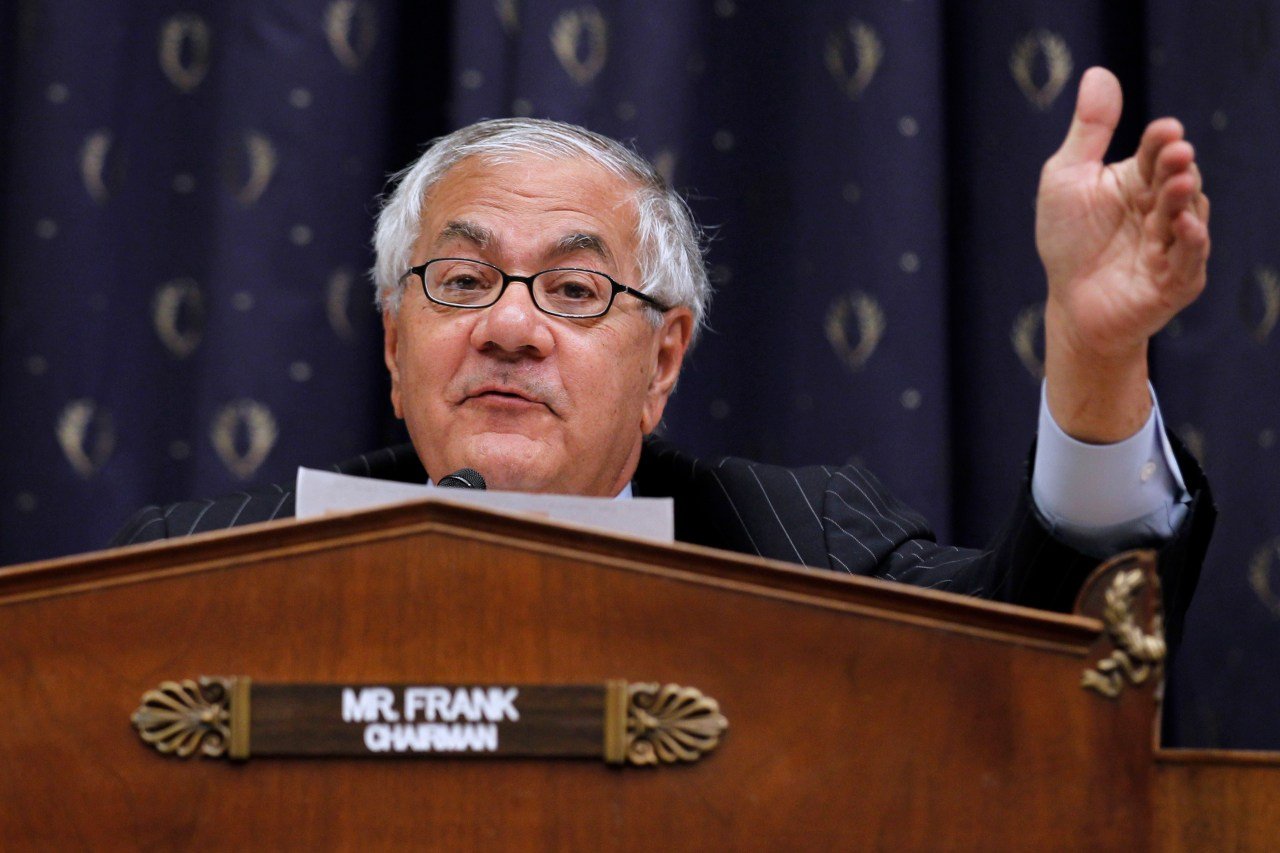
Barney Frank, the sharp-tongued Massachusetts Democrat who for decades was one of the most influential liberal voices in Congress—championing gay rights and rewriting the rules of Wall Street—died Tuesday at age 86. His death was confirmed by Jim Segel, a longtime friend and former campaign manager.
Frank represented Boston suburbs in the House for 32 years before retiring in 2013. He and his husband, Jim Ready, later moved to Ogunquit, Maine. Frank entered hospice care there in April due to congestive heart failure. He is survived by Ready, his sisters—including veteran Democratic strategist Ann Lewis—and a brother.

A self-described “left-handed gay Jew,” Frank was known for his acerbic wit and combative style. He was a fixture of the party’s left flank but maintained close ties with Democratic leaders, sometimes to the chagrin of more progressive activists. His legacy is perhaps most defined by his pioneering role in LGBTQ+ rights: In 1987, he became the first member of Congress to voluntarily come out as gay, and in 2012 he became the first sitting lawmaker to marry a same-sex partner.
But in an interview as he entered hospice, Frank said he hoped to be remembered for a pragmatic brand of progressivism. “I hope I made the point that the best way to accomplish the improvements in our society that we need, particularly in making it less unfair economically and socially, is by conventional political methods,” he said. He warned that Democrats risked alienating voters by making “the most unpopular parts of your agenda” litmus tests—a dynamic he saw playing out as the party looks ahead to the 2028 primaries. Some observers have noted parallels to the internal tensions highlighted in recent races, such as the Georgia governor's race where candidates balanced progressive and moderate appeals.
Born in 1940 in Bayonne, New Jersey, Frank was drawn to politics after the lynching of Emmett Till. He volunteered in Mississippi during the 1964 Freedom Summer, though he later joked that his rapid, New Jersey-accented speech made him “largely incomprehensible” to rural Mississippians. He entered elected office in the Massachusetts House in 1972 and was elected to Congress in 1980, a grim year for Democrats as Ronald Reagan won the White House.
Frank’s pragmatic streak surfaced early. He pushed Speaker Tip O’Neill to confront Reagan more aggressively but often sided with O’Neill’s less confrontational approach. In 1986, he initially opposed a major tax overhaul but switched his vote after securing a deal to expand affordable housing tax credits. “I was happy to sacrifice my ideological purity to improve legislation that was going to become law with or without me,” he wrote.
Former House Speaker Nancy Pelosi called Frank “an idealist to the nth degree.” She added, “The goals, the vision, the promise of it all—nobody could ever surpass what he brought to the table in that regard.” His legacy also includes the Dodd-Frank financial reforms, co-authored with Senator Chris Dodd, which imposed sweeping new regulations after the 2008 crisis—a topic that remains contentious as debates over financial oversight continue, much like the tech-driven distortions that some officials warn now undermine democratic trust.
Frank’s path was not without scandal. In 1987, the House reprimanded him for poor judgment involving a male prostitute he had hired. Republican whip Newt Gingrich pushed for a harsher censure but failed. Years later, House Majority Leader Dick Armey called Frank “Barney Fag” on the House floor, later apologizing. Through it all, Frank remained a formidable figure, helping secure AIDS funding and pressing the Clinton administration to lift the ban on gays in the military—a fight that foreshadowed later battles over inclusion.
Frank’s death marks the end of an era for a generation of Democrats who remember his sharp tongue, his legislative heft, and his insistence that progress requires winning elections, not just arguing for purity. As the party looks toward 2028, his warning against making unpopular litmus tests may resonate anew, especially as potential front-runners grapple with redistricting and coalition-building.