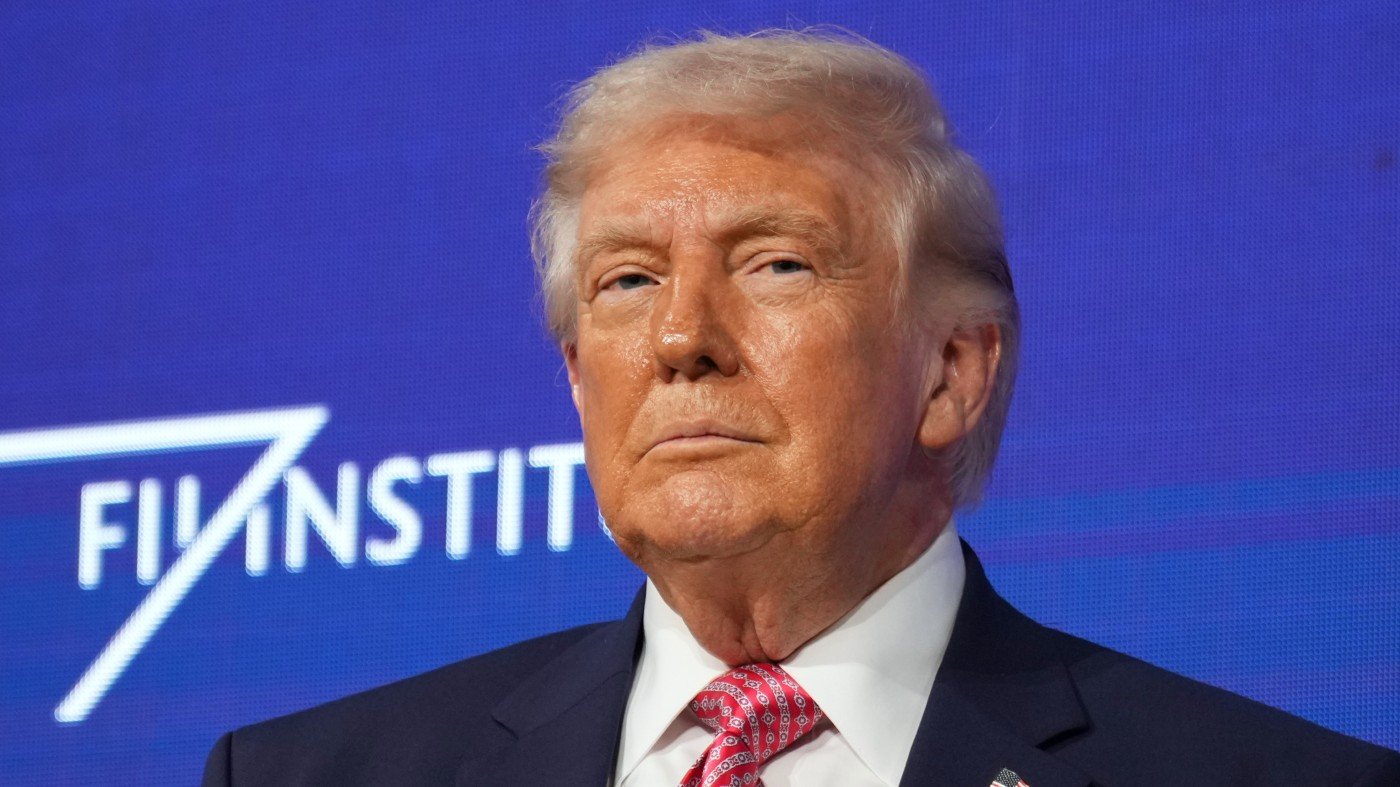
President Donald Trump used a platform at a major Saudi Arabian investment conference in Miami on Friday to declare the United States had achieved decisive victories against Iran and to signal that his administration may turn its attention next to Cuba. Speaking to the Future Investment Initiative, the president framed recent military actions as having fundamentally weakened a longtime regional adversary.
"For 47 years Iran has been known as the bully of the Middle East, but they're not the bully any longer. They're on the run," Trump told the audience, which responded with measured applause. He asserted that without U.S. strikes last year, Iran would have possessed a nuclear weapon "within two to four weeks," a program he claims was set back years. "They would have used it on you, and on Israel, and on everyone else," he said, directing his comments to the Saudi attendees.
Shifting Focus and Criticizing Allies
The president's remarks, largely centered on Middle East policy, took a sharp turn as he identified Cuba as a potential future target. "And Cuba is next by the way, but pretend I didn't say that," Trump stated, before theatrically asking the media to disregard the comment. This follows his administration's continued pressure on Havana and actions in Venezuela, suggesting a renewed focus on Latin American regimes his administration deems hostile.
Trump also reiterated longstanding grievances with NATO allies, criticizing the alliance for what he characterized as a lack of support in confronting Tehran. This criticism comes amid his broader push for allied nations to increase defense spending, a theme consistent with his first term and his recent rebukes of domestic funding bills he views as insufficient for security priorities.
Comments on Saudi Leadership and the Economy
In a notable departure from typical diplomatic language, the president recounted private conversations with Saudi leaders in a manner that appeared to mock them. He quoted an unnamed senior Saudi figure as being surprised by U.S. resilience. "He didn't think he would be kissing my ass. He really didn't," Trump said to the forum attendees. "He thought [I'd] be just another American president that was a loser with a country that is going downhill. But now he has to be nice to me."
Trump sought to project unwavering confidence in the U.S. economy despite global volatility fueled by conflict. "Our economy is booming again," he claimed, predicting a post-war economic surge. "When this war ends, it's gonna be like a rocket ship." His administration has taken other steps to manage economic pressures, including planning relief measures for the agricultural sector affected by rising costs.
The address marked Trump's second appearance before this forum during his current term. His first focused on the war in Ukraine and potential Saudi-mediated peace talks. This time, the spotlight was on the joint U.S.-Israel campaign against Iran's military infrastructure, a topic of direct interest to Saudi Arabia, which has faced attacks from Iranian proxies.
The president's combative foreign policy rhetoric and direct engagement with international business leaders underscore a governing style that frequently bypasses traditional diplomatic channels. This approach is mirrored domestically by efforts like the deployment of an official mobile app to communicate directly with his political base. The forum itself highlighted the deep, if complex, strategic partnership between Washington and Riyadh, a relationship Trump has both championed and used as a stage for blunt pronouncements on global affairs.