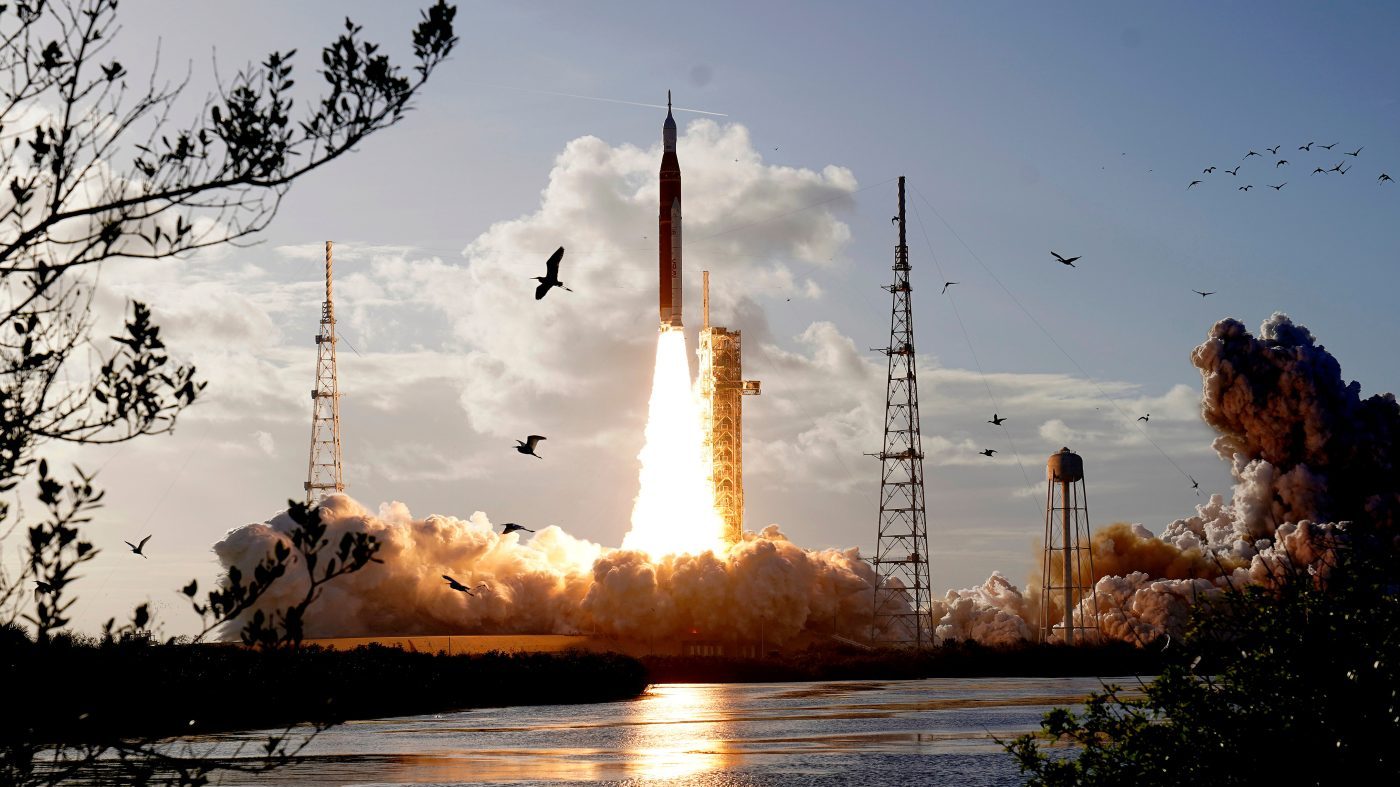
The four astronauts of NASA's Artemis II mission are set to claim a historic title: the humans who have traveled farthest from Earth. On their journey around the Moon, Commander Reid Wiseman, Pilot Victor Glover, Mission Specialist Christina Koch, and Canadian Space Agency astronaut Jeremy Hanson are projected to reach a point 252,799 statute miles from our planet. This distance, expected to be achieved on the mission's sixth day, will officially break the deep-space record held for over five decades by the crew of Apollo 13.
Surpassing an Apollo-Era Milestone
The previous record was set in 1970 during the aborted Apollo 13 lunar landing. Astronauts Jim Lovell, Jack Swigert, and Fred Haise traveled 248,655 miles from Earth as they looped around the Moon in a lifeboat scenario. The Artemis II crew will surpass that mark by more than 4,000 miles, a symbolic leap that underscores the renewed ambition of the U.S. lunar program. The mission represents the first crewed flight to the Moon since 1972.

According to NASA, the astronauts will dedicate much of their time at this farthest point to documenting the experience. They will photograph and film the lunar surface, recording observations as they become the first people to lay eyes on certain regions of the Moon. The trajectory itself is novel; as former astronaut and Senator Mark Kelly (D-Ariz.) noted prior to launch, the crew will travel approximately 4,000 miles beyond the far side of the Moon, a path distinct from the low lunar orbits of the Apollo era.
Limits of the Record and Future Ambitions
While a significant human achievement, the Artemis II flight will not break the overall distance record for the Orion spacecraft. During the uncrewed Artemis I test mission in 2022, an Orion capsule traveled 268,563 miles from Earth. This highlights that the current mission's parameters are carefully designed for crew safety and operational testing rather than pushing the absolute limits of the vehicle's range.
The record-setting distance is a stepping stone within NASA's broader strategic framework. The agency has framed its current efforts as part of a "Golden Age of innovation and exploration," with the Artemis program serving as the foundation for sustained lunar presence and, ultimately, crewed missions to Mars. This long-term vision involves establishing a permanent foothold on the Moon, as outlined in recent White House declarations on lunar ambition.
However, executing this vision is not without challenges. NASA continues to navigate significant institutional and programmatic hurdles within the Artemis program, balancing traditional government-led development with an increasing reliance on commercial partnerships. The success of Artemis II is critical for validating the spacecraft and operational concepts before more complex missions, including a lunar landing.
The exact final distance for Artemis II remains somewhat dependent on launch conditions and orbital mechanics, but the 252,799-mile target represents a calculated benchmark. It is a figure that deliberately eclipses the Apollo 13 milestone, providing a clear, measurable indicator of progress in human spaceflight after a half-century hiatus from lunar voyages.
For the astronauts and the international teams supporting them, the mission is about more than a number. It is a demonstration of renewed capability and a statement of intent. As the Orion capsule carries its crew on this record-breaking loop, it reaffirms the United States' commitment to deep space exploration while setting the stage for the next, more distant chapters in the human story beyond Earth.