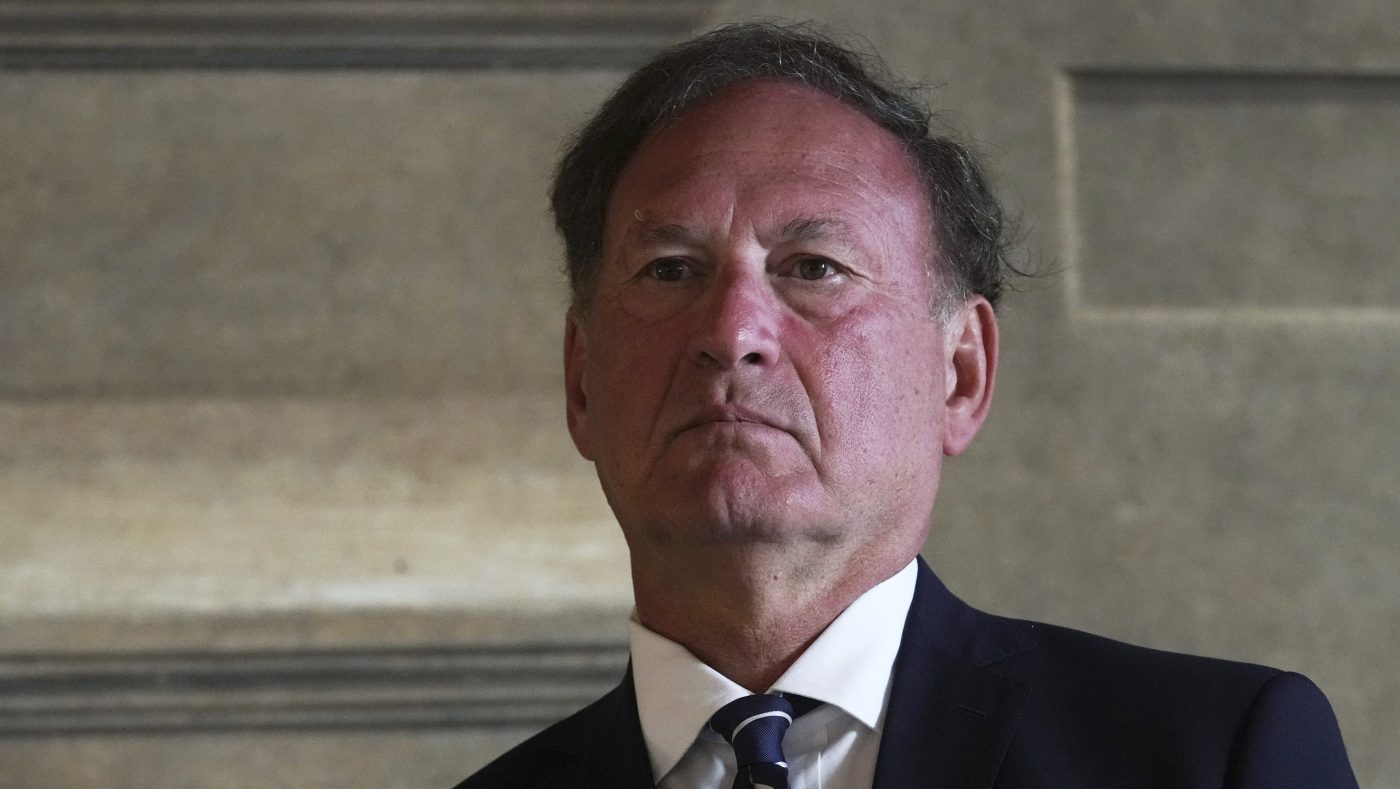
The Supreme Court's conservative majority delivered a sharp setback to asylum seekers Thursday, ruling 6-3 along ideological lines that the Trump administration can turn away migrants before they set foot on U.S. soil. The decision prompted a tense exchange on the bench, with Justice Samuel Alito visibly bristling as Justice Sonia Sotomayor read a scathing dissent aloud.
Alito, author of the majority opinion, began by briefly summarizing the court's position. But as Sotomayor took the floor for an extended reading of her dissent, the conservative justice leaned back in his chair, rocking slightly, his gaze fixed on the ceiling. At times, he appeared to close his eyes, a posture some court watchers interpreted as a display of impatience.
The tension escalated when Sotomayor described the majority's reasoning as “egregiously wrong.” Alito abruptly leaned forward, propped his chin in his hands, and stared upward, a gesture that underscored the ideological rift on the bench. The moment echoed broader debates over judicial temperament and the role of dissent in shaping public understanding of the law.
This is not the first time Alito has been the target of criticism for his reactions to liberal dissents. In a related analysis, legal commentators have noted a pattern of selective outrage, where harsh dissents from liberals draw sharp responses, while conservative losses are met with silence. The incident also feeds into a broader critique of Alito’s jurisprudence of doubt, which critics say uses uncertainty to chip away at established rights.
The ruling itself marks a major victory for the Trump administration’s hardline immigration policies. It allows border officials to summarily reject asylum claims from individuals who passed through other countries without seeking protection there, effectively closing a key legal pathway for those fleeing violence and persecution. Sotomayor warned of fatal consequences, arguing the decision would force vulnerable migrants into dangerous situations.
The decision comes amid a mounting crisis at the southern border, where encounters have surged to record levels. Critics of the ruling argue it undermines U.S. obligations under international refugee law and could push asylum seekers into the hands of smugglers. Supporters counter that the measure is necessary to deter meritless claims and restore order to the immigration system.
The exchange on the bench highlighted the deepening polarization of the Supreme Court, where major rulings increasingly fall along party lines. For close observers of the court, Alito’s demeanor was a rare window into the personal dynamics that shape legal outcomes. Whether it signals a shift in how justices interact remains to be seen, but the episode has already fueled debate over the proper boundaries of dissent and decorum in the nation’s highest court.