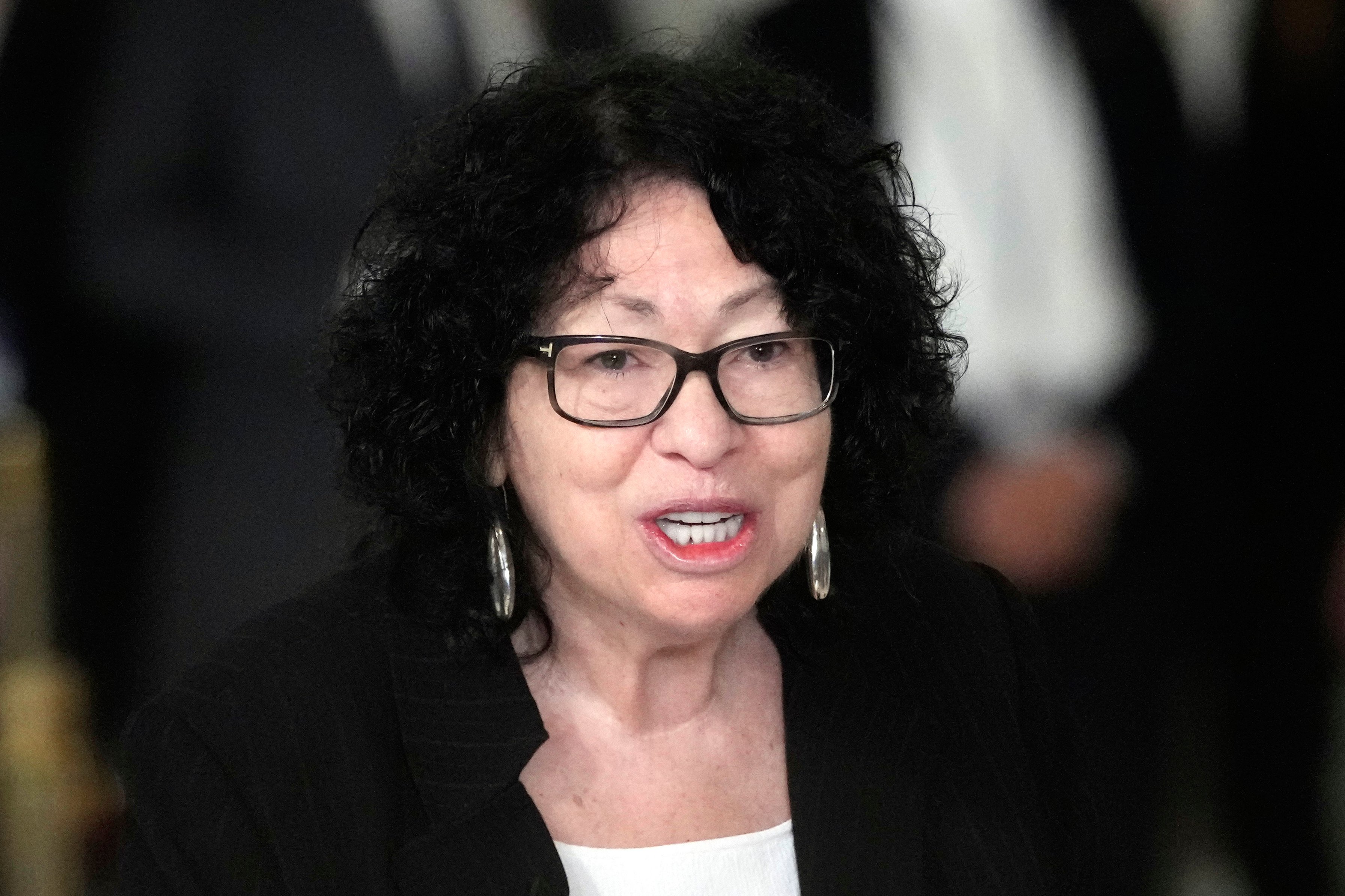
Justice Sonia Sotomayor delivered an unusually forceful dissent from the bench on Thursday, warning that the Supreme Court’s decision to allow the Trump administration to revive a restrictive immigration policy would lead to more deaths along the southern border.
The ruling permits border officials to deny asylum to individuals who do not physically cross into the United States at a port of entry, effectively reviving a policy that had been blocked by lower courts. Sotomayor, the senior liberal justice, read her dissent aloud—a rare move reserved for moments of deep disagreement with the majority.
“The consequences of today’s decision are predictable,” Sotomayor said. “More people will die. More people will attempt to cross the border illegally, and some will make it while others will not.”
The practice of reading a dissent from the bench is uncommon, and it appeared to catch the author of the majority opinion, conservative Justice Samuel Alito, off guard. In a rare response, Alito noted that he would have expanded his own remarks had he known Sotomayor would speak. He argued that the policy had been used by both Republican and Democratic administrations to maintain order at legal ports of entry.
The decision marks the latest chapter in a long-running legal battle over immigration enforcement. The Trump administration has pushed for stricter border controls, while immigrant advocates argue that the policy violates U.S. asylum law and international protections. The policy’s revival could have immediate effects on thousands of migrants fleeing violence and persecution in Central America and elsewhere.
Critics of the ruling point to a recent poll showing that 69% of Americans want the Supreme Court to uphold birthright citizenship, suggesting the court may be out of step with public opinion on immigration matters. The decision also comes amid a broader debate over the scope of executive power in immigration policy, a topic that has divided the court in recent terms.
Legal experts expect the policy to face further challenges in lower courts, but for now, the Supreme Court has given the administration the green light to enforce it. The move is likely to intensify the political battle over border security as the 2024 election cycle heats up.
Sotomayor’s dramatic dissent underscores the high stakes. “More people will die,” she repeated, her voice steady but sharp. The warning resonated in a chamber where such emotional appeals are rare.
The case is part of a broader pattern of the Supreme Court taking up immigration-related disputes. In a separate ruling, the court recently sided with the Trump administration on the termination of Temporary Protected Status for several countries, limiting judicial review of such decisions.
As the administration moves to implement the revived policy, border officials are preparing for a potential surge in illegal crossings. Meanwhile, immigrant rights groups have vowed to continue their legal fight, arguing that the policy endangers vulnerable populations.