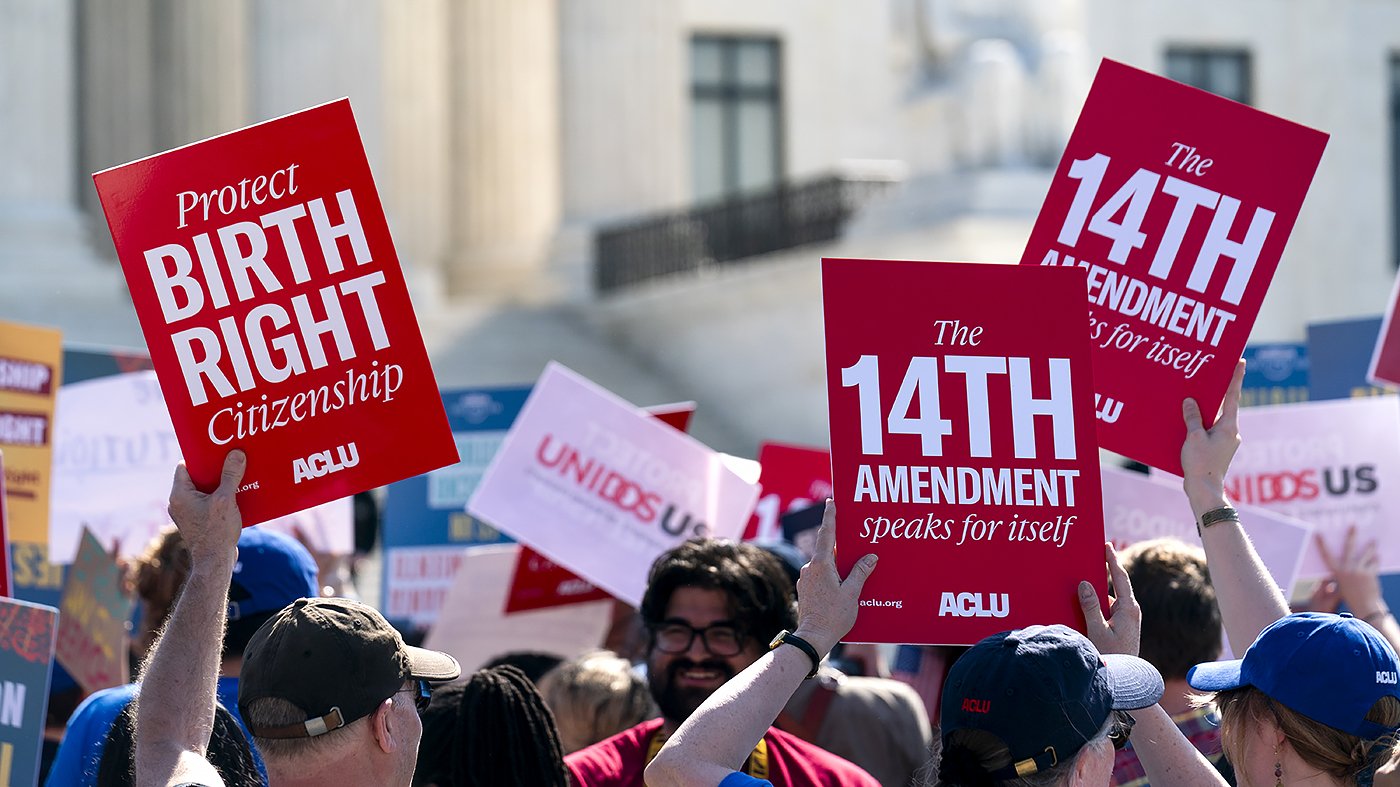
A new Quinnipiac University poll reveals that nearly seven in ten registered voters want the Supreme Court to preserve birthright citizenship, as the justices weigh the legality of President Trump's executive order aimed at ending the long-standing policy.
The survey, conducted from June 18 to 22 among 1,165 self-identified registered voters, found that 69 percent believe the high court should keep in place the 1898 ruling that the 14th Amendment guarantees citizenship to anyone born on U.S. soil. Only 27 percent said the court should reverse that decision, and 4 percent were undecided or declined to answer.
Partisan splits were stark. Ninety-five percent of Democrats and 69 percent of independents said the court should strike down Trump's order as unconstitutional and maintain birthright citizenship. In contrast, just over half of Republicans backed the administration's position, arguing the court should side with the president.
The telephone poll has a margin of error of 3.4 percentage points. The sample included 30 percent Democrats, 26 percent Republicans, 37 percent independents, and 7 percent with other or no party affiliation.
Legal Battle Over 14th Amendment
Trump signed the executive order on his first day back in office last year, asserting that the 14th Amendment “has never been interpreted to extend citizenship universally to everyone born within the United States.” The order argues that children born to parents who are not lawfully present, or who have only temporary legal status, are not “subject to the jurisdiction thereof” and thus should not receive citizenship at birth.
The American Civil Liberties Union, along with state chapters and left-leaning advocacy groups, quickly filed suit. The Supreme Court heard oral arguments in April, and multiple justices appeared skeptical of the administration's legal reasoning. A decision is expected by the end of June, before the court's summer recess.
This case comes amid a series of high-stakes rulings from the conservative-leaning bench. In a recent unanimous decision protecting gun rights for marijuana users, the court showed it can still find common ground on some issues. But the birthright citizenship dispute is likely to expose deep ideological divisions.
Stakes for Immigration and Demographics
Ending birthright citizenship would have sweeping consequences. According to May 2025 estimates from the Migration Policy Institute and Penn State's Population Research Institute, roughly 255,000 babies would be born without U.S. citizenship each year under such a policy. Over time, that could swell the undocumented population by 2.7 million by 2045 and 5.4 million by 2075.
Democrats and immigrant advocacy groups warn that overturning the 1898 precedent would create a permanent underclass and undermine the 14th Amendment's guarantee of equal protection. Republicans who support the order argue it is necessary to deter illegal immigration and clarify that citizenship is a privilege, not an automatic right.
The poll results suggest that, regardless of partisan leanings, a broad majority of Americans favor the status quo. The Supreme Court's decision, expected within days, will determine whether Trump's order stands or if birthright citizenship remains enshrined in constitutional law.