The Senate Homeland Security and Governmental Affairs Committee's decision to refer Dr. Anthony Fauci for criminal contempt has created a legal quagmire for the Justice Department, with former prosecutors and legal experts pointing to a host of obstacles that could derail any prosecution.
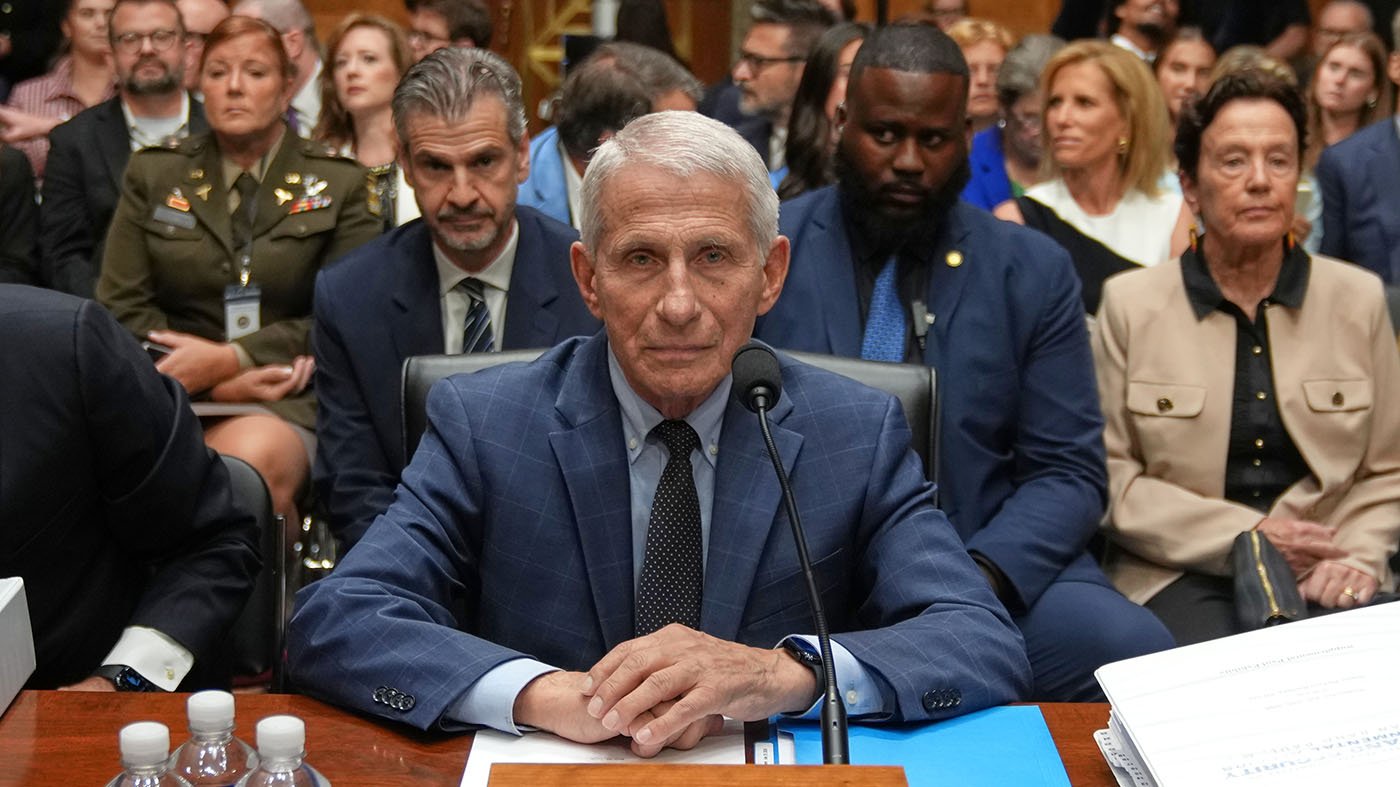
The committee, led by Chairman Rand Paul (R-Ky.), voted along party lines on Thursday to send the referral to the DOJ after Fauci invoked his Fifth Amendment rights 111 times during a hearing the previous week. Paul and his Republican colleagues argue that Fauci's pardon by former President Biden eliminates any fear of prosecution, thereby nullifying his constitutional protection.
However, legal specialists note that the pardon, which covers January 1, 2014, to January 19, 2025, does not shield Fauci from potential charges such as perjury or state-level offenses. Three state attorneys general have already issued subpoenas to Fauci as part of their own investigations, a fact that bolsters his assertion of the Fifth Amendment.
Barb McQuade, a former U.S. attorney for the Eastern District of Michigan, said Fauci would have a "bulletproof" motion to dismiss. "He may invoke the right if he has reasonable fear that his testimony could be used against him in a criminal proceeding," she explained, pointing to Paul's public statements about wanting Fauci "behind bars" as evidence of that fear.
Mark Osler, a former federal prosecutor and law professor at the University of St. Thomas, agreed. "There's some holes in the pardon," he said, noting that Fauci's position is on "firmer ground" given the combination of Paul's rhetoric and the pardon's limitations.
The procedural path of the referral also raises serious questions. Traditionally, contempt citations must be approved by the full Senate before being sent to the DOJ. Paul bypassed that step, sending the referral directly after his committee's vote. Amanda Vaughn, a former DOJ attorney who worked on the Steve Bannon contempt case, said judges are "pretty cautious about saying someone didn't have a right to plead the Fifth." She added that the unusual process could make the case look "incredibly political."
Molly Gaston, another former federal prosecutor involved in the Bannon case, echoed that concern. "That is incredibly messy. It makes it look incredibly political because presumably [Paul is] doing that because he doesn't think that he can get a contempt resolution from the full Senate," she said. "Setting aside the legal question of whether Sen. Paul's actions meet the requirements of the statute, forgoing the traditional contempt resolution process sets prosecutors up for very credible allegations that any prosecution is vindictive and selective."
Paul has cited "precedent" for his approach, but his office did not provide details. Legal experts note that case law suggests Congress must follow the full process—including a chamber-wide vote—for the DOJ to act on a contempt referral.
Fauci's attorney, David Schertler, dismissed the committee's action as "a crude political stunt" and "meritless and politically-motivated." He accused Paul of pursuing a "personal vendetta" against Fauci, who served 50 years in public health. Paul's long history of calling for Fauci's prosecution—documented in over 30 instances by Fauci's legal team—could also be used to argue prosecutorial vindictiveness.
For now, the referral sits with the DOJ, which must decide whether to convene a grand jury. Given the legal and procedural hurdles, many observers doubt the case will move forward. As Gaston noted, "Given the background of Sen. Paul's attention to Dr. Fauci, that would be a very difficult case for the government."