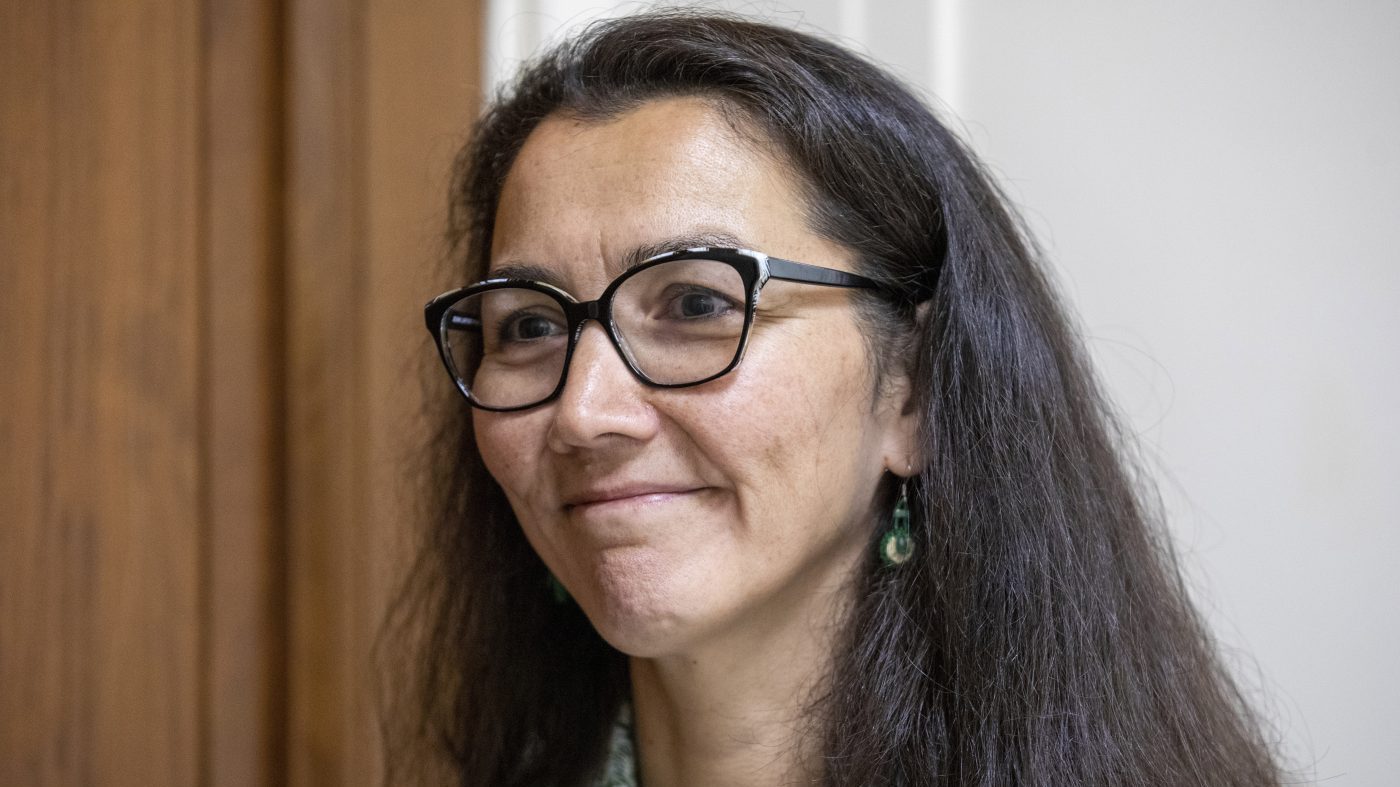
As the primary season winds down, Democrats are getting a clearer picture of the general election landscape, with several Senate races poised to determine control of the chamber. Among the most consequential is Alaska, where former Representative Mary Peltola has advanced to face two-term Republican incumbent Dan Sullivan.
With 80% of the vote counted, Peltola holds a five-point lead over Sullivan (48% to 43%), a margin that has energized Democrats who see her as the only candidate capable of flipping the seat. Unlike the progressive wave in other states, Peltola has deliberately distanced herself from the national Democratic brand, notably avoiding ties to former Vice President Kamala Harris. This strategy, which has drawn criticism from Sullivan—who highlights her funding from “Lower 48 liberals”—appears to resonate with independents and unaffiliated voters weary of partisan gridlock.

A Data for Progress poll conducted just before the primary showed Peltola ahead by six points (53% to 47%), mirroring her primary performance. However, with both campaigns well-funded, a five-point lead is not a comfortable cushion. The Alaska race is a critical test of whether a moderate Democrat can win in a state that leans Republican, a question that will shape the party's approach in 2028.
Progressive Primaries: A Double-Edged Sword
Elsewhere, the progressive wing has scored primary victories, but their general election viability remains uncertain. In Texas, Democrat James Talarico is locked in a tight race with Republican Ken Paxton, who defeated incumbent Senator John Cornyn in the May runoff. Despite Paxton's Trump endorsement and the state's 14-point Republican lean in 2024, Talarico has led or tied in most polls, though a recent Emerson survey shows Paxton ahead by one point (47% to 46%).
Talarico's progressive stances—including controversial remarks about God's gender and calls to dismantle ICE—may alienate the moderate voters he needs to win. A Democratic victory in Texas would be a historic upset, but Talarico's profile makes that climb steeper. Still, his competitiveness signals a potential shift in the Lone Star State, as noted by recent ratings that moved Texas to a toss-up.
In Minnesota, Lieutenant Governor Peggy Flanagan won the Democratic primary by 20 points over moderate Angie Craig, and now leads Republican Michele Tafoya by five points (46% to 41%). Minnesota's left-leaning electorate and strong anti-ICE sentiment have buoyed Flanagan, but the race is far from settled.
Michigan: The Ultimate Swing-State Test
Michigan presents the most telling contest. Progressive Abdul El-Sayed narrowly won the Democratic primary by one point against moderate Haley Stevens, and now faces Republican Mike Rogers. Polls are mixed: a Fox News survey has Rogers up four points, while a Susquehanna poll shows El-Sayed ahead by seven. The outcome will serve as a referendum on whether the far-left can win a key swing state, a question that will define the party's future.
As data center controversies roil swing-state races, Michigan's Senate contest remains the one to watch. El-Sayed's performance could either validate the progressive agenda or push Democrats toward a more centrist path.
Meanwhile, Florida's Senate race has exposed internal party rifts, and Republicans are struggling to find a unified message. These dynamics underscore the high stakes of the 2026 midterms, where control of the Senate hangs in the balance.
Douglas E. Schoen and Carly Cooperman are pollsters and partners at Schoen Cooperman Research in New York, and co-authors of “America: Unite or Die.”