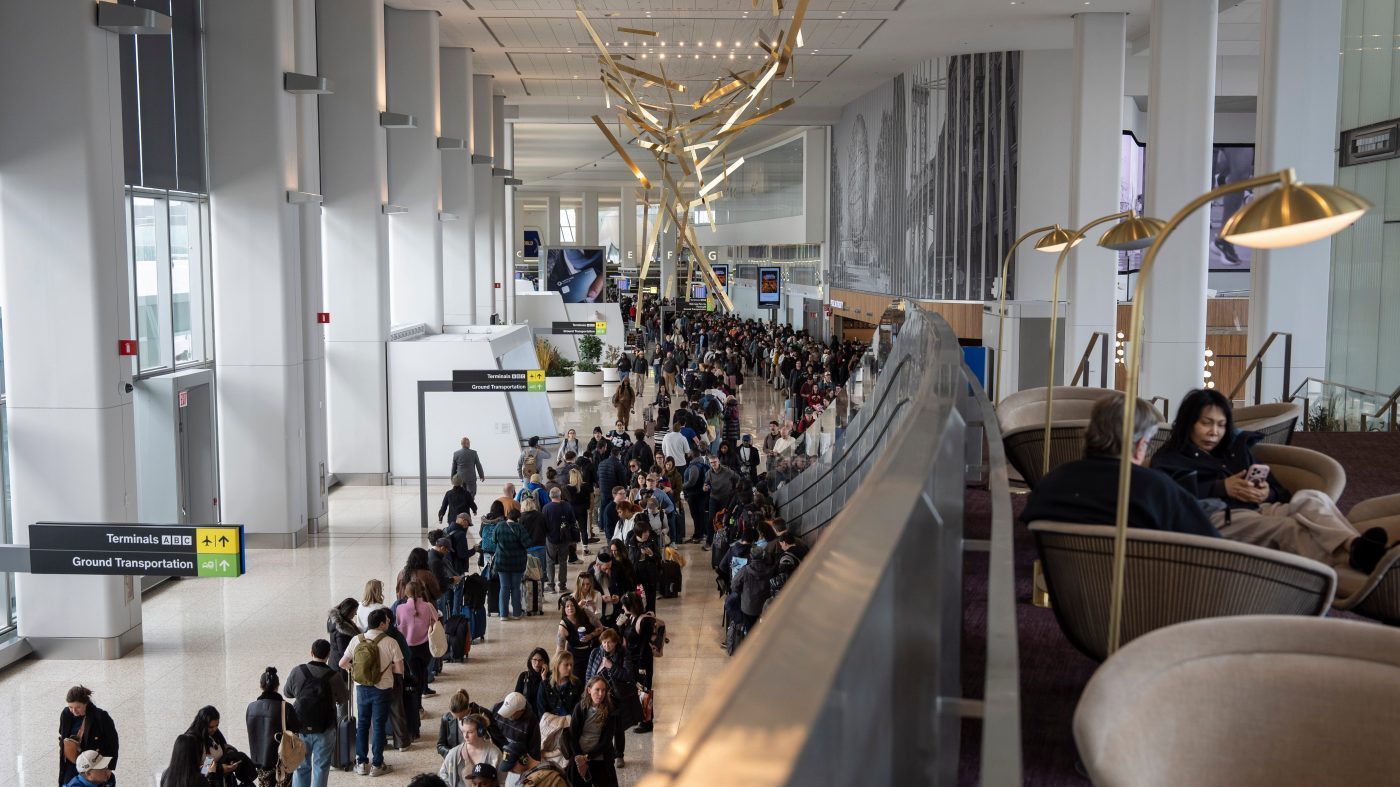
Severe Transportation Security Administration staffing shortages, driven by a partial government shutdown that has left officers working without pay since mid-February, are causing security line delays of up to four hours at major airports, forcing airlines to implement emergency passenger accommodation policies. While carriers are not legally obligated to assist passengers who miss flights due to security delays, several are offering limited flexibility as the operational crisis intensifies.
Airlines Implement Patchwork of Waivers
Delta Air Lines has issued a travel advisory for its Atlanta hub, waiving change fees and fare differences for travelers rebooking through April 6 who purchased tickets for travel between March 23-30. United Airlines is offering similar relief at Houston's George Bush Intercontinental Airport, where lines have stretched beyond four hours, for tickets purchased by March 22. American Airlines stated it would rebook affected travelers on the next available flight at no extra charge, following its longstanding policy, while Southwest Airlines said it is assisting customers with waivers and rebooking.

"The problem is there's not a lot of seats available when it's spring break, so the airline may not have another flight to put you on for a couple days," said Clint Henderson, managing editor at The Points Guy. He advised travelers stuck in line to immediately contact their airline via phone, app, or social media to secure rebooking options before they disappear.
Staffing Exodus Creates Unpredictable Conditions
The crisis stems directly from the ongoing partial government shutdown, which has prompted more than 450 TSA officers to leave the workforce. Absentee rates have soared, with approximately 11% of scheduled officers—over 3,160 personnel—calling out on Tuesday alone. At critical airports including Atlanta, Houston, and New York's JFK, callout rates reached roughly 40%. This critical staffing collapse has created wildly inconsistent security conditions, with some travelers breezing through while others face monumental delays, and expedited screening programs like TSA PreCheck becoming unreliable.
The Department of Homeland Security has warned that the situation could deteriorate further, with airport checkpoint closures becoming a real risk if the staffing exodus continues. The unpredictability has made advance planning nearly impossible for passengers, despite official recommendations to arrive at airports like Atlanta at least four hours early.
Information Blackout at Key Hubs
Compounding the problem, several major airports have temporarily stopped publishing real-time TSA wait time data, including Hartsfield-Jackson Atlanta, JFK, and Baltimore/Washington International. This information blackout leaves travelers flying blind into potentially chaotic situations. The worst delays have been concentrated in the New York City area, Houston, Atlanta, and New Orleans, though conditions fluctuate hourly.
Meanwhile, the political response to the broader DHS shutdown has included controversial measures, such as the deployment of ICE officers to assist at airports, a move that has sparked legal and political challenges. As the travel system strains under these combined pressures, the immediate outlook for passengers remains fraught with uncertainty, dependent on both congressional action to fund the government and airlines' capacity to manage the fallout.