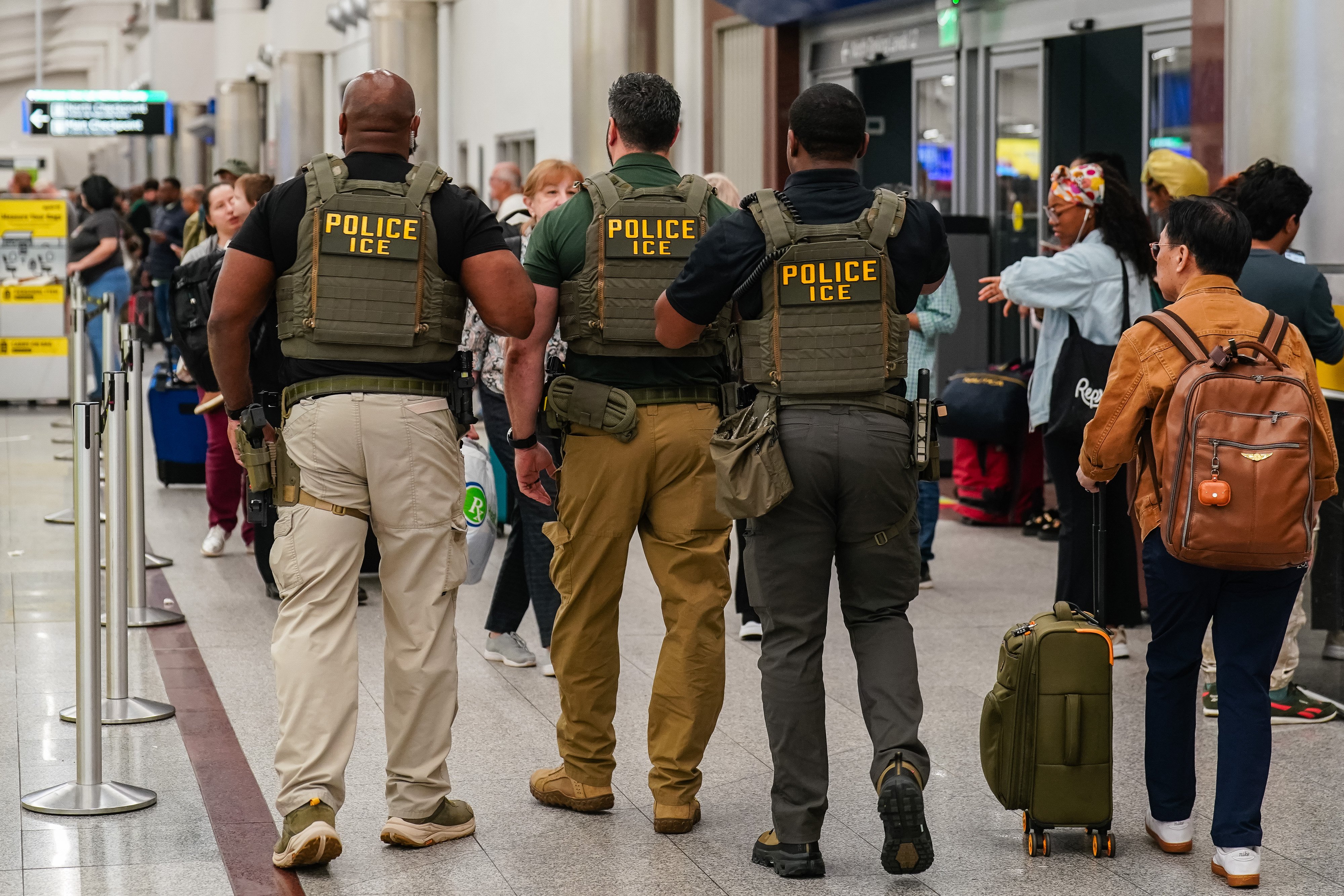
President Donald Trump on Wednesday lauded U.S. Immigration and Customs Enforcement officers for performing non-traditional duties at major airports, where security wait times have ballooned during an ongoing Department of Homeland Security funding lapse. In posts on his Truth Social platform, Trump framed the assistance as a public relations victory for an agency he says has been unfairly criticized.
Political Framing of Airport Assistance
"I am so proud of our ICE Patriots!" Trump wrote. "They were unfairly maligned by the Lunatic Democrats for years, and now, at the Airports, in addition to what they are supposed to be doing, they are helping people with bags, even picking up and cleaning areas." He added that the officers "are rehabbing a fake image given to them by Radical Left Democrat politicians." The deployment began Monday, with ICE personnel assisting Transportation Security Administration staff who are working without pay due to the partial government shutdown.
Acting TSA Administrator Ha Nguyen McNeill confirmed the details to the House Homeland Security Committee, stating ICE officers are engaged in "queue management," exit lane staffing, and guiding passengers on security procedures. "It takes a while to really get folks embedded into our operations and it's gone extremely well," McNeill said in response to questioning from Rep. LaMonica McIver (D-N.J.).
Shutdown Context and Union Backlash
The DHS shutdown, which began on February 14, originated from Democratic demands for immigration enforcement reforms following controversial fatal shootings by federal officers in Minneapolis earlier this year. Those incidents had sparked protests against ICE and Border Patrol presence in several cities. Trump, however, claimed the public response to ICE at airports has been favorable, stating, "The Public is loving ICE, so the Democrats, unwittingly, did us a favor."
Despite the additional personnel, security wait times remain severe. At George Bush Intercontinental Airport in Houston on Wednesday afternoon, estimated checkpoint times ranged from 45 minutes to two hours, an improvement from four-hour waits reported the previous day.
The move drew sharp criticism from TSA union leadership. At a Tuesday press conference, Johnny Jones, secretary treasurer of the American Federation of Government Employees' TSA Council, called the deployment a "straight-up distraction." He emphasized, "Look, at the end of the day, it doesn't matter what ICE is doing up there. They just need to pay the [TSA] employees. The ICE officers are being paid. This is kind of like an insult to the employees." This labor dispute echoes broader tensions within the administration, similar to when a federal judge blocked the administration's freeze on Chicago transit funds.
Broader Political Strategy
Trump's public embrace of ICE aligns with his administration's consistent focus on immigration enforcement as a core political issue. His rhetoric often positions the agency's officers as patriotic bulwarks against Democratic opposition, a theme that extends to other policy areas where he challenges institutional norms. For instance, his approach to executive authority was recently highlighted when adviser Peter Navarro claimed a Supreme Court ruling strengthened presidential trade powers.
The airport deployment also intersects with the administration's management of the partial shutdown, which has affected multiple agencies. The strategy of reassigning personnel from one department to address shortages in another reflects an ad-hoc approach to governance during funding crises. This comes as the President has made other unilateral moves, such as lifting the summer ban on E15 fuel in response to market pressures.
As the shutdown continues with no immediate resolution in sight, the visible presence of ICE officers at transportation hubs serves both operational and political purposes. It provides temporary manpower while allowing the White House to showcase a controversial agency in a service-oriented light, directly countering the narrative of its critics. However, as TSA union leaders stress, the fundamental issue of unpaid essential workers remains unaddressed, ensuring the political and operational tensions will persist.