The recent chaos in the nation's air traffic control system has sparked more than just travel headaches—it has ignited a political debate about the feasibility of government-run programs. In a new opinion piece, Merrill Matthews, a conservative commentator, argues that the FAA's failures offer a stark warning for Democrats pushing for Medicare for All.
Matthews, who chairs Our Republican Legacy in Texas, contends that the air traffic control system is a prime example of what happens when the government manages critical infrastructure. He points out that Medicare for All would place the entire U.S. healthcare system under similar bureaucratic control, eliminating private insurance, Medicaid, and even the current Medicare program for seniors.
"The same politicians and bureaucrats who oversee air traffic control would run health care," Matthews writes. "They will determine what drugs, medical devices, and services patients can have and when." He argues that this would inevitably lead to rationing and delays, as seen in other government-run systems like the UK's National Health Service, where expensive treatments can be stalled, and Canada's system, where patients face the longest wait times for new drugs among G7 nations.
Technological Lag in Government Systems
One of the key lessons Matthews draws is the government's failure to modernize air traffic control technology. Reports indicate that parts of the system still rely on 1990s-era copper wiring, and the recent shutdown that stranded millions was caused by a glitch during a belated patch. Matthews argues that similar delays would plague healthcare under Medicare for All, limiting access to the latest diagnostic tools, surgical innovations, and prescription drugs.
"U.S. patients currently have access to the latest technology," he notes. "That will come to an end under Medicare for All, just as it has in other government-run health care systems."
Funding Shortfalls and Staffing Crises
Matthews also highlights the chronic underfunding of the FAA. Transportation Secretary Sean Duffy has requested up to $50 billion for upgrades, but Matthews notes that such requests become political battles, and funding is never guaranteed. This, he says, leads to staffing shortages, citing a drop in air traffic controllers from 44,000 in 2012 to 30,000 in 2025, despite increased air traffic.
He predicts similar shortages in healthcare, pointing to Canada's struggles with doctor shortages and long waits for specialist care. A recent CBC report found that 4.5 million middle-aged and older Canadians have trouble accessing specialists.
Accountability Deficit
Finally, Matthews criticizes the lack of accountability in government-run systems. He notes that both parties have blamed each other for the FAA's problems, while Congress claims most of the $12.5 billion appropriated for reforms hasn't been spent. Under Medicare for All, he argues, the government would claim adequate funding while providers complain of overwork and underpayment, and patients would see growing waiting lists.
Ironically, Matthews points out that many aviation experts want to privatize air traffic control, while Democrats want to nationalize healthcare. He concludes that the U.S. healthcare system has problems, but Medicare for All is not the solution.
"This comes 16 years after Democrats passed ObamaCare with no Republican support, which is clearly broken," he writes. "Now, Democrats say Medicare for All will fix a broken system they claimed to have fixed 16 years ago. They were wrong then, and they're wrong now."
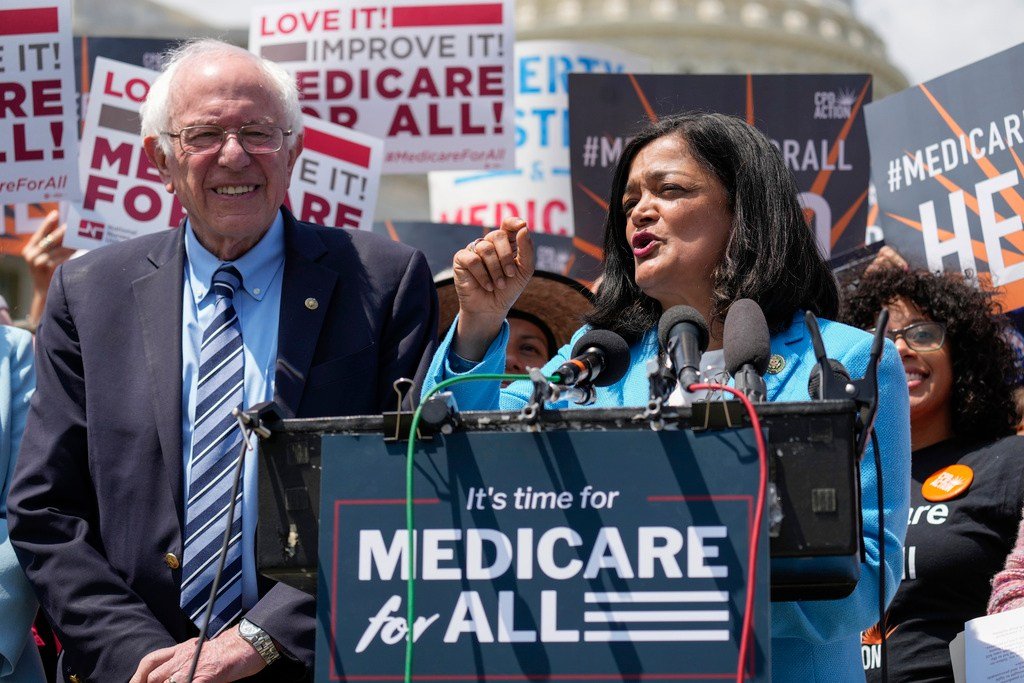
The debate over Medicare for All continues to divide lawmakers, with progressive leaders like Bernie Sanders pushing for a single-payer system while moderates favor incremental expansion of Medicare. As the 2026 midterms approach, the issue is likely to remain a key battleground.