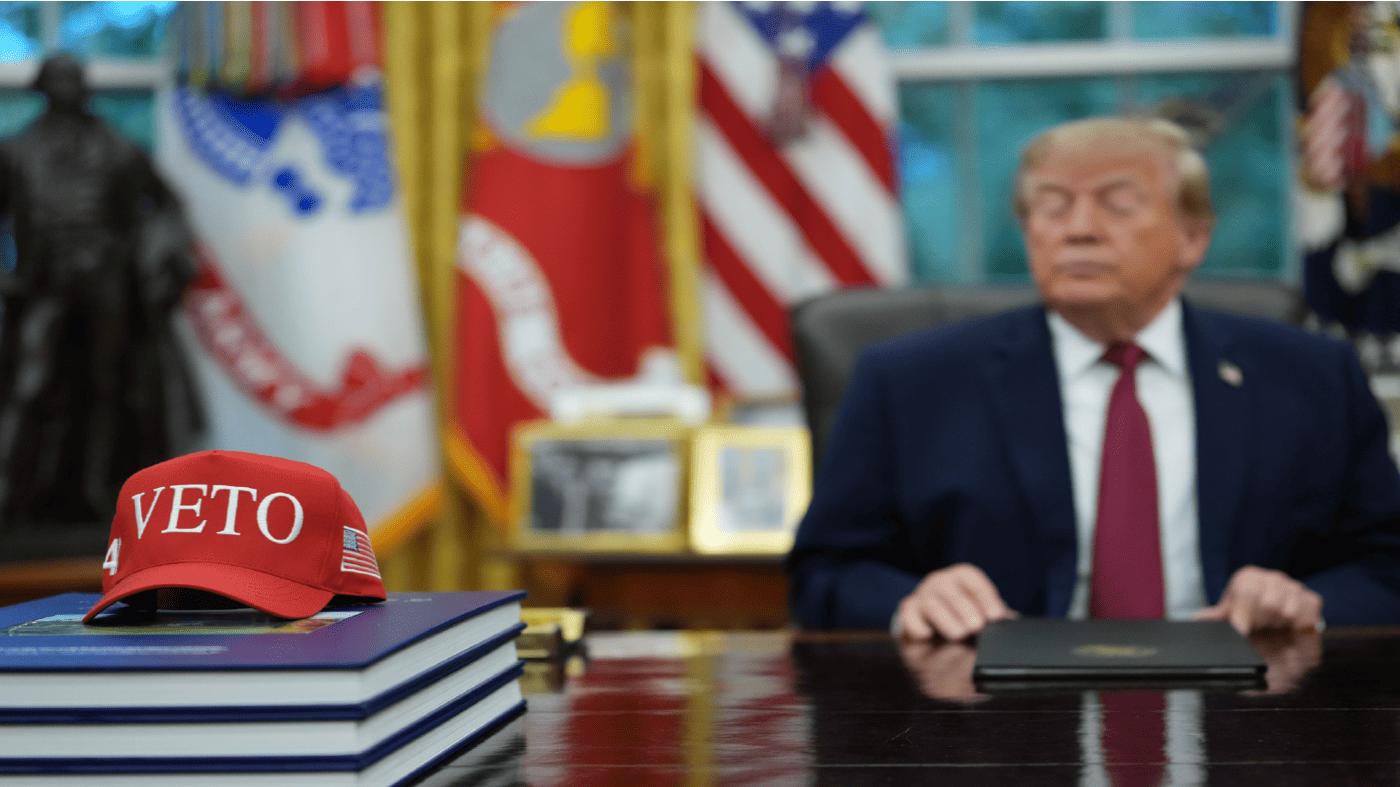
As Democrats prepare to take control of Congress in January 2027, President Trump has signaled he will aggressively use his veto power, even joking about wearing a red "VETO" hat in the Oval Office. This threat has sparked a debate within the party: should they push ambitious legislation knowing it will be rejected, or focus on more incremental measures that might actually become law?
Sen. Brian Schatz (D-Hawaii) argues that proposing bills Trump is "guaranteed to veto" would be a "wasted energy." However, Rep. Greg Casar (D-Texas) counters that Democrats should pursue bold, popular policies and force the president to veto them, highlighting their commitment to affordability and other key issues.
Recent political science research supports Casar's approach. When presidents veto legislation passed by large majorities, they risk appearing to obstruct the will of the people. This can damage their public standing in two ways: first, by triggering skepticism of executive overreach, and second, by making them seem out of step with the public's priorities. Studies show that presidents' approval ratings typically drop by about 2 percentage points for each major veto during divided government.
Given Trump's already historically low approval ratings, the political cost of vetoes could be significant. Democrats should therefore not shy away from passing popular legislation, even if it is destined for a veto. The key is to focus on policies with broad public support, such as restoring Affordable Care Act subsidies, rather than more controversial measures like tax increases on the wealthy.
However, Democrats must also be careful not to appear cynical. If the public believes Congress knew a veto was inevitable, they may blame Congress for prioritizing political gamesmanship over practical governance. To avoid this, Democrats should frame their legislative efforts as sincere attempts to address the nation's problems, not as traps for the president.
By pursuing this strategy, Democrats can use Trump's vetoes to undermine his support and that of the Republican Party, while positioning themselves for further victories in the 2028 elections. And if Trump decides the political costs are too high and signs some of their proposals into law, that would be an unexpected bonus.
As the new Congress convenes, Democrats would do well to remember that the veto is a double-edged sword. Used wisely, it can be a powerful tool to advance their agenda and weaken the opposition.