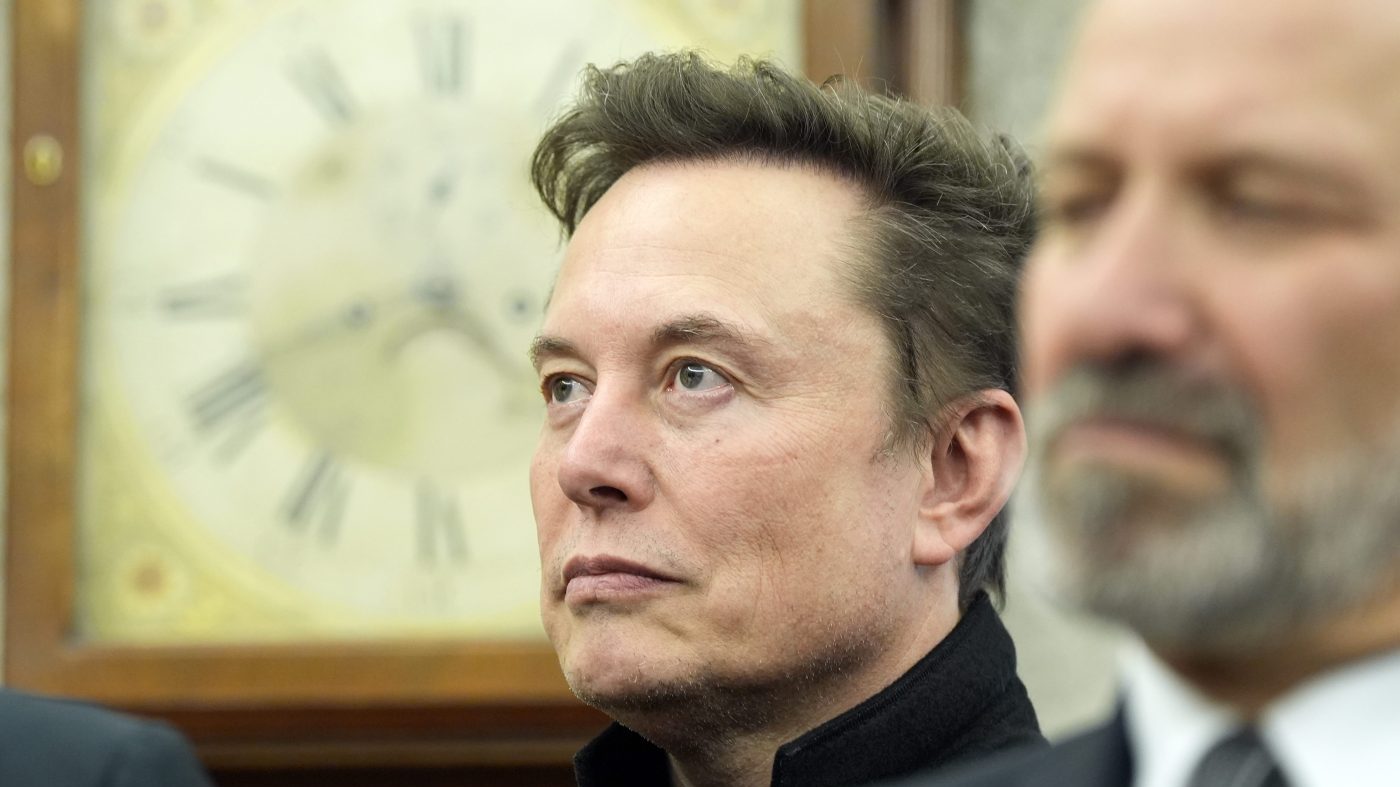
A divided but bipartisan Wisconsin elections panel has concluded that billionaire Elon Musk likely violated the state's election bribery law when he handed out $1 million checks to voters during last year's Supreme Court race. The Wisconsin Election Committee voted 5-1 last week to send two complaints against Musk to the Brown County district attorney's office, citing probable cause that the giveaways were illegal.
The panel, evenly split between three Democrats and three Republicans, determined that Musk's offer of $1 million to voters who cast ballots in the Supreme Court election was intended to induce participation. The motion reviewed by the Associated Press states Musk broke the law by offering the money "in order to induce them to vote in that election."
Wisconsin law explicitly prohibits offering "anything of value" to any elector "in order to induce any elector" to vote. Legal experts had warned Musk's initial announcement could run afoul of the statute, prompting him to delete a social media post and clarify his plan.
"To clarify a previous post, entrance is limited to those who have signed the petition in opposition to activist judges. I will also hand over checks for a million dollars to 2 people to be spokesmen for the petition," Musk wrote on his platform X. Despite the revision, the panel found that the giveaway still constituted an inducement to vote.
Musk, CEO of Tesla and founder of SpaceX, emerged as one of the largest financial backers of the Supreme Court race, pouring at least $20 million into supporting Republican candidate Brad Schimel. The race ultimately saw Schimel defeated by liberal Judge Susan Crawford, becoming one of the most expensive judicial elections in U.S. history with spending exceeding $100 million. Other big-name donors, including billionaire George Soros, also contributed heavily.
The referral now puts the case in the hands of the Brown County district attorney, who will decide whether to pursue charges. This development comes amid broader debates over campaign finance and election integrity, as House GOP holdouts signal support for attaching voter ID requirements to must-pass legislation, a move that could reshape voting rules nationwide.
The Wisconsin case also highlights generational and partisan divides over election law enforcement. A recent analysis found that generational differences now outweigh party divides in American politics, suggesting that younger voters may view such giveaways differently than older cohorts.
Musk's legal team has not yet commented on the panel's finding. The case could set a precedent for how states treat large-scale voter incentive programs, especially as tech billionaires increasingly wade into electoral politics.