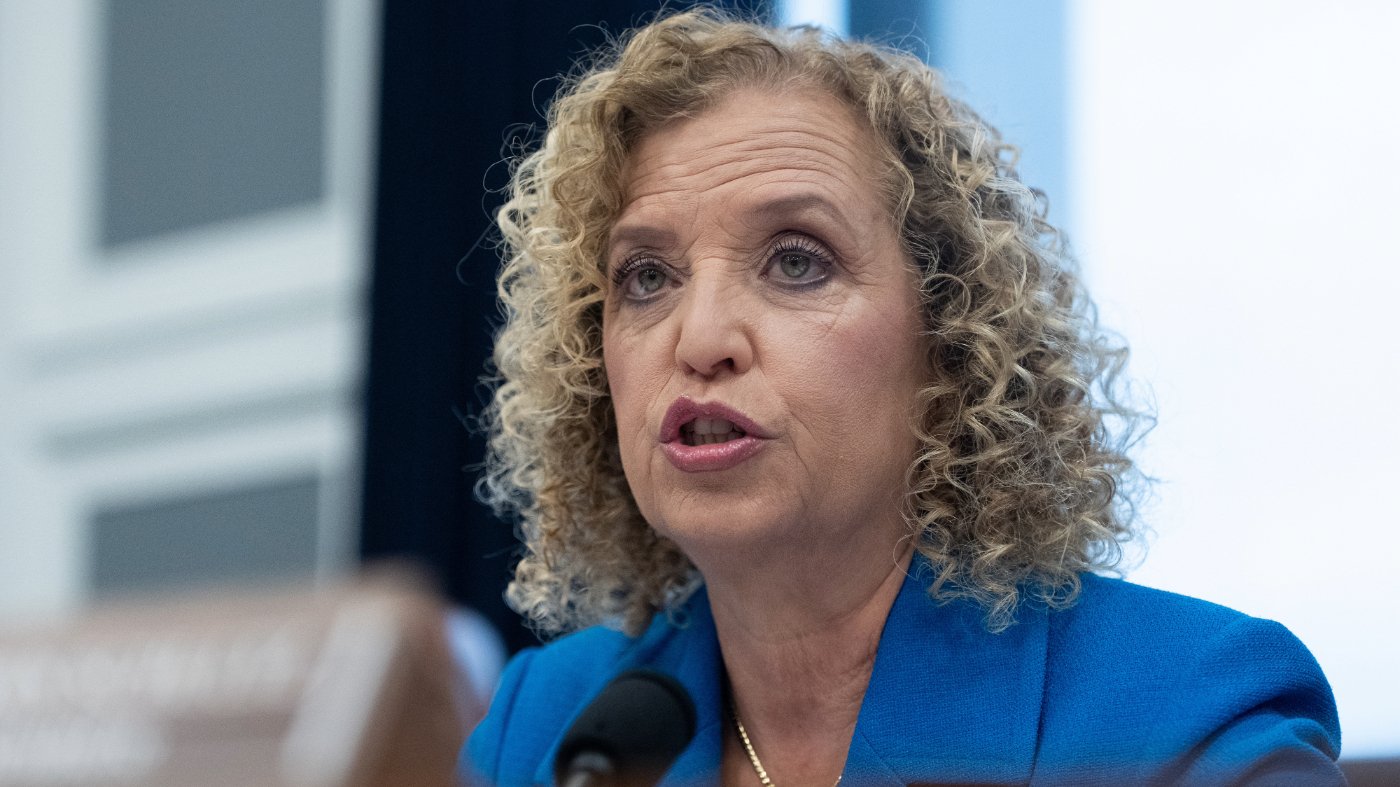
Rep. Debbie Wasserman Schultz (D-Fla.) is facing a backlash from Black voters and political leaders in South Florida as she campaigns for a seat that was originally created to ensure Black representation. The 21-year incumbent, who previously chaired the Democratic National Committee, is running in Florida's 20th Congressional District after her old district was dismantled by a Republican-led gerrymander.
The district, drawn by a federal court in 1992 under the Voting Rights Act, has elected Black lawmakers since Reconstruction. But Wasserman Schultz's decision to enter the race has drawn sharp criticism from the Florida Legislative Black Caucus and the Broward County Democratic Black Caucus, both of which asked her not to run. Ten of Florida's 15 Democratic National Committee members also urged her to step aside in writing, and state Senate Democratic leader Shevrin Jones declared Black representation a "non-negotiable."
Wasserman Schultz ignored those calls, filing to run anyway. Critics say she is exploiting a Republican attack on Black voting power for personal gain. The map that Republican Gov. Ron DeSantis signed into law broke up the 20th District, a move enabled by the Supreme Court's recent gutting of Section 2 of the Voting Rights Act in Louisiana v. Callais. As the GOP and Democrats gird for an intensified gerrymandering war ahead of 2028, Wasserman Schultz's move is seen as a symptom of a deeper problem.
"She used a Republican attack on Black voting power as her personal staircase to a safer seat," wrote Michael Starr Hopkins, a former senior congressional aide and author of Burn the Playbook, in a blistering critique. "She is not a victim of the gerrymander but a beneficiary."
Wasserman Schultz could have run in the redrawn 22nd District, which Republicans openly call a pickup opportunity, or sought state office. Instead, she chose a district where Black voters have long chosen their own representatives. The primary, set for Aug. 18, features a field of Black candidates, including Elijah Manley, who had already filed before Wasserman Schultz entered the race.
"Either the principle is the principle, or it is a fundraising line," the DNC members wrote in their letter, adding that Democrats cannot "claim to defend voting rights, racial justice, and representation while undermining Black political power when it becomes politically convenient."
House Minority Leader Hakeem Jeffries, DNC Chair Ken Martin, and the Congressional Black Caucus have remained silent on the matter, a silence that critics say reveals a party that talks about voting rights but fails to act when one of its own is involved. The NAACP has urged Black athletes to leave states undermining voting rights, and the fight over Florida's maps is part of a broader pattern.
Wasserman Schultz's campaign hopes to win a plurality in a divided primary, but Black voters are organizing to send a message. "The Black vote is not a parachute," Hopkins wrote. "The Black district is not a vacancy listing. It is not a hand-me-down."