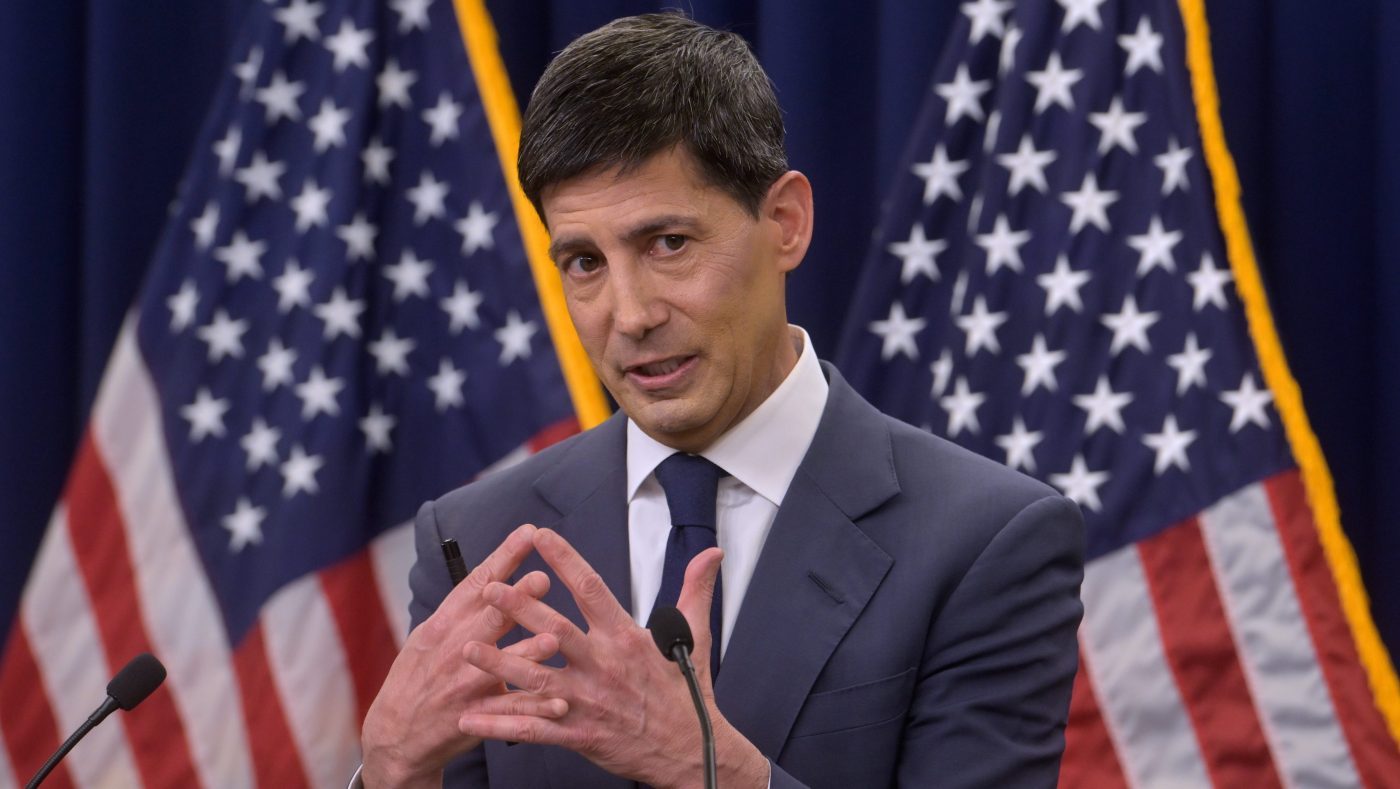
Federal Reserve Chair Kevin Warsh is set to deliver a closely watched address Friday at the central bank's annual economic symposium in Jackson Hole, Wyoming. The speech comes at a delicate moment for the U.S. economy, with inflation running above target and bond markets showing signs of strain.
Last week, the 30-year Treasury yield climbed to its highest level in 19 years before retreating after Treasury Secretary Scott Bessent announced plans to double the maximum amount of long-term debt the government can repurchase. That move was seen as an attempt to calm investors worried about the federal government's borrowing needs.
The Fed's preferred inflation gauge, released this week, showed prices rising 3.7 percent over the past year—well above the central bank's 2 percent goal. At the same time, the labor market is cooling, with the economy shedding 23,000 jobs last month, adding to concerns about a potential slowdown.
Friday's appearance will also put Warsh's communication strategy under the microscope. Since taking over from former Chair Jerome Powell, Warsh has largely avoided signaling the bank's next moves, a departure from the more explicit forward guidance of his predecessor. Investors and analysts will be parsing his remarks for any hints about the future path of interest rates, especially as economic jitters grow on Capitol Hill.
President Trump, meanwhile, has continued to push for lower interest rates, though the Fed is widely expected to keep rates steady at its September meeting. Warsh's speech, scheduled to begin at 10 a.m. EDT, could offer clues on whether the central bank is leaning toward easing later this year or holding firm to combat inflation.
The Jackson Hole symposium has historically been a venue for major policy signals, and this year's gathering takes place against a backdrop of fiscal and monetary uncertainty. The bond market's recent volatility, driven by concerns over government debt and inflation, has added urgency to Warsh's remarks.
Economists note that the Fed faces a delicate balancing act: tightening enough to bring inflation down without triggering a recession, while also managing the political pressure from the White House. Warsh's approach to communication—sparse and deliberate—has left many market participants guessing, and Friday's speech may do little to clarify the near-term outlook.
As the global financial community watches, the stakes are high. A misstep in messaging could roil markets further, while a clear signal could provide some much-needed stability. The speech also comes amid broader policy fights, including a federal judge blocking HUD's overhaul of fair housing grants, underscoring the contentious political environment.
For now, investors and policymakers alike will be listening closely to Warsh's words, hoping for direction in an otherwise uncertain economic landscape.