Warren Rejects Parallel Between Her Fed Views and Trump's Pressure Tactics
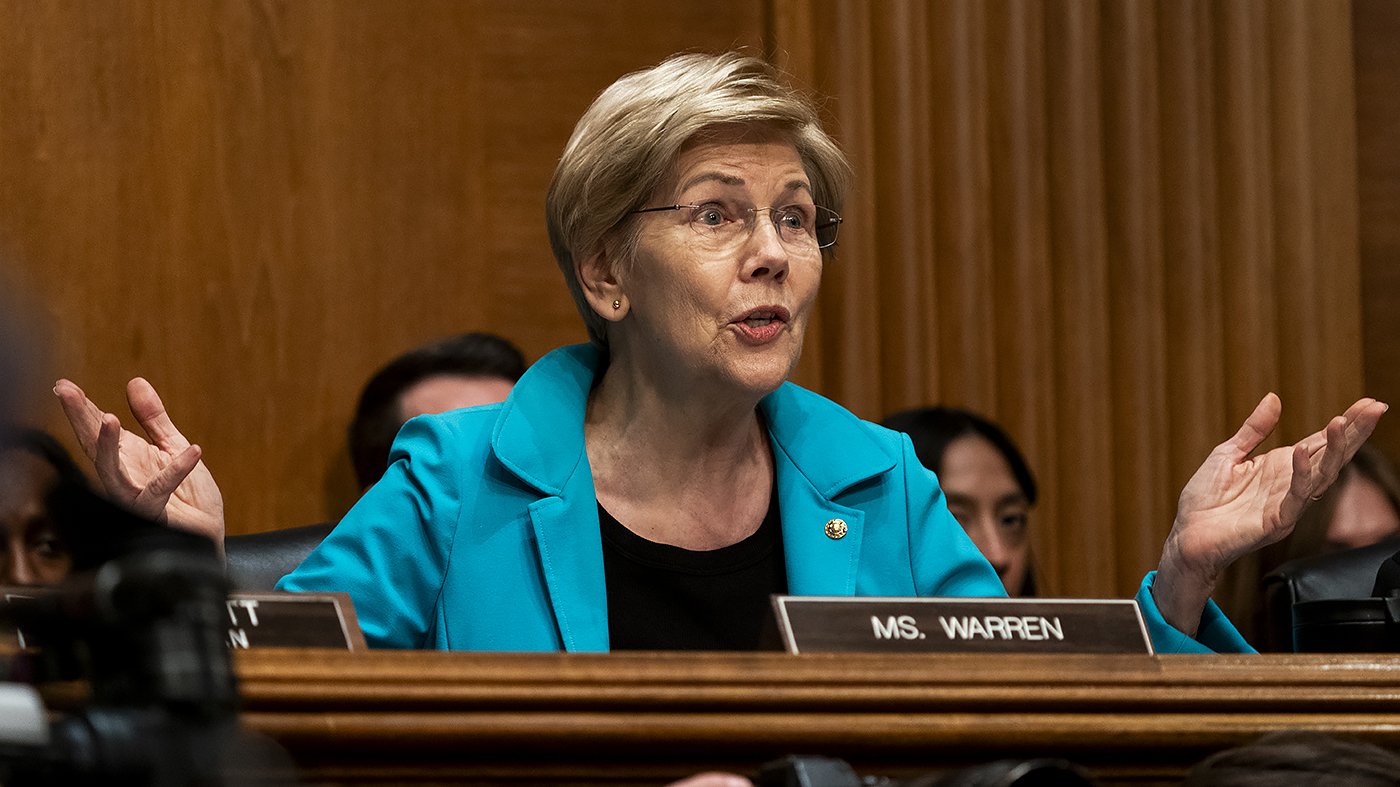
Senator Elizabeth Warren (D-Mass.) forcefully rejected any equivalence between her policy-based critiques of the Federal Reserve and what she characterized as President Trump's coercive pressure campaign against the central bank during a Wednesday interview on CNBC's "Squawk on the Street." The exchange grew heated when anchor Sara Eisen suggested Warren's past outspokenness on Fed interest rate policy mirrored the president's public demands.
"I'm sorry, is that real?" Warren responded with visible incredulity. "It is not different to just say, 'Here's my opinion and here's how I read the numbers and here's who I think has a good track record?'" She drew a stark distinction, arguing her support for nominees like former Chair Janet Yellen was based on policy alignment, while Trump's actions constituted intimidation. "You think that's the same as being the president of the United States and employing the Department of Justice to bring criminal [action] against someone, of sending a notice that they have been fired?"

Probe Into Powell Seen as Political Leverage
Warren was referencing an investigation into Fed Chair Jerome Powell led by U.S. Attorney Jeanine Pirro, officially concerning cost overruns on building renovations. Powell asserted in January that the probe was actually a political maneuver by the White House to force interest rate cuts. Warren concurred with that assessment. "What he's also trying to do is to control the Fed by terrifying all of them," she said, accusing Trump of using the threat of prosecution to influence monetary policy. This tactic aligns with a broader pattern of the president leveraging government power, as seen when he warned companies against claiming billions in court-ordered tariff refunds.
The interview turned to Trump's nominee to potentially succeed Powell, Kevin Warsh, who faced the Senate Banking Committee on Tuesday. Eisen questioned why Warren did not directly ask Warsh about the Powell probe during the hearing. Warren revealed she had questioned him privately, receiving a non-answer. "He told every one of us the same thing: 'You'll get no comment from me on that.' Because that's what Kevin Warsh is doing, exactly what you'd expect a sock puppet to do," Warren stated.
Warsh's Hearing and Democratic Scrutiny
During the confirmation hearing, Warren engaged Warsh on his financial disclosures and independence from the president. Senator Angela Alsobrooks (D-Md.) directly raised the Powell investigation and Trump's attempted removal of Fed Governor Lisa Cook, which is pending before the Supreme Court. Warsh declined to comment on both, pledging to respect judicial outcomes. Warren dismissed his claim of independence, noting his refusal to disagree with Trump on any substantive fact. "Uncomfortable questions, he just says, 'I'm not going to answer them...' I gotta tell ya, if the sock fits, and it sure does for him."
When Eisen noted Warsh had disagreed with Trump's description of him as being from "central casting," Warren rolled her eyes and replied, "Yeah, that was really adorable," underscoring her view that the nominee's independence was superficial. This confrontation reflects the intense scrutiny Trump's nominees face from Senate Democrats, a dynamic also seen as Maine Democrat Platner vows aggressive Trump probes and a Supreme Court impeachment push.
The clash highlights a fundamental debate over the appropriate boundaries of political influence on the historically independent Federal Reserve. Warren frames Trump's actions as an unprecedented assault on institutional integrity, using legal threats to achieve policy goals. The administration's approach to the Fed is part of a governing style that frequently challenges norms, similar to Trump's escalated attacks on conservative justices following unfavorable rulings.
Warren's critique extends beyond monetary policy into a broader warning about the concentration of executive power. Her description of Warsh as a compliant "sock puppet" suggests she believes a Trump-renominated Fed would lack the courage to resist political pressure, potentially undermining its dual mandate of price stability and maximum employment. The outcome of Warsh's nomination, and the shadow of the Powell investigation, will test the resilience of the Fed's independence in an era of heightened political polarization.