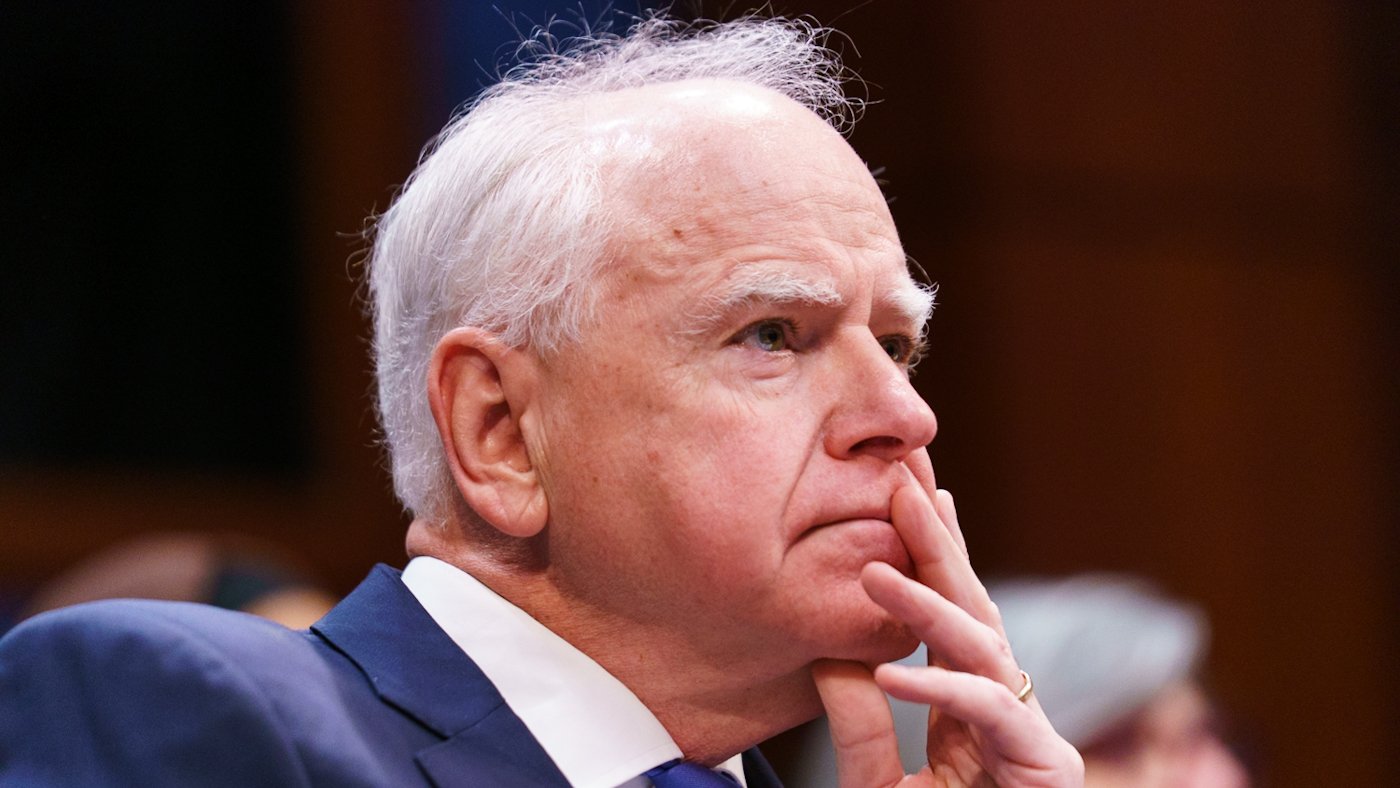
Minnesota Governor Tim Walz has issued a direct challenge to the future leadership of his party, stating that the next Democratic president must make achieving universal healthcare a central and successful mission. The governor framed the issue as a definitive measure of whether the party can translate electoral victories into substantive policy gains for Americans.
"When we take power back, the next Democratic president better figure out a way to get universal health care or we're back in the same situation again," Walz declared during an appearance on MSNBC's 'The Weeknight.' He argued that political power must be used to pass significant legislation, not merely retained. "It has to be about not holding power for the sake of holding power, it has to be about passing things," he said.
Walz's comments underscore a persistent and often divisive debate within the Democratic coalition. For over a decade, the party's progressive wing, led by figures like Senator Bernie Sanders, has championed single-payer 'Medicare for All' as a moral and economic imperative. This push has often clashed with more moderate voices who cite fiscal concerns and political viability.
That internal tension was evident in recent presidential cycles. During the 2016 campaign, Hillary Clinton dismissed the possibility of single-payer healthcare ever happening. In 2020, President Joe Biden stated he would veto a Medicare for All bill, pointing to its high projected cost. Walz's statement is a clear signal that this debate is far from settled and will likely be a central issue in the post-Biden era.
The governor, who rose to national prominence as Vice President Kamala Harris's 2024 running mate, enters this policy fray as he prepares to leave office in Minnesota. His stance aligns with significant public sentiment. A poll from late last year found a majority of voters believe healthcare is unaffordable, and 76% expressed support for a system where insurance coverage is not tied to employment—a core tenet of many universal healthcare proposals.
Walz suggested that the political approach of former President Donald Trump has reinforced his view on the urgency of delivering major reforms. The implication is that without clear, tangible achievements like universal healthcare, Democratic governance risks being perceived as ineffective, potentially fueling a cyclical return of Republican control.
The call for universal healthcare comes amid broader internal Democratic debates over the party's direction following the 2024 elections. Furthermore, discussions about healthcare system overhauls are not confined to the Democratic side, as seen in recent moves like Senator John Kennedy's effort to restructure a key federal health advisory panel that governs preventive care coverage.
Ultimately, Walz has placed a major policy marker for his party's future. By explicitly stating that the next Democratic standard-bearer must 'figure out a way' to achieve universal coverage, he is elevating it from a progressive aspiration to a baseline expectation for leadership, ensuring it will remain a litmus test in upcoming primary contests and a defining challenge for whoever next occupies the Oval Office.