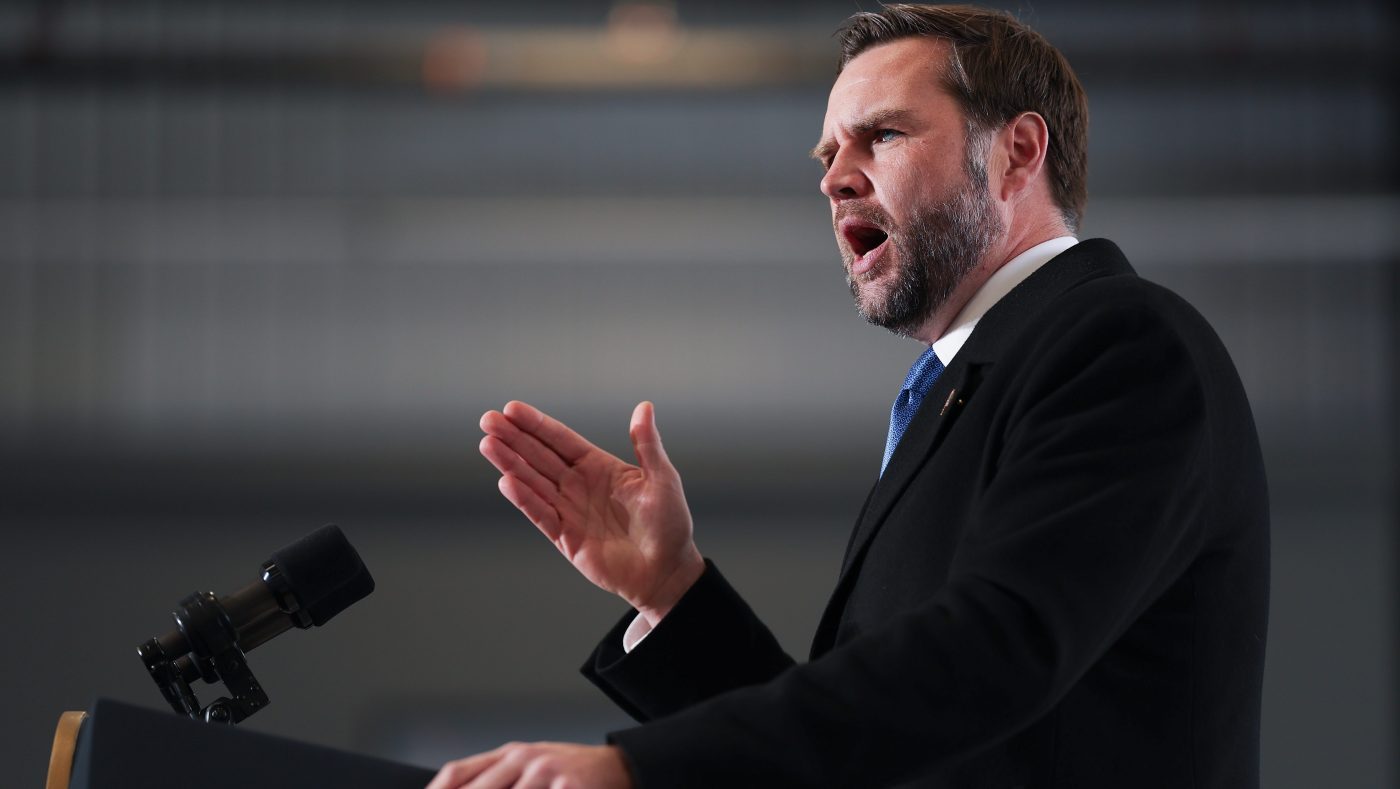
Vice President JD Vance on Monday delivered a firm pledge that the United States will not sink into a protracted military engagement with Iran, drawing a sharp contrast with the long wars in Iraq and Afghanistan. Speaking with Fox News host Laura Ingraham, Vance insisted that the Trump administration has no intention of repeating the mistakes of past Middle East conflicts.
When Ingraham noted that Vance himself has faced criticism over the U.S.-Iran memorandum of understanding and its political fallout ahead of the 2026 midterms, Vance defended President Trump, saying the president retains "a lot of options" and remains in control of the endgame. "He ultimately decides to bring the conflict to a close," Vance said. "He is not going to let this become a forever war, and the people who want it to become a forever war, they can attack me all they want to, because we signed up to not do this."
The vice president stressed that Trump's original campaign promise was to avoid new global entanglements. Although Trump later authorized strikes on Iran to destroy its nuclear program, Vance argued that decision was a necessary, limited action rather than the opening of a new endless conflict. "We are not going to allow this to become a 10- to 15-year commitment or, frankly, even a two-year commitment," he said, directly rebuking neoconservatives and others who advocate for a prolonged U.S. presence. "We're not going to stay there forever."
Vance expressed "full confidence" that Trump will bring the conflict to a resolution "with great results for the American people." His remarks come after two months of stalled ceasefire negotiations, which were further complicated by three recent drone attacks from Iran. The most recent, on Tuesday, involved one-way attack drones targeting a U.S. radar facility in Bahrain. U.S. Central Command confirmed that all drones were intercepted with no injuries or damage to U.S. personnel.
Trump has signaled he does not intend to escalate, declaring the conflict "effectively over" after negotiations helped lower gasoline prices. He also dismissed reports of an Iranian plot to deploy a "dirty bomb" in Washington, D.C., warning that if such a plot exists, "they will pay a price the likes of which no country has ever paid before."
Qatar, with backing from Egypt, Saudi Arabia, Pakistan, and Turkey, has been trying to bring both sides back to the table, but talks have stalled. Iran has offered to reopen the Strait of Hormuz—which it effectively closed at the start of the conflict—as part of a broader deal, but also demands the lifting of U.S. sanctions and the release of frozen assets. The administration has rejected those conditions.
Vance's comments come amid a broader Republican debate over the political cost of the Iran war. Some GOP figures, including former Vice President Mike Pence, have blamed the conflict for the party's midterm losses, while Vance has argued the war was not the primary factor. The vice president also recently downplayed the impeachment push against Defense Secretary Hegseth, framing it as a fight over Pentagon reform rather than Iran policy.
As the administration tries to wind down the conflict, Vance's insistence on a short timeline reflects a broader White House strategy to avoid a repeat of the political damage that the war inflicted on Republicans in the midterms. With Trump reportedly pulling Vance from direct Iran talks to focus on other priorities, the administration is signaling that its Iran policy will be defined by exit, not escalation.