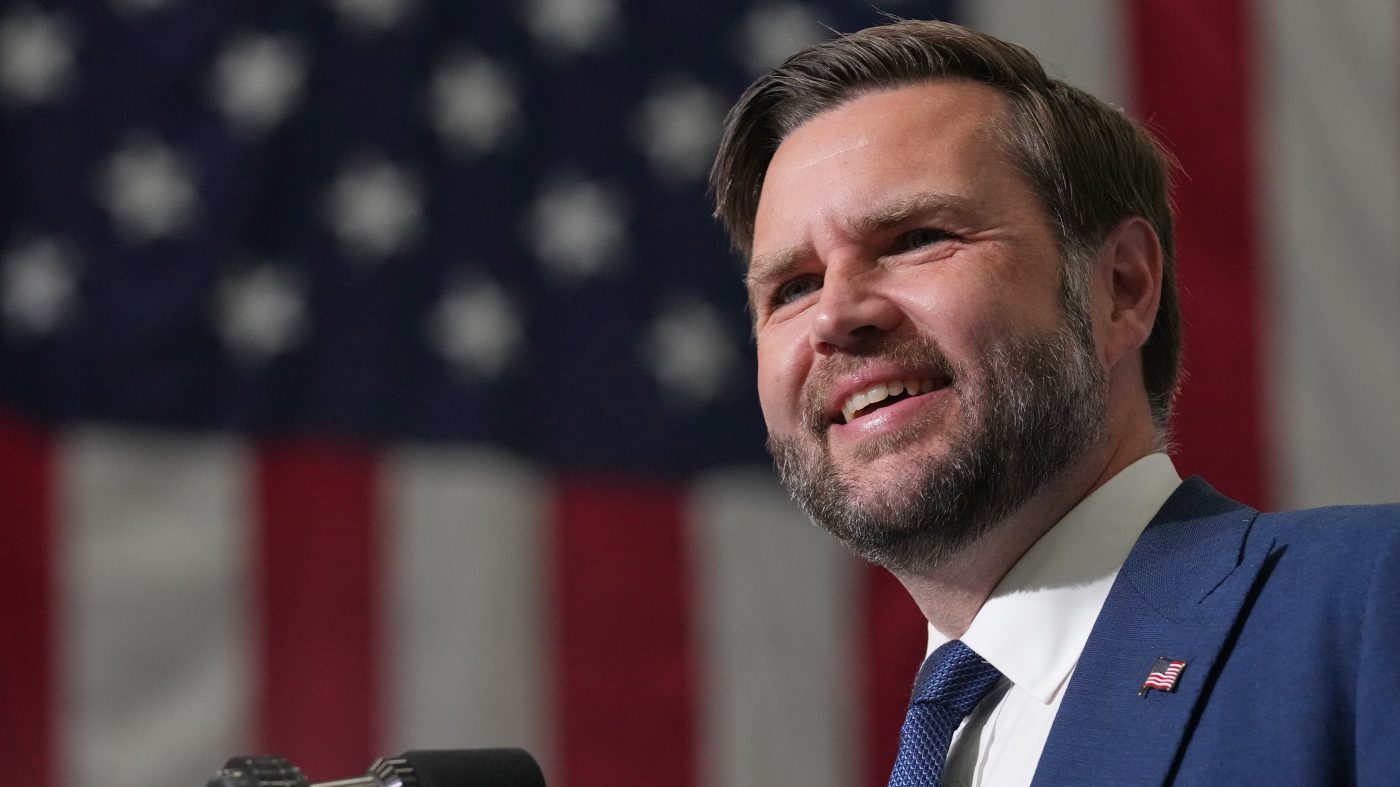
Vice President Vance on Wednesday dismissed Abdul El-Sayed's Michigan Senate primary victory as a product of affluent liberal support, arguing that the progressive candidate lacks genuine backing among working-class voters. Speaking with Fox News' Laura Ingraham a day after El-Sayed defeated Rep. Haley Stevens, Vance contended that the Democratic Party's ascendant progressive wing is pushing “radicals” who are hostile to private property rights.
“El-Sayed, he's this guy who holds himself out as a working-class hero, is a guy who's gonna fight for the working class,” Vance said on “The Ingraham Angle.” “He doesn't have a constituency among the working class.” The vice president argued that El-Sayed's policy platform, particularly on trade and immigration, would undermine Michigan's auto industry and hurt the very workers he claims to champion.

El-Sayed, who earned endorsements from Sen. Bernie Sanders and other progressive leaders, has called for abolishing ICE and has been cautious about broad tariffs that could raise consumer prices. Vance said those positions appeal primarily to “wealthy white liberals” rather than the blue-collar voters who form the backbone of Michigan's electorate. The vice president pointed to El-Sayed's strongest performance in wealthier, more educated precincts as evidence of this divide.
Vance's comments come amid growing enthusiasm among progressives following El-Sayed's narrow win, but also highlight lingering fractures within the Democratic coalition. While some party leaders have rallied behind El-Sayed, including Governor Gretchen Whitmer uniting behind him, others worry that his unabashed progressive stance could alienate swing voters in the general election.
Vance also linked El-Sayed's appeal to a broader frustration among younger college graduates who feel betrayed by the educational system. “I think what it tells us is that a lot of the young Americans were sold a whole promise at the elite universities in our country, and that promise is that they were going to be able to go to college, get a degree, and everything was gonna work out fine for them,” he said. “I think in reality, actually, a lot of universities sold these kids a bill of goods. They gave them a lot of debt. They did not give them useful skills or a useful credential. And a lot of these kids are very angry.”
The vice president's remarks echo attacks from former President Trump, who has labeled El-Sayed as antisemitic, a charge El-Sayed's campaign has denied. The race is shaping up to be a toss-up clash with Republican nominee Mike Rogers, with both national parties pouring resources into the state.
Political analysts note that El-Sayed's path to victory in November will require him to expand his coalition beyond the progressive base that propelled him through the primary. His campaign has sought to paint Rogers as a corporate sellout, but Vance's framing could resonate with the working-class voters who have drifted toward the GOP in recent cycles.
As the general election campaign kicks off, the battle for Michigan's working-class vote is likely to intensify. Vance's pointed critique underscores the stakes for both parties in a state that remains a critical battleground for control of the Senate.