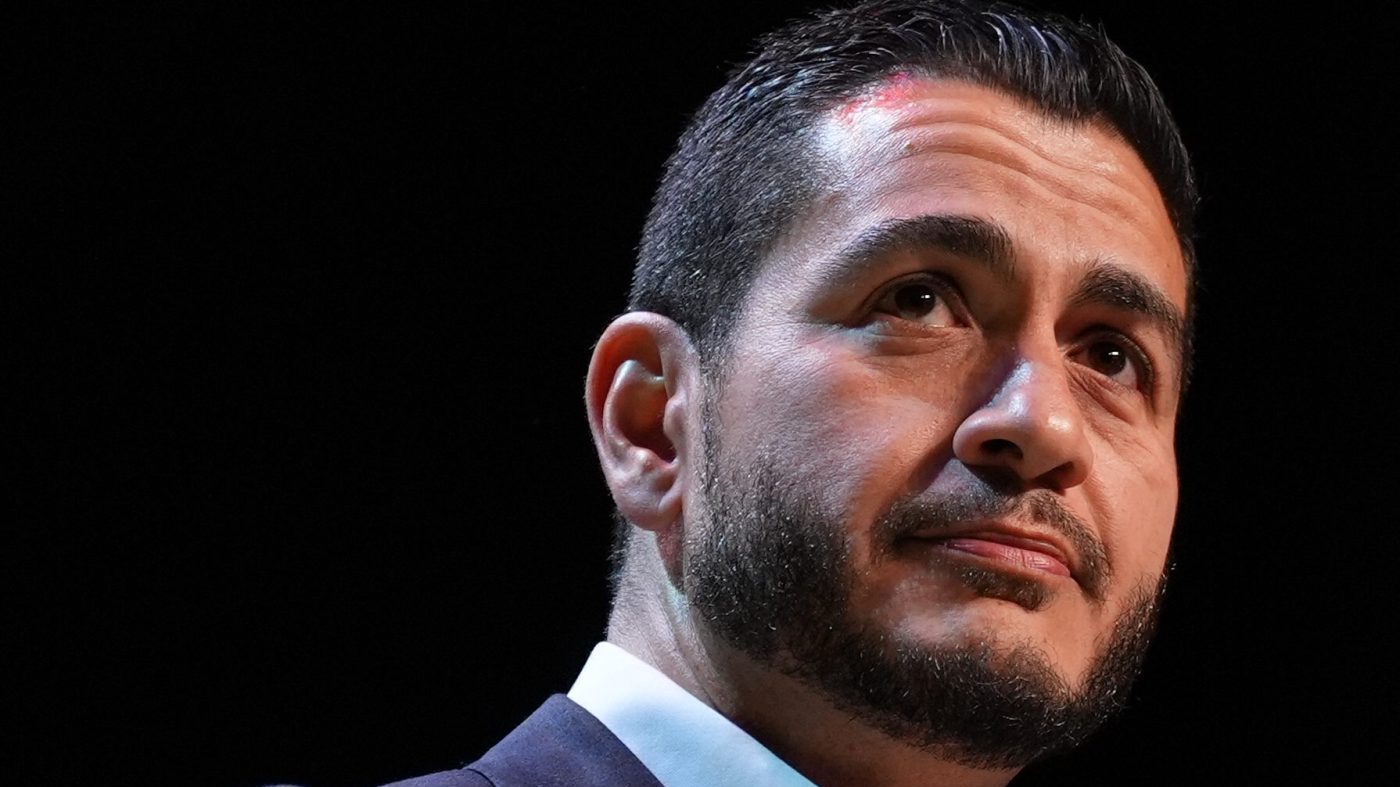
Progressive Abdul El-Sayed secured the Democratic nomination in Michigan's Senate race early Wednesday, narrowly defeating moderate Rep. Haley Stevens. According to Decision Desk HQ, El-Sayed captured 48.5 percent of the vote to Stevens's 47.5 percent, a margin that underscored the party's ideological divide in a key battleground state.
The former Detroit health director will now take on Republican Mike Rogers, a former congressman and FBI agent, in November for the seat being vacated by retiring Sen. Gary Peters. The nonpartisan Cook Political Report rates the general election as a toss-up, making it one of the most closely watched Senate contests in the country.

El-Sayed's victory marks a significant win for the party's progressive wing, which has been energized by his calls for Medicare for All, a Green New Deal, and tougher antitrust enforcement. His campaign leaned heavily on grassroots fundraising and a coalition of young voters and labor unions, while Stevens, who had the backing of many establishment figures, emphasized her record of bipartisan deal-making and her role in passing the CHIPS Act.
In his victory remarks, scheduled for 10:30 a.m. EDT, El-Sayed is expected to frame the general election as a clear choice between his vision for economic and racial justice and Rogers's alignment with former President Trump's agenda. Rogers, who served as chairman of the House Intelligence Committee, has made border security and inflation central to his campaign.
The race is likely to attract national attention and significant outside spending, as control of the Senate hangs in the balance. Michigan's open seat is one of several pickup opportunities for Republicans, who need to flip only one seat if they hold the White House in 2024.
El-Sayed's win also reverberates beyond Michigan. It comes on the same night that progressive candidates in other states notched victories, including a test for democratic socialists in Wisconsin. His success may embolden left-wing challengers in future primaries, even as some party strategists worry about electability in moderate-leaning districts.
Meanwhile, down-ballot races in Michigan produced notable outcomes. In the 10th District, Democrat Carl Hines and Republican Paul Bouchard will face off for an open seat. And in the 4th District, Republican Bill Huizenga won his primary, setting up a fall contest against Democrat Jessica McCann.
El-Sayed's path to the nomination was not without controversy. He had previously run for governor in 2018, losing to Gretchen Whitmer in the primary. This time, he focused on health care and economic populism, arguing that Michigan's working families have been left behind by corporate interests. His campaign also highlighted his experience as a Rhodes Scholar and a former public health official during the Flint water crisis.
Stevens conceded late Tuesday, congratulating El-Sayed and urging Democrats to unite behind him. In a statement, she said, "We must defeat Mike Rogers and protect our democracy." Rogers, for his part, quickly pivoted to attacking El-Sayed as "too extreme for Michigan," a line likely to be repeated in the months ahead.
With the primary over, both campaigns will now turn to the general election, which is expected to be one of the most expensive and closely contested in the country. National Democrats are already pouring resources into Michigan, while Republicans see an opportunity to flip a seat that has been in Democratic hands since 2000.