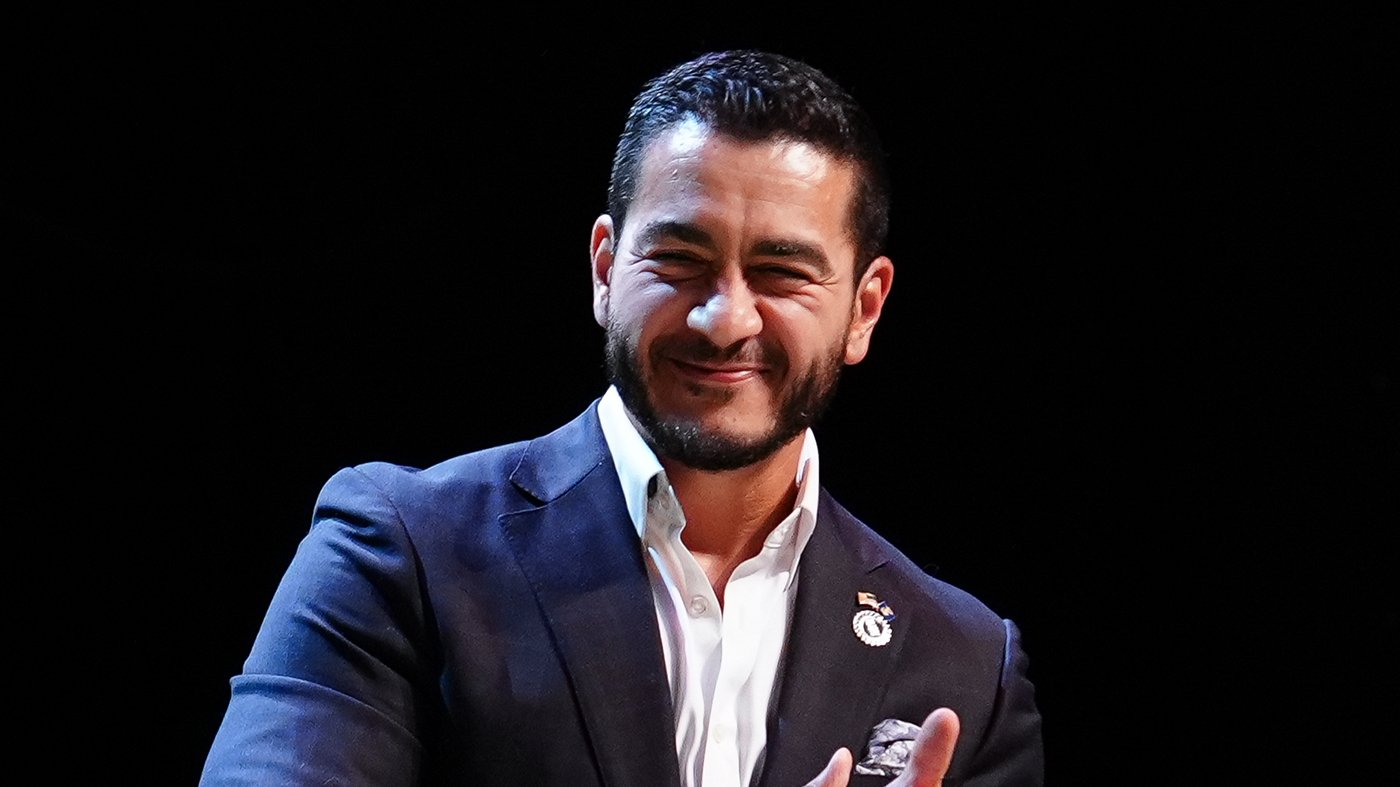
The Democratic Party's progressive wing added another notable victory on Tuesday, though the night's marquee race in Michigan proved far closer than many on the left had hoped. Abdul El-Sayed, a public health expert and first-time candidate, narrowly defeated four-term Rep. Haley Stevens in the state's Senate primary, overcoming a torrent of outside cash and establishment opposition.
El-Sayed's margin of victory was about one percentage point, a far cry from the double-digit leads he held in pre-primary polls. But progressive strategists argue the narrowness of the win misses the larger point: El-Sayed, who never held elected office, toppled a well-funded incumbent who had the backing of the Democratic establishment and more than $60 million in outside spending—roughly half of it from groups affiliated with the American Israel Public Affairs Committee (AIPAC).
"The bottom line is that Abdul El-Sayed faced an unprecedented amount of outside spending, he faced a Democratic establishment that was pretty much all-in against him, and he overcame that with a great message, with some real political skills, and with a really excellent organizing operation," said Matt Duss, executive vice president at the Center for International Policy and a former foreign policy adviser to Sen. Bernie Sanders.
The race highlighted the deep fault lines within the Democratic Party, particularly over Israel and Gaza. El-Sayed, who has called Israel's actions in Gaza a genocide, used the AIPAC funding against Stevens, while Stevens cast El-Sayed as a celebrity candidate and unelectable. El-Sayed's populist message—"Money out of politics, money in your pocket, Medicare-for-All"—resonated with grassroots activists, earning him endorsements from Sanders, Rep. Alexandria Ocasio-Cortez, Sen. Elizabeth Warren, and Rep. Rashida Tlaib.
In the aftermath, party leaders have moved to unify. Sen. Gary Peters, Gov. Gretchen Whitmer, and even Stevens herself have endorsed El-Sayed, and Senate Majority Leader Chuck Schumer and Sen. Kirsten Gillibrand released a joint statement of support. The Schumer-aligned Senate Majority PAC has already launched an ad backing his general election bid against former Rep. Mike Rogers.
But the underlying tensions remain. "The left is not going to stop pushing, and the centrists are not going to stop pushing back," said one Democratic strategist who requested anonymity to speak candidly. "The question is whether they can hold it together for November."
Tuesday's results also delivered other progressive wins in Michigan: state Rep. Donavan McKinney ousted incumbent Rep. Shri Thanedar in a House primary, and Will Lawrence, a Sunrise Movement co-founder, won the 7th District primary. These victories follow a string of left-wing upsets in recent months, including the defeats of Reps. Adriano Espaillat and Dan Goldman in New York and Rep. Diana DeGette in Colorado.
Yet the left has also faced setbacks. In Missouri, progressive favorite Cori Bush lost her comeback bid to Rep. Wesley Bell, and centrists like Sen. John Fetterman and strategist James Carville continue to argue that the party must move toward the center to win. Sanders fired back this week, suggesting Carville should "start his own party" if he is so unhappy with the left's influence.
As El-Sayed now pivots to the general election, the race against Rogers is expected to be one of the most closely watched in the country. El-Sayed has already tagged Rogers as a "corporate sellout", while Republicans are likely to paint El-Sayed as too far left. The attack from former President Trump—who called El-Sayed antisemitic—has only intensified the stakes.
For now, the progressive movement can claim momentum, but the narrow margins and persistent internal battles suggest the road to November will be anything but smooth.