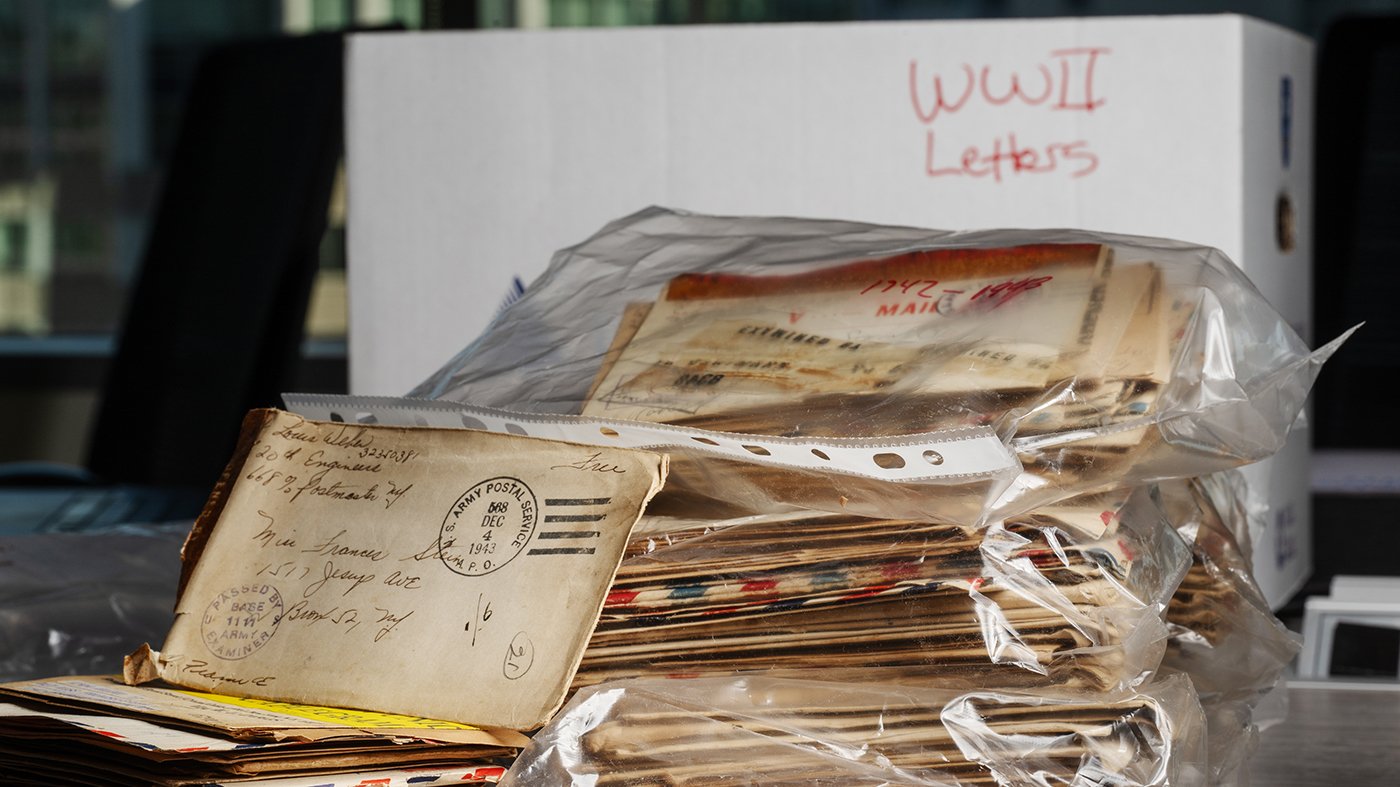
The United Service Organizations (USO) has launched a digital archive of more than 300 never-before-seen letters from a World War II soldier, offering an intimate look at the pressures of D-Day and the mundane moments of military life. The collection, released Wednesday, features correspondence from U.S. Army private Louis “Speedy” Weber to his wife, Frances, written between 1942 and 1945 while he served on the frontlines in Europe.
Weber’s letters capture both the gravity of historic events and the trivialities of army routine. In a June 10, 1942 note, he describes being woken after just four hours of sleep, quipping, “I don’t know whether they want to make men of us or kill us before we get to Japan.” He also recounts a 30-cent haircut to comply with regulations, noting the forced removal of mustaches and the dismay of fellow soldiers.
The correspondence provides a raw window into the emotional toll of separation. “I don’t feel as blue as I did yesterday,” Weber wrote. “Things are beginning to shape up and they don’t give me a minute to think about anything but Army life, and in a way that’s the best thing for me, because if I stopped to think about home I’d go nuts.”
Mike Case, the USO’s digital archivist who authenticated the letters, highlighted Weber’s romantic side. Despite three years apart, Weber signed every letter with “you’re always in my heart” and once joked that his intimacy might “get her pregnant” from reading—a playful remark Case called “very 1940s spicy” and innocent by today’s standards.
Weber also had a keen sense of history, Case noted. He often dated his letters from “Somewhere in France, somewhere in Germany, somewhere in Africa” and described the Normandy invasion with vivid detail: “the sky full of planes and the sea full of ships.” Many of the letters were written in the lead-up to D-Day in 1944, offering a firsthand account of the tension surrounding the operation.
The USO received the cache around 2022 during the COVID-19 pandemic, but the donor’s identity remains unknown, sparking a search for Weber’s descendants. Weber was born in New York City in 1918, survived the war, and died in 1997 at age 78; Frances passed away in 2005. The couple had no children, leaving Case to wonder if a distant relative or an unrelated person cleaning out a house donated the letters.
“Part of the mystery is he refers to letters having photos and a voice recording,” Case said. “I would love to see a photo of Speedy. I would love to know if that audio recording of his voice is still out there somewhere.”
The USO is also tying the launch to the upcoming film Pressure, set for release May 29. The Focus Features movie, starring Brendan Fraser as General Dwight D. Eisenhower and Andrew Scott as meteorologist Captain James Stagg, focuses on the 72 hours before D-Day and the role of weather forecasting. Scott reads from one of Weber’s letters on the USO’s site, dated June 21, 1944, where Weber describes a “dark, bleak, miserable, cold day” that “makes you mad at everyone.”
Case emphasized the collection’s value for a public with limited direct military experience. “Since most Americans don’t serve, they don’t really have a direct connection to the military. This really gives you sort of a first-person perspective of what it’s like,” he said. The letters, he added, “illustrate the stressors and sort of the day-to-day life of what it’s like to serve in the military.”
For those interested in military history, the archive complements recent coverage of defense matters, such as the debate over congressional approval for Iran military action and the recovery of a soldier's body off Morocco during African Lion drills. The USO hopes the digital collection will not only educate but also help locate Weber’s family to fill in the gaps of his story.