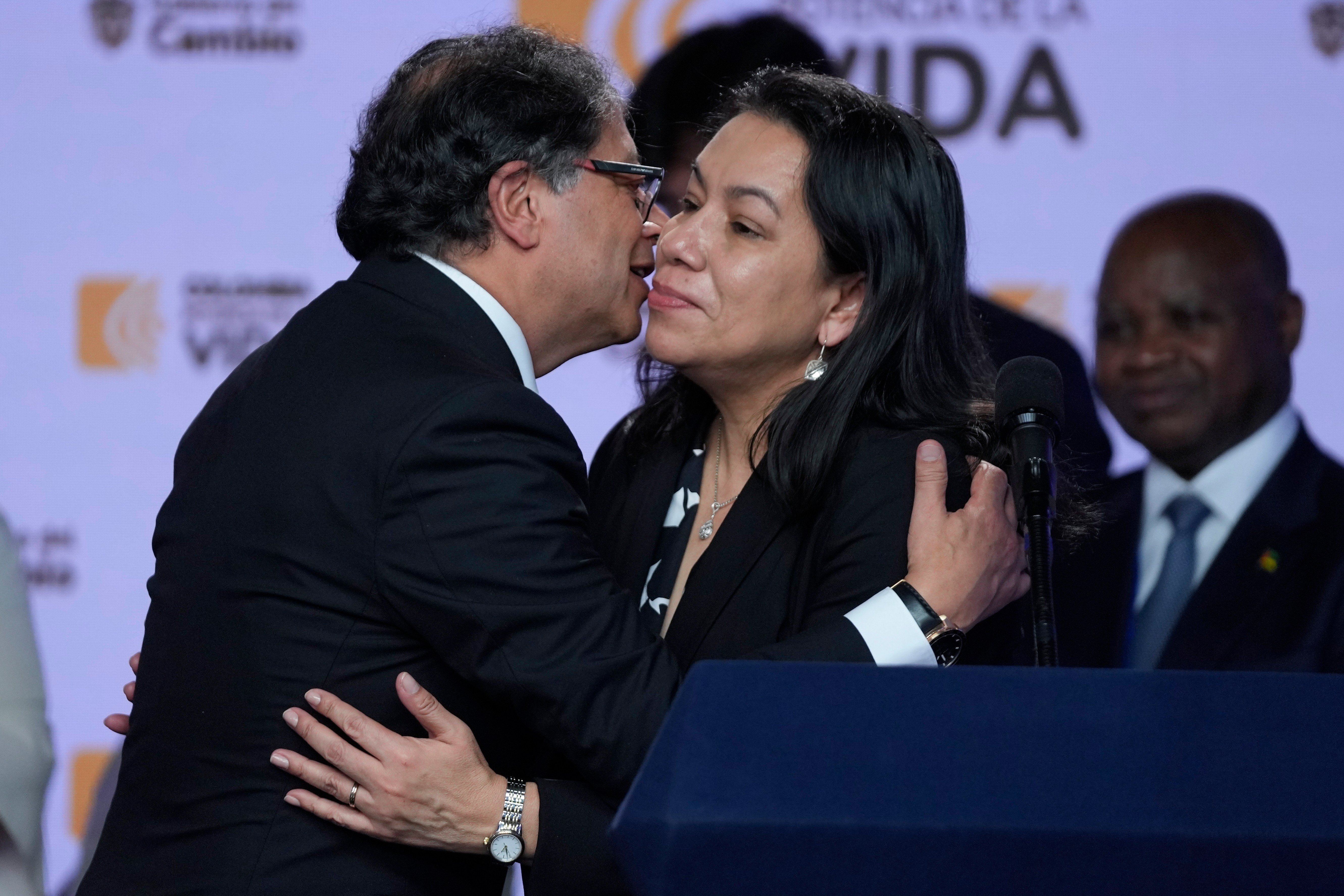
The contest to select the next United Nations secretary-general remains wide open, but one candidate gaining traction should trigger serious concern in Washington.
In the latest straw poll among Security Council members, Rebeca Grynspan, a former Costa Rican vice president who has headed the UN Conference on Trade and Development since 2021, held a narrow lead. However, Guyana's UN ambassador, Carolyn Rodrigues-Birkett, who topped the previous round, is close behind.
To secure the post, a nominee needs backing from nine of the council's 15 members and must avoid a veto from any of the five permanent members: the US, China, the UK, France, and Russia.
The US has ample reason to question Rodrigues-Birkett's fitness, especially as several world leaders at the recent UN General Assembly called for a woman to lead the organization. Although Guyana is a US ally, Rodrigues-Birkett's stances align more closely with the Chinese Communist Party, the Cuban regime, and Hamas than with Washington and its partners. Indeed, China, America's chief global rival, appears poised to endorse her.
On artificial intelligence, Rodrigues-Birkett has backed China's newly formed World Artificial Intelligence Cooperation Organization, which counts Russia, Cuba, and Nicaragua among its 29 founding members—all authoritarian adversaries of the US. As Washington seeks to maintain leadership in AI and manage its societal impacts, having a UN chief in Beijing's corner on this issue would be detrimental.
Her affinity for Beijing was evident during a July campaign trip to the Chinese capital. While four other candidates also visited, she was the only one to explicitly support the 1971 UN General Assembly resolution recognizing the People's Republic of China as the sole legitimate representative of China to the UN. Beijing routinely invokes that resolution to exclude democratic Taiwan from UN bodies, a position Washington has consistently rejected.
China's official readout of the meeting noted that Rodrigues-Birkett "spoke highly of the four major global initiatives proposed by China," which are central to President Xi Jinping's efforts to reshape international rules and institutions in Beijing's favor.
Her record also includes praise for Cuba's communist regime. In a 2013 speech, she called the late dictator Fidel Castro a "visionary, determined revolutionary." That same year, as Guyana's foreign minister, she sponsored a motion in the National Assembly condemning the US blockade of Cuba and claimed Cuba, a totalitarian state that has imprisoned thousands of dissidents, "has been kind to everyone."
On Gaza, Rodrigues-Birkett has voiced concern for hostages taken by Hamas but squarely blamed Israel for the conflict, accusing it of "veritable genocide." She has also pushed for the continued role of the UN Relief and Works Agency (UNRWA) in postwar Gaza. The US has called for UNRWA's abolition because up to 100 of its employees allegedly took part in the October 7, 2023, atrocities, and the USAID inspector general is investigating terrorism links involving up to 1,500 current and former staff.
The US needs a secretary-general who will support President Trump's plan to stabilize Gaza by disarming Hamas, not amplify its propaganda or defend an agency that has provided material support to terrorists.
As a permanent Security Council member, the US can veto Rodrigues-Birkett's nomination and should do so, even if it sparks protests in Guyana. Richard Goldberg is a senior advisor to the Foundation for Defense of Democracies, where Ben Cohen is a research fellow.