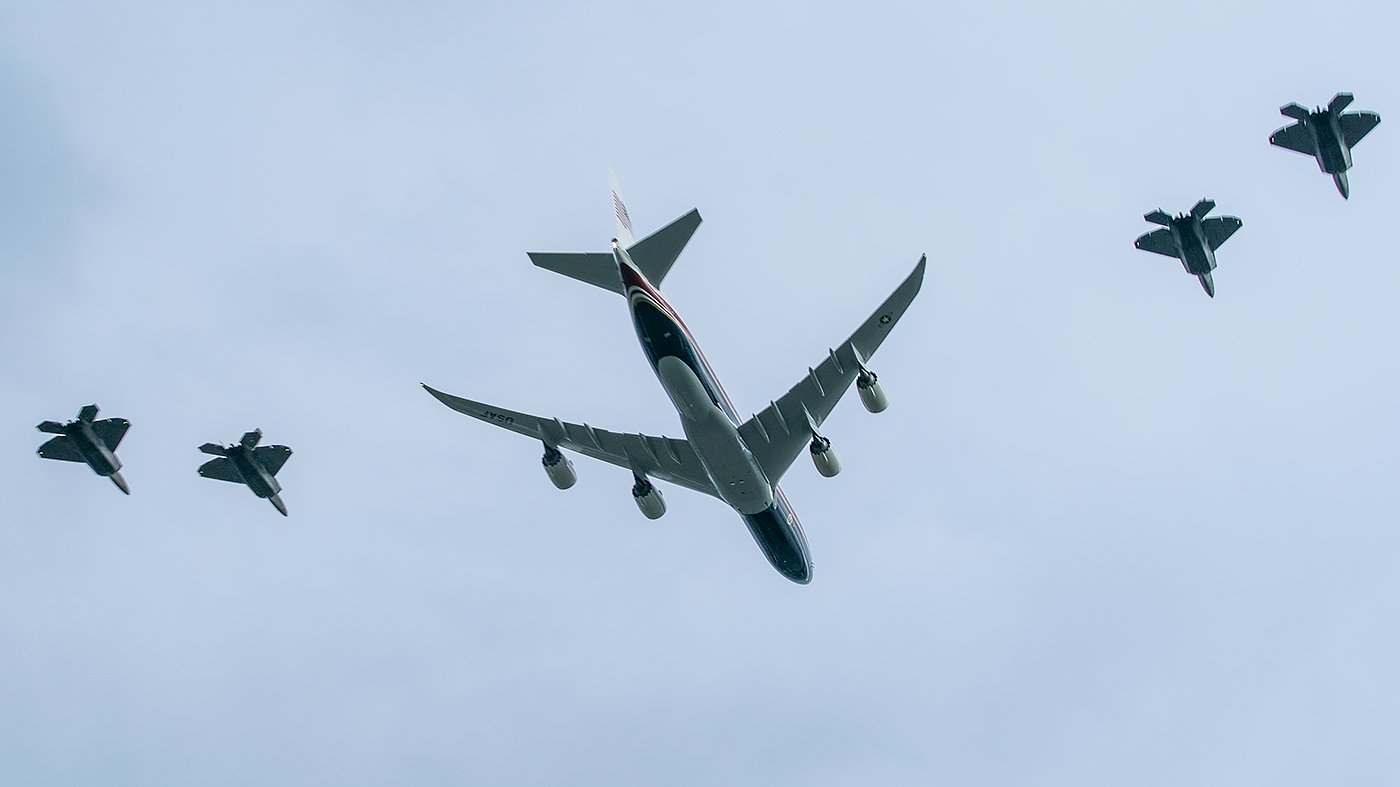
A U.S. Air Force cargo plane headed to Antarctica was forced to abort its mission on Tuesday after Russia warned of a planned missile launch in the region, according to New Zealand aviation authorities.
The C-17 Globemaster, operating under the callsign ICE28, departed Christchurch, New Zealand, around 9:00 a.m. local time but turned back less than three hours later. The reversal came after New Zealand's Civil Aviation Authority (CAA) issued a Notice to Airmen (NOTAM) flagging a "potentially hazardous" space activity.
In a statement, the CAA said it was alerted to the danger by Russia's State Air Traffic Management Corporation, which informed the agency of an impending missile launch. The warning applied to international airspace within New Zealand's Oceanic Flight Information Region (FIR), a vast 30-million-square-kilometer area spanning the South Pacific, Southern Ocean, and Tasman Sea.
"We were made aware by the Russian air traffic agency of a planned missile launch and associated potential hazard to international airspace," the CAA said. "We put in place a danger area and issued a NOTAM to alert aircraft operators to the potential hazard. This does not prevent aircraft from flying through the area; operators make their decisions based on the information available."
The flight was part of the annual WINFLY season, which ferries researchers and essential equipment to U.S. and New Zealand Antarctic research stations ahead of the summer research period. The C-17 is a regular fixture on the Christchurch-to-Antarctica route, but this mission was cut short by the security alert.
This incident underscores the growing geopolitical tensions in the region, as Russia's military activities increasingly encroach on international airspace used by civilian and scientific operations. The decision to turn back highlights how even routine logistical flights can be disrupted by such threats.
Earlier this year, escalating missile threats have prompted similar caution from military planners. The Antarctic research community, which relies on precise scheduling, now faces additional uncertainty as geopolitical rivalries extend to the southernmost continent.
The CAA did not immediately respond to requests for further comment, and it remains unclear whether the missile launch was a test or part of a broader military exercise. The incident follows a pattern of concerns about missile defense readiness raised by defense analysts.
For now, the affected flight has returned to Christchurch, and officials are assessing whether to reschedule the mission. The WINFLY season is critical for resupplying Antarctic bases before winter sets in, and any prolonged delay could hamper scientific work.