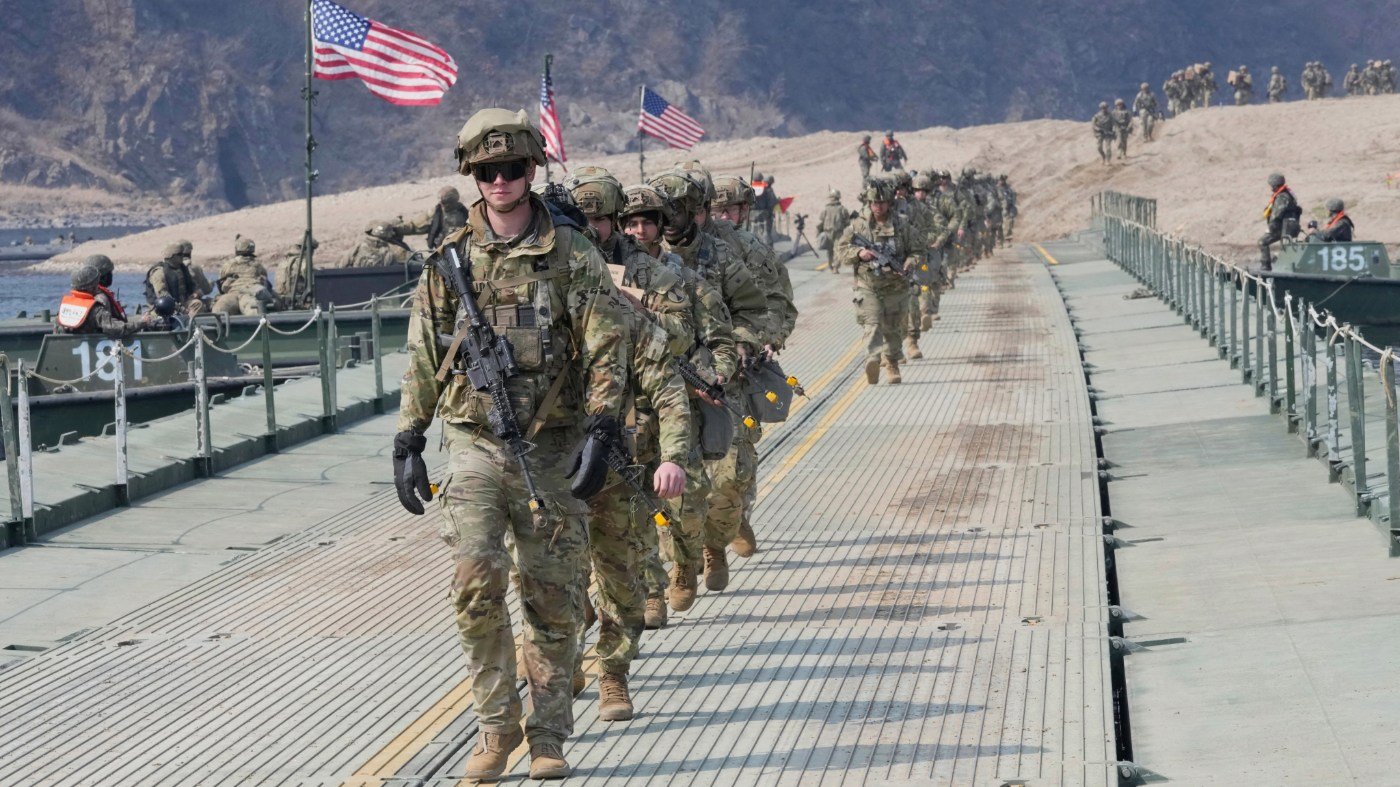
The fragile ceasefire between the United States and Iran faced its most severe challenge Friday when the U.S. military resumed strikes against Iranian targets, accusing Tehran of violating the terms of a 60-day truce. President Trump labeled the Islamic Revolutionary Guard Corps' attack on a commercial vessel in the Strait of Hormuz a "foolish infringement" of the agreement.
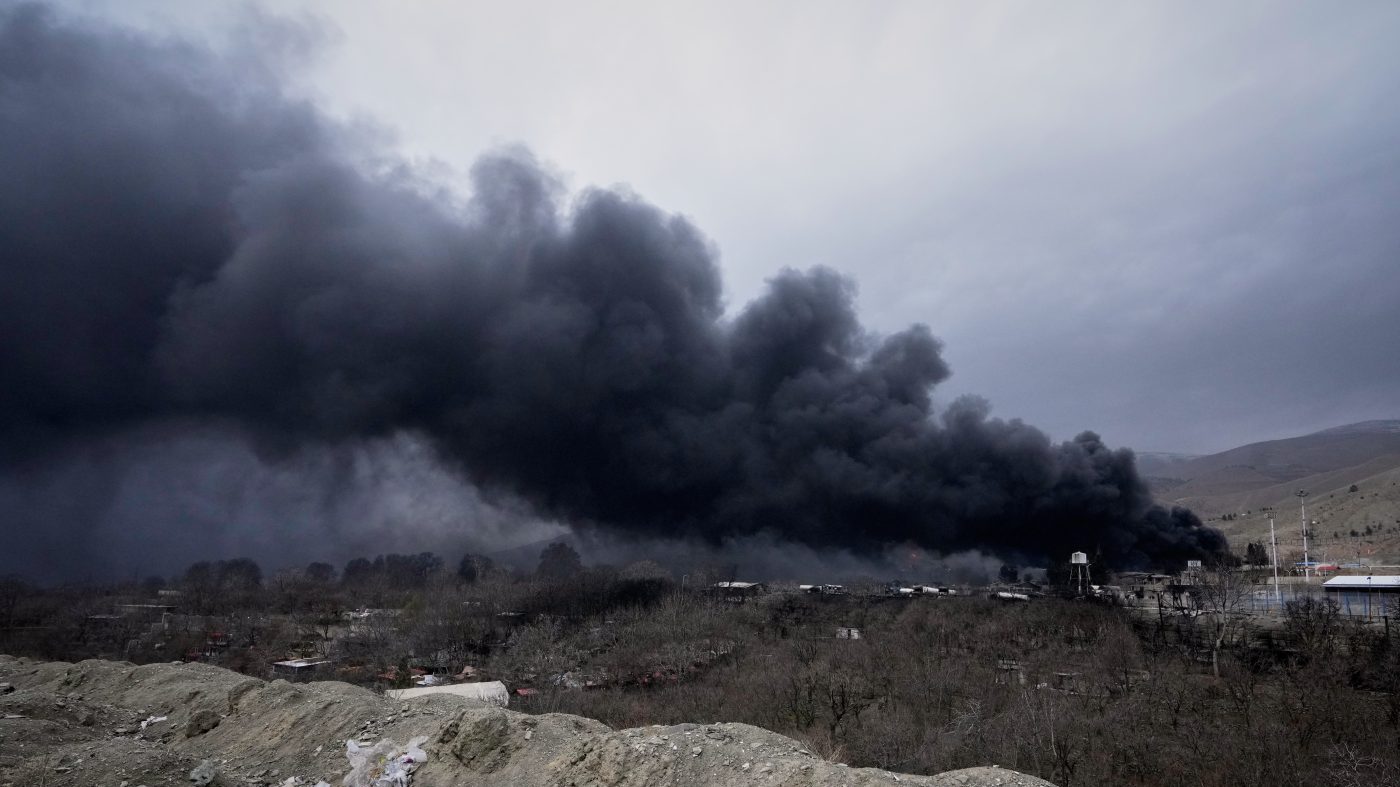
The U.S. military announced it had struck Iranian coastal radar installations and missile and drone storage sites on Friday. In response, Tehran launched a drone attack early Saturday on Bahrain, home to the U.S. Navy's Fifth Fleet. Bahrain's speaker of the Council of Representatives, Ahmed bin Salman Al Musallam, condemned the assault as a "flagrant violation" of his country's sovereignty, according to the Bahrain News Agency.
The British Navy's shipping monitor reported later Saturday that a vessel in the Strait of Hormuz had been hit by an "unidentified projectile," causing damage to the bridge but no casualties. The United Kingdom Maritime Trade Operations center confirmed the crew was safe.
The escalation comes after weeks of relative calm following a U.S.-Iran memorandum of understanding negotiated by Vice President Vance and Middle East envoy Steve Witkoff. Vance defended the American strikes in a social media statement, saying, "Iran signed a ceasefire agreement. We have honored it. If they have disagreements about how the MOU is being applied, they can pick up the phone. But violence will be met with violence." In an interview with comedian Bill Maher on Friday, Vance also argued that the administration's strategy in Iran remains sound even if a long-term deal fails to materialize.
The ceasefire's fragility is compounded by conflicting interpretations of the memorandum. Trump claimed on Truth Social that Iran "fully and completely agreed" to future inspections of its nuclear facilities. But Iranian Foreign Ministry spokesperson Esmail Baghaei contradicted that, telling state media Tuesday that Tehran has no plans to allow inspectors and that no meeting has been scheduled with the head of the International Atomic Energy Agency. "No protocol exists in this regard," Baghaei said.
The standoff is further inflamed by regional turmoil, including tensions between Israel and Iran-backed Hezbollah. After Lebanon agreed to a U.S.-backed framework agreement with Israel on Friday, Hezbollah leader Naim Qassem declared the deal "null and void," calling it "a humiliation, a disgrace, and a surrender of sovereignty." The agreement calls for disarming the militia, a condition Qassem rejected outright.
The combination of nuclear disagreements, control of the Strait of Hormuz, and the Hezbollah conflict has placed the entire ceasefire at risk. Iran has previously threatened to restrict shipping through the strait, a critical chokepoint for global oil supplies, following strikes in Lebanon. The latest fighting underscores how quickly the region can tip back into open confrontation.
For more context on the immediate aftermath of the U.S. strikes, see our report on Iran Strikes Bahrain Base Hours After US Hits Iranian Military Sites. For details on the initial drone attack that triggered the escalation, read US Military Strikes Iranian Targets After Drone Attack on Cargo Ship in Strait of Hormuz. And for analysis of how the ceasefire deal is affecting domestic politics, check Trump's Iran Ceasefire Deal Boosts His Midterm Prospects but Leaves Netanyahu in Political Peril.