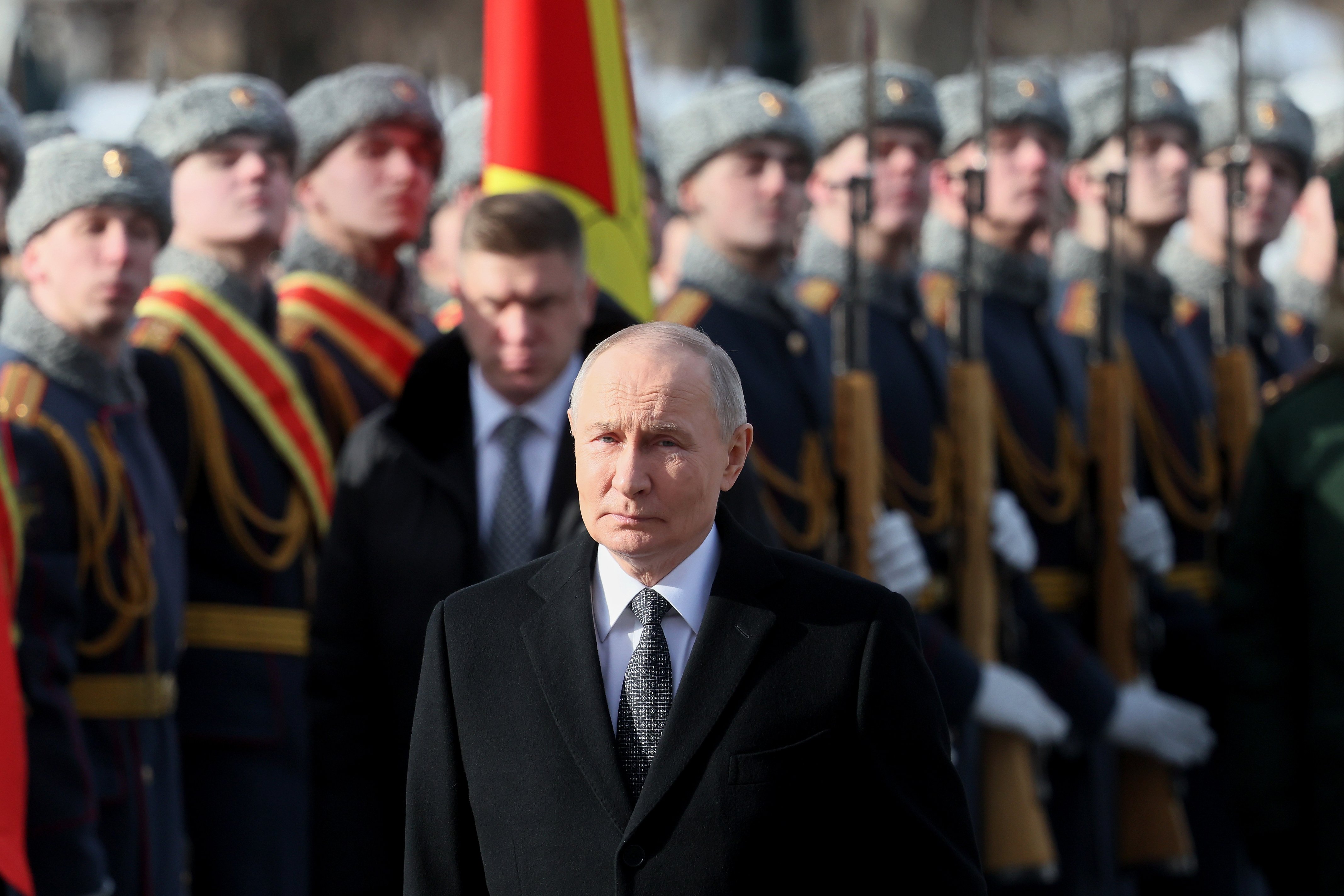
The battlefield calculus in Ukraine has undergone a dramatic transformation in recent weeks, with Kyiv's new tactics not only reshaping the front lines but also forcing a visible change in Vladimir Putin's public posture. For the first time in nearly two decades, Russia's annual Victory Day parade on Red Square rolled out without a single tank or missile launcher—a stark admission that Ukrainian drone capabilities now pose a direct threat to Moscow's security.
The shift is more than symbolic. Putin has abruptly dropped his vitriolic rhetoric—he no longer labels Ukrainian leaders as "drug addicts" or "neo-Nazis"—and now refers to President Volodymyr Zelensky as "Mr. Zelensky," even hinting at the possibility of direct talks. This change reflects a genuine reckoning with Ukraine's military effectiveness, particularly its ability to strike deep inside Russian territory.
Ukrainian forces have repeatedly hit critical infrastructure, including the oil terminal in Tuapse four times in two weeks, as well as the Baltic ports of Primorsk and Ust-Luga. These strikes, some more than 1,200 kilometers from the front, are disrupting Russia's war machine and eroding public morale. Air defense systems in the Urals are being knocked out faster than Moscow can replace them.
The tactical evolution is clear: Ukraine is moving away from classic infantry and tank encirclements toward a model of technological siege. By massing drones for total fire blockade of enemy logistics, Kyiv is making occupied territory increasingly lethal for Russian troops. Donetsk and Luhansk may soon be encircled not by heavy armor, but by swarms of unmanned aerial vehicles.
This approach is already showing results on the ground. In April, for the first time since 2024, Russia lost more territory than it gained. For five consecutive months, Ukrainian forces have been killing Russian soldiers faster than Putin can recruit replacements. Overall, the full-scale invasion has cost Russia an estimated 500,000 killed, with many more wounded.
The international perception of Russia is also shifting. A protest by the band Pussy Riot at the Venice Biennale disrupted Kremlin efforts to use art as a cultural weapon. Meanwhile, Ukraine's battlefield momentum has been widely covered, including in reports about how Kyiv seized the initiative for the first time since 2023.
Putin's frustration is mounting as the Baltic states brace for potential aggression, but the reality is that Russia's offensive capacity is eroding. The Kremlin's reliance on missiles and drones to terrorize civilians—striking sites like the Chernobyl Museum—has had limited military impact. In contrast, Ukraine's precision strikes are systematically dismantling Russia's logistical backbone.
The conflict is also illustrating broader lessons about how asymmetric warfare is reshaping modern conflicts. Ukraine's drone strategy is not just a tactical innovation; it is a blueprint for how a smaller force can impose strategic costs on a larger adversary.
All these developments—Putin's softened rhetoric, the disruption of Russian logistics, and the gradual loss of territory—point to a weakened Russia heading toward a potentially humiliating conclusion. The war's trajectory is no longer defined by Russian advances but by Ukraine's ability to innovate and strike where it hurts most.