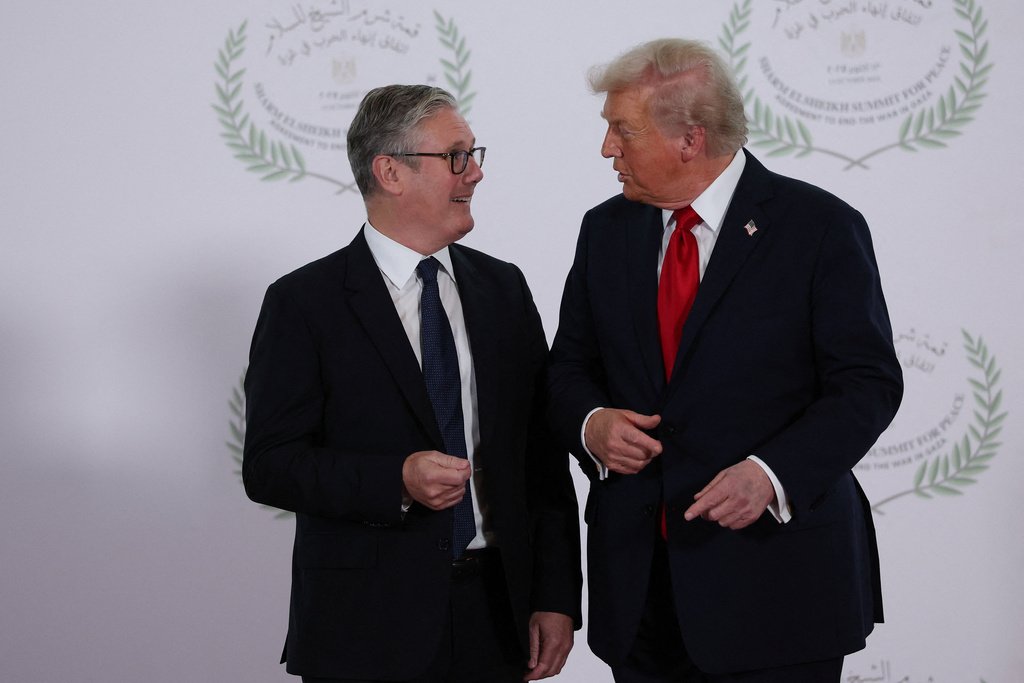
The Anglo-American alliance, frequently described as "special," has demonstrated remarkable durability through eight decades of international upheaval. From the nuclear tensions of the McMahon Act to the diplomatic rupture of the Suez Crisis, and through conflicts from Vietnam to Afghanistan, the partnership has weathered profound disagreements. Its persistence stems not from sentimental attachment but from cold strategic calculation: Britain has consistently provided capabilities that advance American interests more effectively than any other ally.
Current Strains in Historical Context
Recent months have seen familiar tensions resurface. Following an initially positive start to the second Trump administration, rhetoric from Washington has turned sharply critical. The President's comparison of Prime Minister Keir Starmer to appeaser Neville Chamberlain and the Defense Secretary's public criticism of the Royal Navy signal renewed friction. These disputes, alongside fundamental disagreements over policy toward Iran and broader concerns about U.S. actions' legality, have prompted some British officials, like former National Security Adviser Lord Peter Ricketts, to question the very concept of a special relationship.
Yet history suggests these strains are not fatal. The partnership's defining characteristic is its survival through recurring crises that often seemed existential at the time. The relationship became institutionalized precisely because it delivered mutual strategic advantage. British intelligence offered unparalleled access to Russia, China, and the Middle East. The two militaries achieved a level of interoperability unmatched by any other alliance. Joint development programs helped counter Soviet and Chinese influence during the Cold War, a priority for administrations like Kennedy's, and British overseas territories provided critical staging points for American power projection.
The Gathering Storm: A Depletion of British Power
The coming decades, however, may present the partnership's most severe test. Britain's capacity to be a valuable partner is eroding across multiple fronts. Defense capabilities are particularly concerning. The Ministry of Defence faces a funding shortfall estimated at £28 billion over the next four years just to meet existing commitments. A stalled Defence Investment Plan has delayed procurement essential for addressing threats in Eastern Europe and the Arctic, while paralyzing the domestic defense industrial base. This comes as the U.S. debates its own massive defense spending priorities.
Britain's global influence is also receding. A decision to cut overseas aid spending to theoretically fund defense—an increase that has not materialized—risks creating vacuums that rivals like Russia and China are eager to fill. British development policy remains stuck in a post-Cold War framework, failing to adapt to a new era of strategic competition where Moscow and Beijing are actively courting the Global South. This backsliding undermines shared Western interests.
The China Conundrum and Shifting Public Sentiment
Perhaps the most dangerous divergence lies in China policy. As Washington increasingly views Beijing as its primary pacing threat, Britain has struggled to formulate and execute a coherent foreign policy that robustly acknowledges the challenge China poses to Western security and values. If London continues to avoid this reality, it risks falling down Washington's list of strategic priorities at the very moment the U.S. is reorienting its global focus.
Compounding these strategic challenges is a shift in British public opinion. Harsh rhetoric from the White House has turned sentiment, with one-third of the UK public now perceiving the U.S. as a threat. Yet the relationship remains indispensable for British security. Without deep intelligence sharing, defense integration, and technological cooperation with America, the UK's strategic position would rapidly unravel.
The Path Forward: Power, Not Sentiment
The solution echoes the wisdom of former Prime Minister Harold Macmillan after Suez. The choice remains whether Britain faces a volatile world with the United States or without it. Macmillan concluded Britain must neither part from the Americans nor become a satellite. Achieving that balance today requires Britain to become more powerful on its own terms.
This demands a fully integrated foreign policy built on a credible, well-funded strategy for defense, diplomacy, and development. It requires reversing capability decline with real investment, modernizing development aid for an age of competition, and formulating a clear-eyed approach to challengers like China. The alliance's future hinges not on nostalgia, but on whether Britain can rebuild the tangible assets that have made it a uniquely useful partner for eight decades. As global tensions flare, from the Middle East to the South China Sea, the value of a capable British ally will only grow for American strategists. The partnership will survive only if Britain provides it.