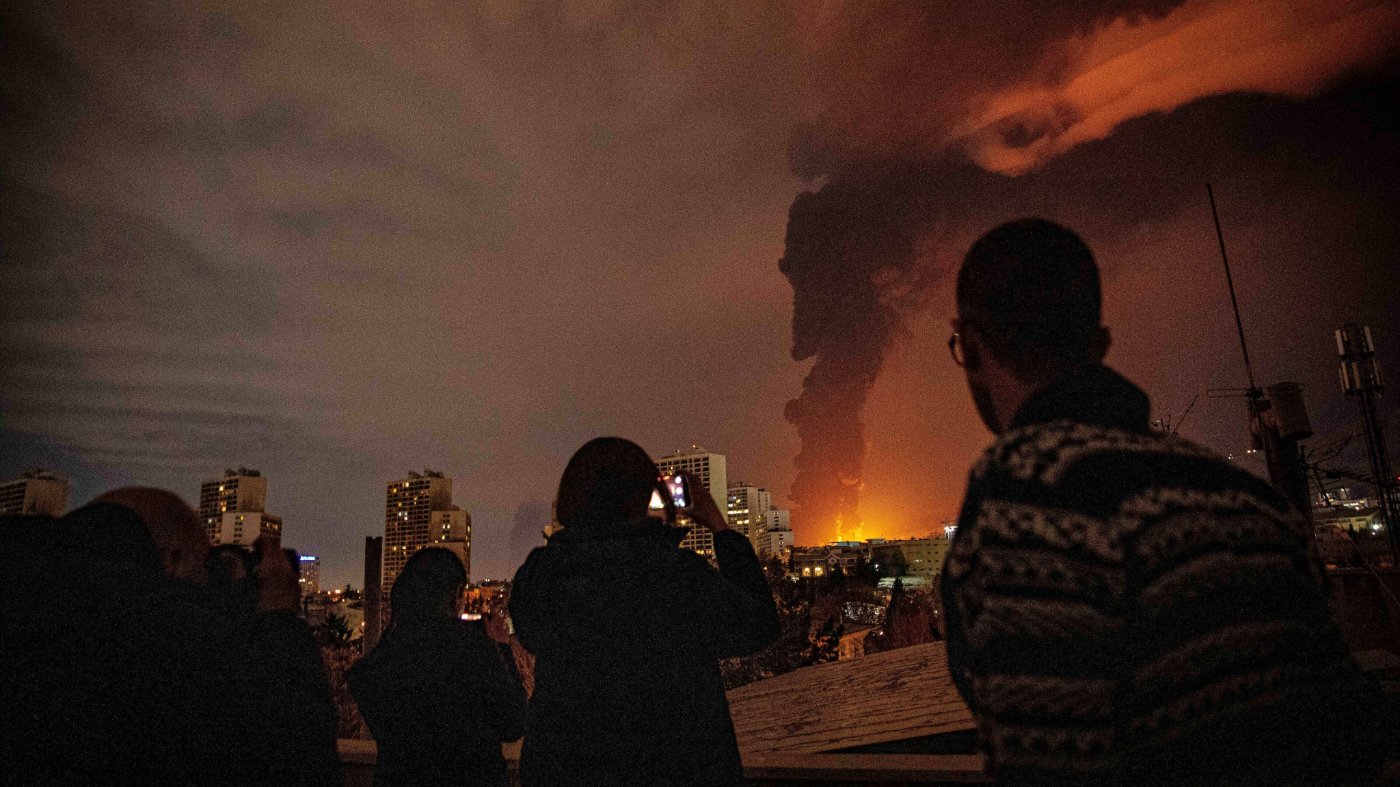
For the second time in recent weeks, U.S. military forces conducted precision strikes against Iranian military installations on Kharg Island overnight Tuesday. The operation targeted bunkers, storage facilities, and air defense systems along the island's northern coast, according to a White House official who spoke to NBC News. No American ground troops were deployed during the aerial assault.
The timing was strategically significant, occurring less than twenty-four hours before President Trump's 8 p.m. EDT deadline for the Iranian government to lift its restrictions on commercial shipping through the Strait of Hormuz. The President had issued grave warnings, stating ahead of the deadline that "a whole civilization will die tonight" if Iran failed to comply. The Iranian blockade has severed a crucial maritime chokepoint, cutting off approximately twenty percent of global oil shipments and contributing to skyrocketing energy prices.
The Strategic Prize: Iran's Oil Lifeline
Kharg Island, situated just 16 miles off Iran's coast and roughly 300 miles from the Strait of Hormuz, represents the beating heart of Iran's petroleum economy. Analysts estimate that between 80 and 90 percent of Iran's oil exports flow through the terminal, which also serves as a maintenance hub for the country's fleet of supertankers. This concentration makes it a singular point of vulnerability.
"That reliance, if the Americans were to take it, would allow them to put enormous pressure on any Iranian regime without the need for boots on the ground in Tehran," said Ian Bremmer, founder of GZERO Media, in a recent analysis. "If you control the oil exports, you have much greater leverage over the regime long term."
Escalating Rhetoric and Military Calculus
The latest strikes follow an initial U.S. attack on the island last month, which President Trump claimed at the time had "totally obliterated every MILITARY target." In a social media post following that operation, Trump noted he had "chosen NOT to wipe out the Oil Infrastructure on the Island" but warned he would "immediately reconsider" that restraint if Iran continued to interfere with shipping.
The possibility of a full-scale seizure of Kharg Island has been openly debated in foreign policy circles. Marc Gustafson, former head of the White House Situation Room and now a senior director at Eurasia Group, suggested last week that President Trump "may be tempted" to capture the facility. He cited the degradation of the Iranian navy from sustained bombardment and a desire to cement U.S. energy dominance as potential motivations. However, as some officials have warned, military strikes alone may not achieve broader strategic objectives.
Such an occupation would mark a dramatic escalation, requiring a ground force deployment that the administration has so far avoided. Defense Secretary Pete Hegseth and the President have not ruled out sending troops into Iran, a move that would be politically fraught during an election year. Gustafson cautioned that seizing the island could trigger a "multi-week targeting campaign for Iranian drones" and further inflame global oil markets.
Regional Pressures and Global Repercussions
The conflict has drawn strong reactions from regional actors. Prior to the first U.S. strike, former Israeli Prime Minister Yair Lapid advocated for the destruction of Iran's energy industry on Kharg, arguing it "is what will cripple Iran's economy and topple the regime." The ongoing crisis occurs against a backdrop of other global security challenges, including a stalled conflict in Ukraine where Russian military advantages are eroding.
The immediate economic impact is being felt worldwide. Iran's stranglehold on the Strait of Hormuz has disrupted global oil supplies, sending prices soaring. The benchmark price for West Texas Intermediate crude surpassed $112 per barrel on Tuesday. This has translated directly to U.S. consumers, with the national average for a gallon of regular gasoline hitting $4.14, an increase of more than 12 cents in a week and over 72 cents in a month. The administration now faces the complex task of calibrating military pressure with economic and political realities as the confrontation enters a new, more volatile phase.