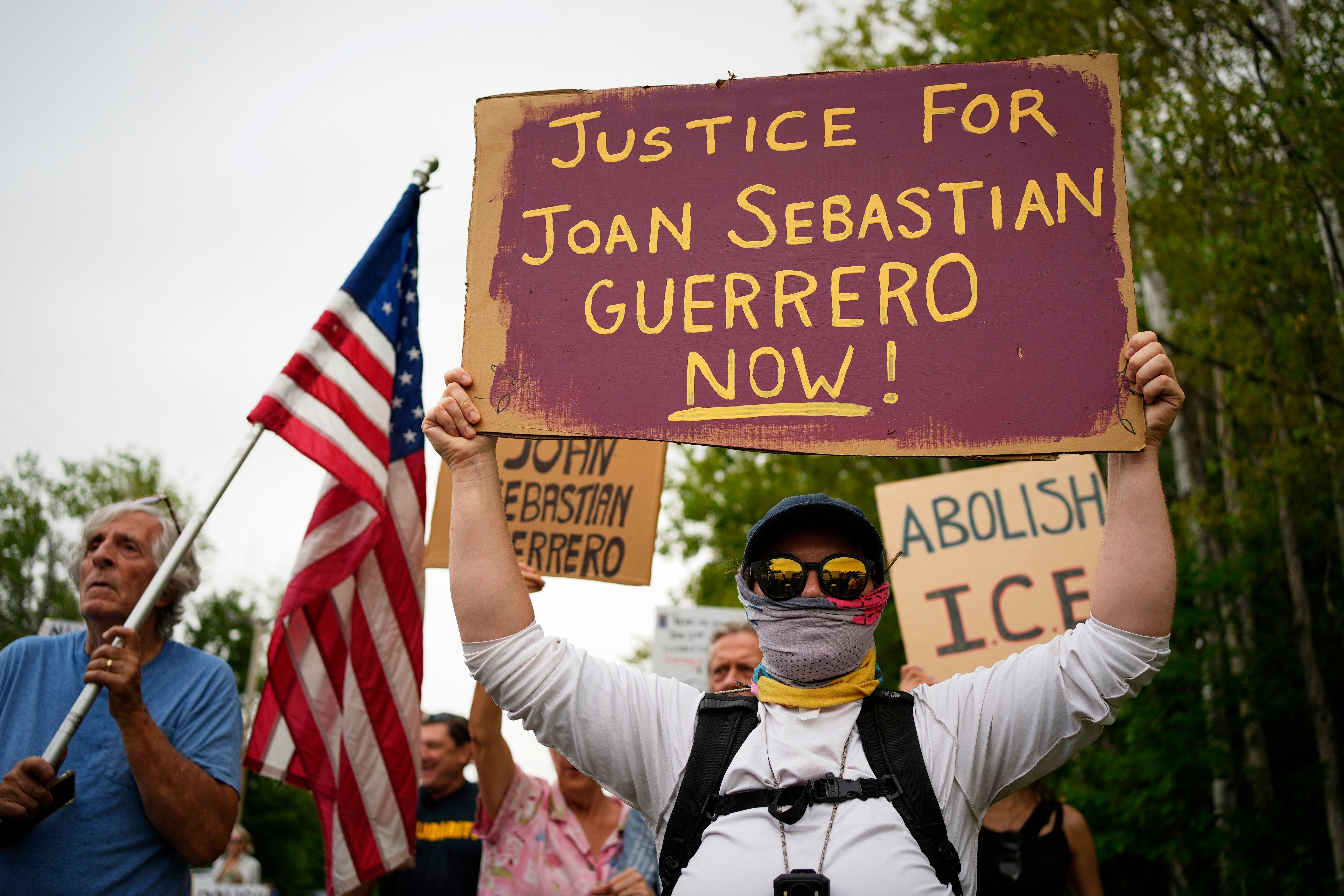
When an ICE officer shot and killed a man during a traffic stop in Biddeford, Maine, this week, federal officials quickly promised an investigation. But after a string of similar incidents, the real question is whether the public can trust the process—not just whether it happens.
As long as federal authorities retain exclusive control over investigations into their own use of deadly force, they undermine the transparency and accountability that give law enforcement legitimacy. Without independent review, the public has little reason to accept the outcome, no matter how thorough officials claim it will be.
Just days earlier, the family of Lorenzo Salgado Araujo stood before reporters in Houston to mourn another fatal ICE shooting, demanding an independent probe. While many in law enforcement consider external review the bare minimum after any officer-involved shooting, federal authorities have so far refused. That refusal prompted local officials, including Houston Mayor John Whitmire, to pursue their own city-led investigation, as Whitmire vowed a city-led probe into the fatal ICE shooting of a Mexican national.
Salgado's family shouldn't have had to ask. External review of deadly force shouldn't hinge on grieving families, public pressure, or media coverage. Yet the federal government's resistance to this basic principle has become part of the story, reinforcing the perception that immigration authorities operate under a different set of rules than other law enforcement agencies.
Accountability as a Foundation, Not a Concession
Earlier this year, after federal agents shot and killed Renee Good and Alex Pretti in separate incidents in Minneapolis, the organization I lead called for independent investigations. We argued then that accountability isn't an obstacle to effective policing—it's a foundation. The best agencies understand that transparency and independent oversight aren't concessions but professional standards that build the public trust every officer needs to do the job.
Federal officials responded by acknowledging that “visible, meaningful participation by independent entities can be critical to public confidence” and expressing support for processes showing “no agency is above accountability.” But that statement identified the problem without solving it. They never launched an independent review of the Minneapolis shootings, and until recently, refused to cooperate with a parallel state investigation. In Houston, they reportedly maintain tight control over the Salgado probe. If the same happens in Biddeford, vague assurances will only deepen public skepticism.
Maine senators have now called for an independent probe after the ICE killing of a Colombian man, as reported earlier.
A Predictable Pattern
After two fatal ICE shootings in less than a week, Americans feel a sense of déjà vu. Months after Minneapolis, there's no indication that federal immigration enforcement has meaningfully strengthened oversight or accountability. Despite changes in agency leadership and carefully worded statements, the underlying system appears unchanged.
The recent shootings were tragically predictable. The administration renewed its mass deportation campaign without addressing the concerns exposed by the Minneapolis shootings. The shockwaves from Houston had barely subsided before another community was shaken—only then prompting the agency to temporarily suspend most traffic-stop arrests.
This pattern should concern anyone who believes the rule of law depends not just on enforcing the law, but on law enforcement itself adhering to constitutional limits, professional standards, and meaningful accountability.
Discrepancies That Demand Scrutiny
The facts emerging in Houston illustrate why independent oversight is essential. Almost immediately after Salgado's death, bystander video and witness accounts raised questions about the government's initial description—including whether his van struck the ICE vehicle, as officials first claimed, or whether federal agents drove into his vehicle before opening fire. Witnesses in Salgado's van were detained by immigration authorities, and reports indicate they were pressured to self-deport before providing full accounts.
Those discrepancies alone warrant independent examination, especially given the growing number of allegations of assaults on federal officers that later collapsed under scrutiny. In recent months, prosecutors have quietly abandoned numerous criminal cases after video evidence or further investigation contradicted the underlying allegations. Each reversal erodes public confidence, giving Americans less reason to accept official narratives at face value.
Local law enforcement spent decades learning that public trust can't be restored through internal investigations alone. After highly publicized controversies, police departments across the country adopted stronger oversight, body-worn cameras, civilian review, and independent investigations. Yet ICE has resisted such reforms. Garbarino demands an ICE body camera update after two fatal shootings, highlighting the ongoing gap.