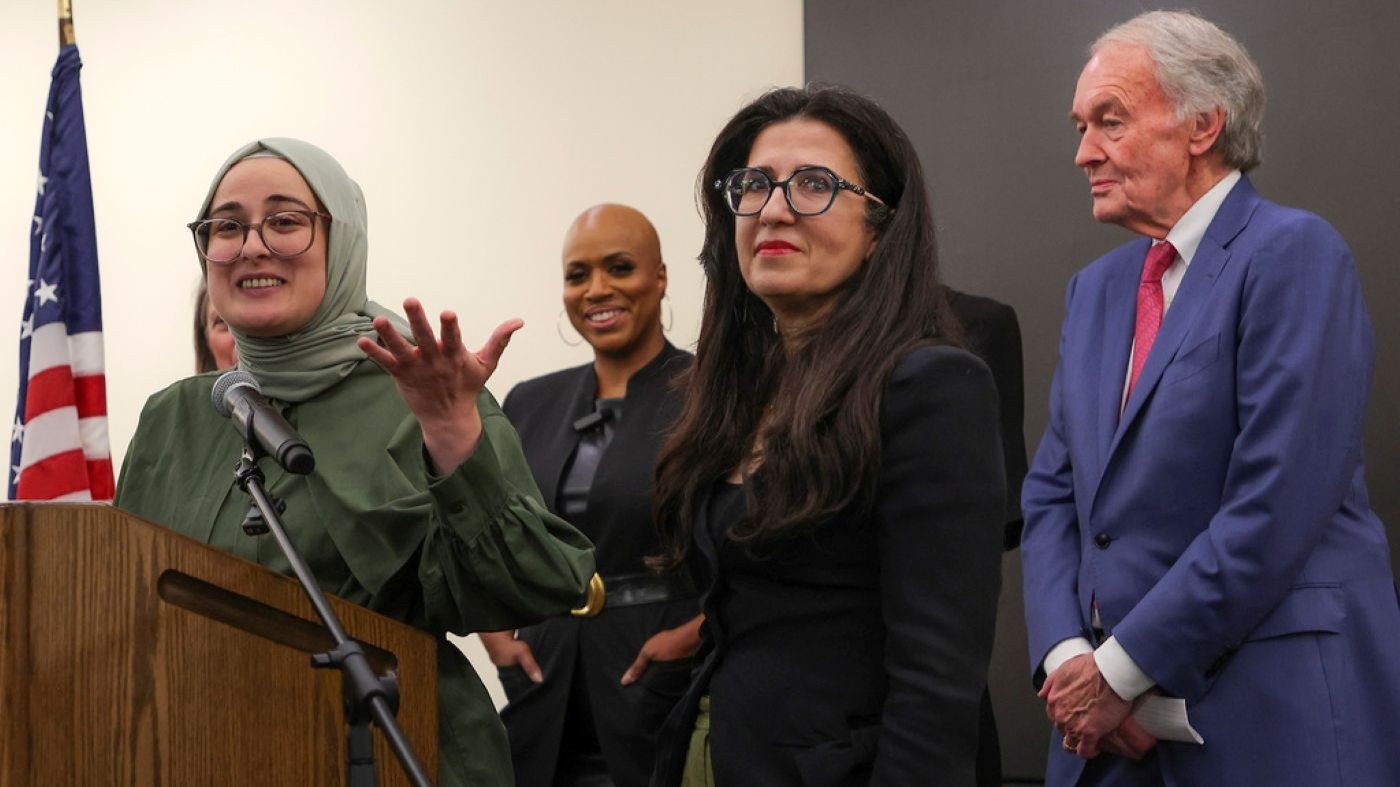
Rümeysa Öztürk, a Turkish national and doctoral candidate at Tufts University, has left the United States for her home country after a contentious immigration case stemming from her political activism. Her legal team confirmed her departure Friday, marking the conclusion of a thirteen-year academic journey in America that was interrupted by federal detention.
Detention Follows Campus Criticism
Immigration and Customs Enforcement agents took Öztürk into custody in 2025 after she co-authored a column in the Tufts student newspaper. The piece criticized the university's institutional response to the Israel-Gaza war. The detention sparked immediate controversy, with a federal judge later ordering her release, stating the record contained "absolutely no evidence that she has engaged in or advocated violence."
"After 13 years of dedicated study, I am very proud to have completed my Ph.D. and to return home on my own timeline," Öztürk said in a statement provided by her lawyers. "The time stolen from me by the U.S. government belongs not just to me, but to the children and youth I have dedicated my life to advocating for. With them in mind, I am choosing to return home as planned to continue my career as a woman scholar without losing more time to the state-imposed violence and hostility I have experienced in the United States – all for nothing more than co-signing an op-ed advocating for Palestinian rights."
Legal Settlement and Ongoing Battles
The American Civil Liberties Union, which represented Öztürk, announced a settlement with the Trump administration that dismissed her immigration proceedings. As part of the agreement, the government conceded she had maintained lawful status throughout her stay in the country. This resolution stands in contrast to the administration's continued legal push against other foreign students involved in pro-Palestinian advocacy, a pattern that has drawn scrutiny as the House grapples with deep Republican divisions on broader immigration policy.
Öztürk was one of several international students detained by ICE last year following expressions of support for Palestinians. Among them was Mahmoud Khalil, who was held for months and missed the birth of his first child. Although the Board of Immigration Appeals recently issued a final removal order for Khalil, he remains in the U.S. due to an ongoing federal court case challenging the administration's actions.
The targeting of student activists forms part of a broader immigration enforcement landscape that continues to evolve. Senior Trump adviser Stephen Miller has publicly urged states to mount legal challenges against established Supreme Court precedent regarding undocumented students, signaling a sustained political and legal offensive.
Broader Political Context
This case intersects with several high-stakes political debates, from campus free speech and foreign policy alignment to the executive branch's discretion in immigration enforcement. The detentions occurred amid heightened domestic political tension over the Israel-Gaza conflict and during a period when the administration was aggressively expanding its immigration enforcement priorities.
The episode also highlights the complex interplay between visa status, political expression, and national security justifications—a friction point that is likely to persist. As Department of Homeland Security officials regularly face intense congressional scrutiny over budget and enforcement directives, cases like Öztürk's provide concrete examples of how policy is implemented on the ground.
Öztürk's return to Turkey closes a specific case but leaves unanswered questions about the standards used to detain foreign students for political speech and the long-term impact on academic freedom and U.S. appeal for international scholars. Her departure under these circumstances represents a diplomatic and intellectual loss, underscoring how immigration tools can be leveraged in geopolitical and ideological disputes.