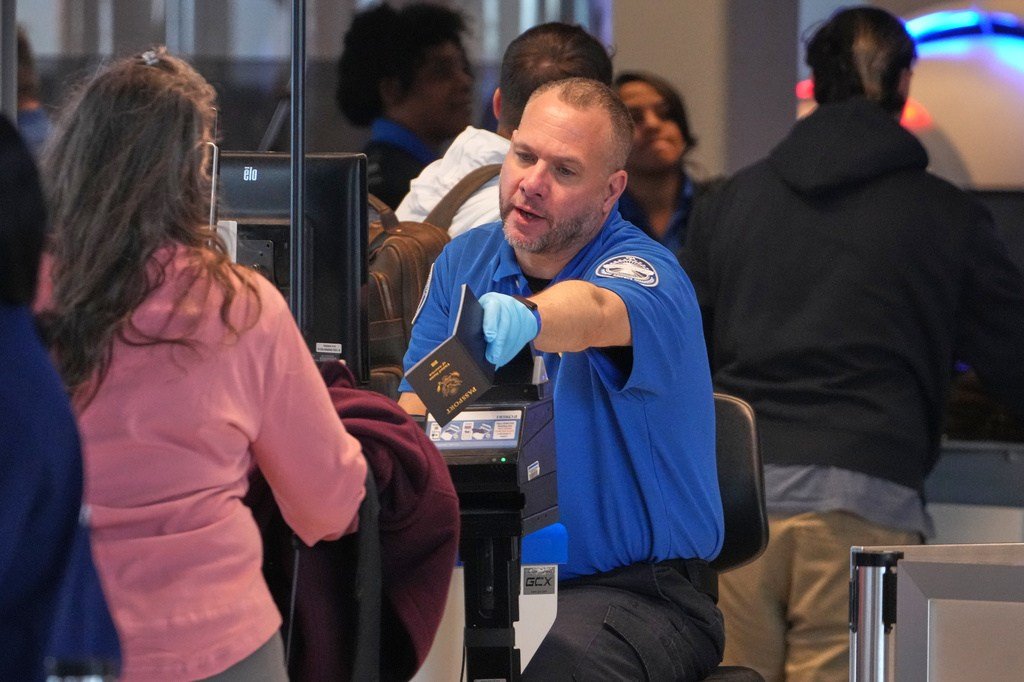
Transportation Security Administration officers stationed at document-checking positions will no longer be allowed to sit while performing their duties, the agency confirmed, a policy shift framed as necessary for both security and customer service.
"TSA officers performing the travel document checker role are the first to interact with the traveling public. This welcome change reinforces both our security posture and our commitment to hospitality by having these officers on their feet and alert," a TSA spokesperson said in an emailed statement.

The spokesperson added that all officers must meet fitness for duty requirements to carry out their national security mission while also fostering a welcoming and professional environment for travelers.
The change comes amid the agency's recently announced Horizon 25 initiative, launched in August by new TSA Administrator David P. Cummins. That effort appears to be reshaping frontline procedures, with the document-checker rule representing one of its first visible operational adjustments.
For travelers, the practical effect will be most noticeable at the start of the screening process, where officers inspect identification and boarding passes. Those officers will now remain standing throughout their shifts, a requirement the agency says keeps them more alert and better positioned to engage with the public.
The policy has not been without controversy. Critics argue that forcing officers to stand for extended periods could exacerbate fatigue and undermine morale, particularly at understaffed airports where breaks may be limited. Supporters counter that a standing posture projects authority and attentiveness, consistent with the agency's dual mandate of security and hospitality.
The TSA has not released data on how the change will be enforced or whether it will apply uniformly across all checkpoints. A spokesperson did not specify whether accommodations will be made for officers with medical conditions, though the agency emphasized that all personnel must meet fitness for duty standards.
The shift also arrives as the TSA faces broader scrutiny over its workforce policies. In recent months, the agency has been under pressure to balance security requirements with employee well-being, a tension that has played out in other areas of federal service. For instance, a separate dispute over military officer reductions has drawn congressional attention, with Senate Republicans balking at proposed cuts to flag officer positions. Meanwhile, legal battles over January 6 continue to test the boundaries of federal accountability, as seen when a judge threw out a lawsuit brought by officers over a Capitol plaque.
For now, the TSA's new standing requirement is a modest but tangible change that frequent flyers may soon observe. Whether it improves security and hospitality—or simply adds strain to an already demanding job—will depend on how it is implemented in the coming months.