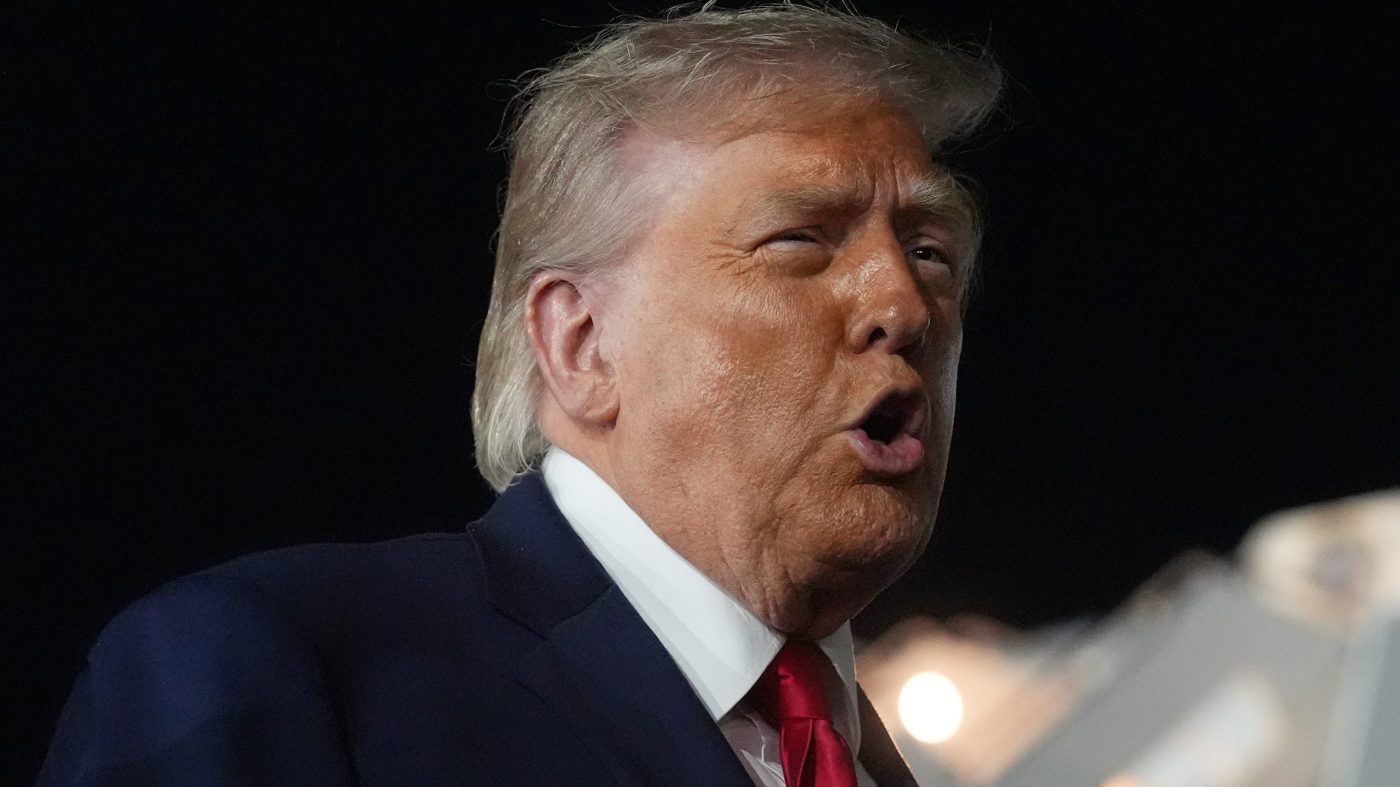
President Donald Trump escalated his rhetoric against Iran late Tuesday by sharing a scene from the television drama The West Wing that explicitly rejects the idea of a “proportional response,” just hours after the U.S. military launched a fresh round of strikes on Iranian targets. The move underscores the administration’s aggressive posture as a fragile ceasefire with Tehran teeters on the brink of collapse.
Earlier in the evening, Trump posted on Truth Social the official statement from U.S. Central Command (CENTCOM) announcing what it called “self-defense strikes” against Iran. The CENTCOM release described the operation as “a proportional response to unjustified Iranian aggression,” following an attack that downed an American AH-64 Apache helicopter near the Strait of Hormuz.
But the president quickly undercut that language with a second post: a clip from The West Wing Season 1 episode titled “A Proportional Response.” In the scene, fictional President Josiah Bartlet, played by Martin Sheen, questions Admiral Percy Fitzwallace about the “virtue” of a proportional response after Syria shoots down a U.S. plane. When Fitzwallace says it’s “all there is,” Bartlet erupts, demanding a “disproportional response” to deter future attacks. “You kill an American, any American, we don’t come back with a proportional response,” Sheen’s character declares. “We come back with total disaster!”
The episode ends with Bartlet ultimately choosing the proportional option after realizing a disproportionate strike would cause more civilian casualties—a nuance Trump’s post omitted.
The real-world escalation began Tuesday when an unmanned Navy vessel rescued two U.S. service members from the downed Apache. Trump initially said both were “fine” and that the incident was being investigated as a possible crash near Oman’s coast. However, he later blamed Iran directly, stating the U.S. “must, of necessity, respond to this attack.” The shift in tone aligns with his administration’s broader strategy of pledging retaliation for any Iranian aggression.
The strikes come amid a tenuous ceasefire brokered in April to allow peace talks aimed at ending a conflict that has lasted over 100 days, reopening the Strait of Hormuz, and determining the future of Iran’s nuclear program. That truce has been repeatedly tested, most recently on Sunday when Israel launched attacks on southern Beirut, prompting an Iranian response and mutual accusations of ceasefire violations. Both sides pulled back by late Monday.
Earlier Tuesday, Trump told reporters he believed the U.S. and Iran were “two or three days” away from finalizing a new peace agreement—a timeline now cast into doubt by the latest military exchanges. The juxtaposition of diplomatic optimism and military escalation has become a hallmark of Trump’s approach to foreign policy, drawing both praise and criticism from allies and adversaries alike.
The White House declined to comment on whether the West Wing clip reflected official policy, but the president’s public embrace of disproportionate force has already reverberated through Washington. Some Republicans hailed the tough stance, while Democrats warned it could derail negotiations. The episode also comes as the administration faces other domestic and international pressures, including pushing the UK to reverse its under-16 social media ban and managing a $70 billion border security bill sent to Trump’s desk.
As the region braces for further escalation, the president’s message is clear: any attack on American forces will be met with overwhelming force, not measured restraint. Whether that strategy leads to peace or deeper conflict remains the central question for the hours and days ahead.