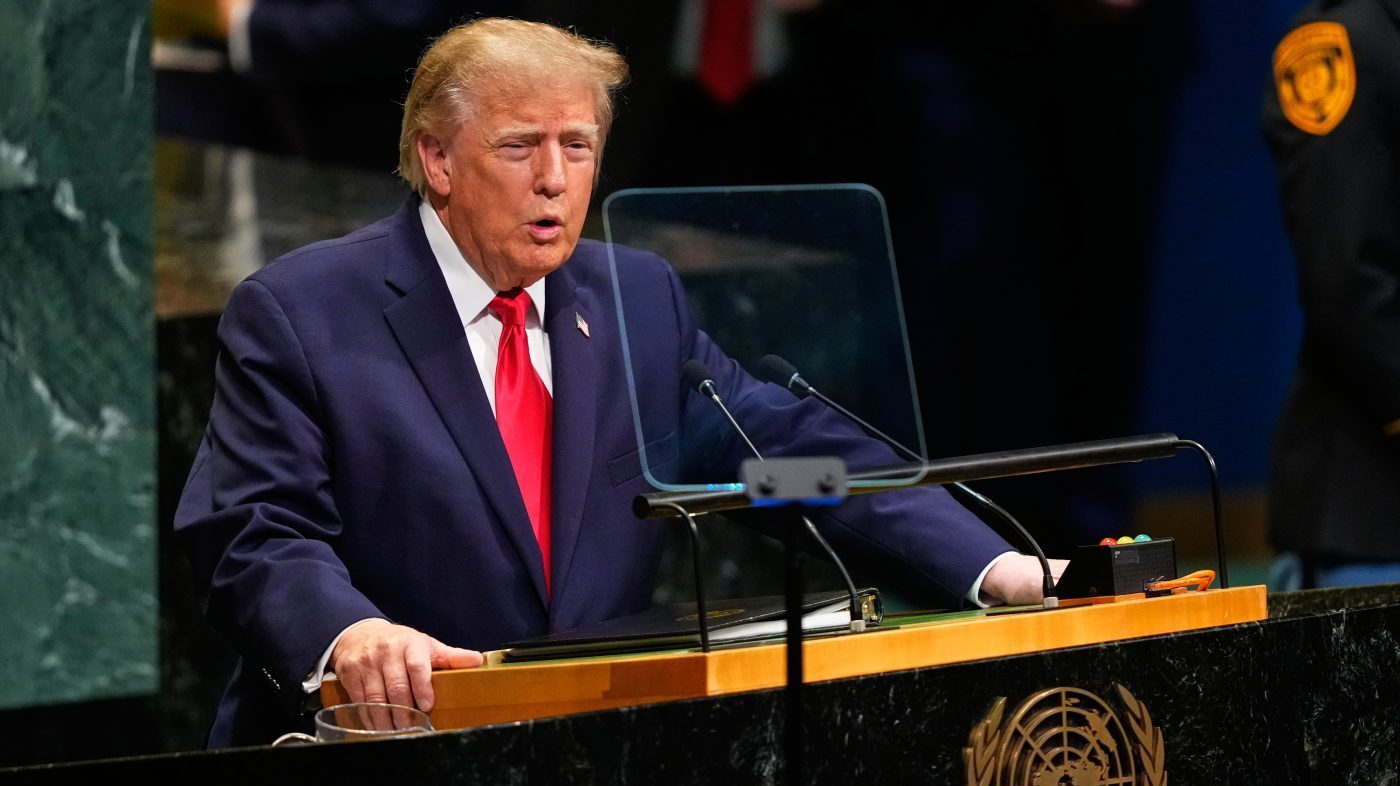
President Trump is scheduled to address the United Nations General Assembly in New York City on Tuesday morning, with the ongoing wars in Iran and Ukraine and the rapid advancement of artificial intelligence casting a shadow over the annual gathering of world leaders. His remarks are set to begin at 9:55 a.m. EDT.
Following his address, Trump is expected to hold a series of bilateral meetings with key counterparts, including Ukrainian President Volodymyr Zelensky, Japanese Prime Minister Sanae Takaichi, and U.K. Prime Minister Andy Burnham. He will also meet with officials from several Gulf nations, and is slated to sign a security agreement with Greenland and Denmark, a move that underscores the administration's focus on Arctic geopolitics.
The president's schedule also includes participation in an event centered on his administration's Shield of the Americas initiative, a regional security framework. Additionally, he has a private meeting planned with Venezuelan leader Delcy Rodriguez, which is likely to touch on migration and sanctions policy.
Trump's UN appearance comes at a time of heightened global tensions. The conflicts in Iran and Ukraine remain unresolved, and the president's approach to these crises is under scrutiny. His remarks are also expected to address concerns about the unchecked development of artificial intelligence, a topic that has gained urgency among world leaders.
This year's UNGA is particularly notable for the series of high-stakes diplomatic encounters. Trump's meeting with Zelensky is closely watched, as the U.S. has been a key military and financial backer of Ukraine. At the same time, the president's interactions with Gulf officials come amid ongoing efforts to broker a ceasefire in the Middle East.
The security agreement with Greenland and Denmark is a significant development, reflecting the administration's strategic interest in the Arctic region, which has become a focal point for great-power competition. The deal is expected to enhance cooperation on defense and resource extraction.
Trump's participation in the Shield of the Americas event highlights his administration's emphasis on hemispheric security, particularly in light of migration flows and drug trafficking. The private meeting with Rodriguez, a senior Venezuelan official, signals a potential shift in U.S. policy toward Caracas, though details remain sparse.
As the president takes the world stage, his speech is expected to focus on Iran, cartels, and Greenland, according to administration officials. The address will be closely parsed for signals on U.S. foreign policy priorities in a second term.
The UNGA meetings come on the heels of a possible U.S.-Iran meeting, though no formal deal has been scheduled. Secretary of State Marco Rubio has indicated that Trump is open to dialogue with Tehran, but the administration remains cautious.
Observers note that Trump's diplomatic engagements at the UNGA are a test of his ability to navigate complex international relationships, especially as he faces criticism at home over judicial independence and other issues. The president's performance on the global stage will likely shape the narrative of his second term's foreign policy.